
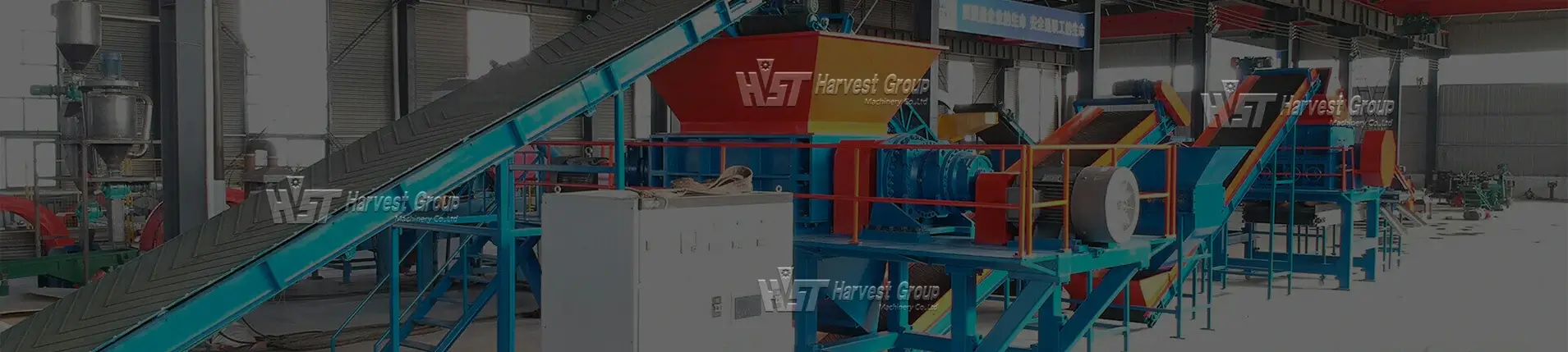
A tire shredder may be rated at 5 tons per hour, but that does not always mean it will deliver 5 tons of finished tire chips every hour. The difference usually comes from how tire shredder capacity is defined and measured.
A manufacturer may quote the amount of fresh tires entering the shredder, while a recycling plant may care more about the amount of correctly sized material leaving the screening system. Oversize chips may be returned for another shredding pass, production may stop temporarily, and different tire types can place very different loads on the same machine.
For buyers comparing a tire shredder machine or other tire recycling equipment, the most useful capacity figure is therefore not simply the largest number in tons per hour. It is the throughput measured under a clearly defined tire type, feed condition, output size, screening configuration and time basis.
What Does Tire Shredder Capacity Really Mean?
Tire shredder capacity is normally expressed in tons per hour (T/h) or kilograms per hour (kg/h). However, several different production figures can all be described as capacity. Understanding which one is being quoted is essential before comparing different machines.
Rated Capacity
Rated capacity is the manufacturer’s specified production range under defined or typical operating conditions. For example, a shredder may be listed as 3–5 T/h. This should be treated as a production range rather than a guarantee that every tire type, screen size and operating condition will produce exactly 5 tons per hour.
Feed Rate
The feed rate is the mass of fresh tire material entering the shredder during a specified period. If 10 metric tons of tires enter the shredder during two operating hours, the fresh feed rate is 10 ÷ 2 = 5 T/h. Returned oversize material should not be added to the fresh feed rate because it has already entered the process once.
Accepted Output Rate
The accepted output rate measures material that has passed the required product-size or quality rule and leaves the defined process boundary. This can be different from the amount discharged directly from the cutting chamber. If large tire pieces are screened out and returned to the shredder, those pieces are still being processed and are not yet accepted finished output.
| Capacity Term | Meaning | What It Tells the Buyer |
| Rated Capacity | Manufacturer’s stated operating range | Expected throughput under defined conditions |
| Fresh Feed Rate | New tire material entering the shredder per hour | How quickly the system is being supplied |
| Gross Cutting Load | Fresh material plus recirculated oversize passing through the cutters | Actual cutting duty placed on the machine |
| Accepted Output Rate | Material meeting the required output condition per hour | Actual usable production |
For commercial or acceptance testing, input and output should be measured separately. NIST Handbook 44 includes technical requirements for scales and belt-conveyor scale systems, reinforcing the importance of documented and repeatable mass measurement.[1]
How Many Tons per Hour Can a Tire Shredder Process?
Industrial tire shredders can range from around 1 T/h for smaller machines to 20–30 T/h or more for large primary shredders. However, the tonnage should always be viewed together with feed size and required output size.
| Model | Input Size | Output Size | Capacity | Motor | Blades | Dimensions | Weight |
| TS-800 | 800 mm | 50×50 mm | 1–2 T/h | 2×22 kW | 16 pcs | 4×2.6×3.2 m | 8 T |
| TS-1200 | 1200 mm | 60×60 mm | 3–5 T/h | 2×45/55 kW | 20 pcs | 4.8×2.8×3.5 m | 14 T |
| TS-1600 | 1600 mm | 50–150 mm | 6–8 T/h | 2×75 kW | 16–30 pcs | 5×2×3.4 m | 18 T |
| TS-1800 | 1800 mm | 50–150 mm | 7–10 T/h | 2×90/110 kW | 20–24 pcs | 5.6×2×3.4 m | 23 T |
| TS-2000 | 2000 mm | 75–200 mm | 10–15 T/h | 2×110 kW | 20–30 pcs | 6×2.4×4 m | 36 T |
| TS-2400 | 2400 mm | 100–200 mm | 20–30 T/h | 2×160 kW | 16–24 pcs | 7.4×3.2×5.2 m | 56 T |
These figures show why capacity should never be compared in isolation. A TS-1200 producing approximately 60×60 mm chips at 3–5 T/h is performing a different duty from a large primary shredder producing 100–200 mm pieces at 20–30 T/h. The second number is much higher, but the required product is also considerably coarser.
Feed Rate vs Accepted Output: Why Are They Different?
Under stable operating conditions and over a sufficiently long production period, feed rate and accepted output may become relatively close. They do not necessarily match during every hour of operation.
Oversize Material Must Be Shredded Again
Many tire shredding systems use a screen to control chip size. Material leaving the cutting chamber passes through the screen. Correctly sized pieces continue downstream, while oversized pieces return to the shredder for another cutting pass.
The return material is internal circulation, not additional production. If 10 tons of fresh tires enter the system and 3 tons of oversize chips circulate back through the shredder, it would be incorrect to report 13 tons of production. Some of the original material simply passed through the cutting chamber more than once.
A properly configured vibrating screen for tire recycling therefore affects both product-size control and the internal workload of the shredder.
Smaller Output Sizes Require More Cutting Passes
Output size has a major influence on actual tire shredder throughput. The U.S. EPA scrap-tire recycling handbook describes how smaller tire products can require more recycle passes and more cuts, increasing knife wear and processing duty.[3]
In general, larger output sizes require fewer cutting passes and can support higher throughput, while smaller output sizes usually create more screening and recirculation and can reduce the accepted-output rate.
Stops and Feeding Interruptions Reduce Actual Throughput
A shredder can have enough cutting power for 5 T/h but still deliver less than 5 tons during a full clock hour. Common interruptions include irregular feeding, bridging, overload reversals, foreign material, manual clearing, screen blockage, downstream conveyor stops and maintenance.
If operators must clear or service equipment, applicable hazardous-energy-control procedures should be followed. OSHA 29 CFR 1910.147 covers servicing activities including cleaning and unjamming where unexpected startup or stored energy can create hazards.[4]
Tire Type and Preparation Condition Change the Load
A ton of passenger tires does not behave exactly like a ton of truck tires or OTR tires. Different tires vary in diameter, weight, steel content, tread thickness, stiffness and bead construction. For this reason, tons per hour is generally more useful than simply quoting tires per hour when mixed feedstock is involved.
Very large or difficult tires may also require pre-processing with a tire cutting machine before entering the primary shredder.
What Factors Affect Tire Shredder Capacity?
Although motor power matters, tire shredder capacity is not determined by motor kilowatts alone. A realistic capacity figure results from several interacting factors.
Tire Type and Maximum Feed Size
The shredder must first be physically capable of accepting the tire. The HVST TS-1200, for example, is designed for tires up to approximately 1200 mm in diameter, while larger models are available for truck and OTR tire applications. Processing tires close to the maximum machine size may create a different feeding and cutting load from continuously processing smaller passenger tires.
Motor Power and Cutting Torque
Tire shredders typically operate with relatively low shaft speed and high torque. Motor power, gearbox ratio, shaft diameter, available torque, blade arrangement and control strategy all influence sustainable throughput. For example, HVST models range from 2×22 kW on the TS-800 to 2×160 kW on the TS-2400, but capacity is determined by the complete cutting system rather than motor power alone.
Blade Design and Blade Condition
Blade thickness, quantity, spacing and cutting-edge condition influence output size and cutting efficiency. The EPA tire-recycling handbook notes that knife width can influence throughput and shred size, while worn edges can make reinforced tire material more difficult to shear cleanly.[3]
Screen Size and Oversize Recirculation
A screen determines how much material can leave the shredding loop after each cutting pass. A tighter screen opening normally increases the amount of oversize material returned to the shredder, increasing the cutting work required for each ton of accepted product.
For downstream processing with a rubber granulator, consistent primary shred size may be more important than simply maximizing the shredder’s peak tonnage.
Feeding Stability and Overload Protection
A tire shredder reaches its best sustainable capacity when material enters at a reasonably stable rate. Too little feed starves the cutting chamber, while excessive feeding can cause repeated overload reversals. Controlled conveyors, PLC logic and automatic overload protection help maintain stable production and reduce unnecessary downtime.
How Does Output Size Affect Tire Shredder Capacity?
Output size is one of the most important conditions attached to any shredder-capacity claim. A system producing 100–200 mm coarse tire shreds may achieve much higher throughput than a system producing 50–60 mm tire chips, because smaller material normally requires more cutting and more recirculation.
Therefore, the statement “this shredder produces 10 T/h” is incomplete unless the supplier also states the required output size and screening condition.
This is particularly important for Tire Derived Fuel applications. ASTM D6700 provides guidance for recovering scrap tires for fuel use and producing chipped tire-derived fuel material.[2] The actual chip specification should still match the requirements of the intended downstream application.
How Should Tire Shredder Capacity Be Calculated?
The basic calculation is simple: Capacity (T/h) = Processed Mass ÷ Time. The important question is which mass and which time are being used.
Capacity Based on Running Time
Suppose 10 tons of fresh tires enter a shredder during 2 hours of actual running time and 9 tons of accepted chips leave the defined output boundary. The fresh feed rate is 10 ÷ 2 = 5 T/h, while the accepted output rate is 9 ÷ 2 = 4.5 T/h.
Capacity Based on Elapsed Time
If the same production test takes 2.5 elapsed hours because of a 30-minute interruption, the accepted output based on elapsed time becomes 9 ÷ 2.5 = 3.6 T/h. The same production run can therefore produce three valid numbers: 5 T/h fresh feed, 4.5 T/h accepted output during running time, and 3.6 T/h accepted output during total elapsed time.
How Should Input and Output Be Measured?
If capacity is being verified for a contract, FAT or production guarantee, input and output should be measured separately. Possible methods include truck scales, platform scales, belt scales, load cells and weighed containers.
NIST Handbook 44 contains technical requirements for scales, belt-conveyor scale systems and automatic bulk weighing systems.[1] For a practical capacity test, the measurement point, tare method, scale condition, start and stop time, retained material and rejected material should all be documented.
How to Compare Tire Shredder Capacity Between Suppliers
When comparing quotations, do not compare only one column labeled “Capacity.” The same production conditions should be used for every supplier.
| Item | What Should Be Defined |
| Tire Type | Passenger, truck, bus, OTR or mixed tires |
| Feed Condition | Whole, debeaded, pre-cut or sectioned tires |
| Maximum Tire Size | Diameter, width and recurring maximum size |
| Output Size | Required chip size or size range |
| Screen Configuration | Screen opening and oversize-return arrangement |
| Capacity Basis | Fresh feed, gross discharge or accepted output |
| Time Basis | Running time or elapsed time |
| Motor Configuration | Installed motor power and drive arrangement |
| Downstream Condition | Conveyors, separators and receiving equipment |
| Measurement Method | How input and output mass are verified |
For example, a 20 T/h shredder producing 150–200 mm coarse material should not automatically be considered four times more productive than a 5 T/h shredder producing approximately 60 mm chips. They may be designed for very different processing stages.
How to Choose the Right Tire Shredder Capacity
The best machine is not necessarily the shredder with the highest catalog capacity. Start with the required finished production, then define the tire type, maximum tire dimensions, target output size, operating hours, expected downtime and downstream capacity.
For a complete tire recycling plant, the shredder should also be matched to downstream equipment. Installing a 15 T/h primary shredder provides little benefit if the screen, conveyors or secondary processing equipment can continuously handle only 6 T/h.
Capacity should therefore be evaluated at both the individual machine level and the complete production-line level.
Frequently Asked Questions About Tire Shredder Capacity
Is a 5 T/h Tire Shredder Guaranteed to Produce 5 Tons of Finished Chips Every Hour?
Not necessarily. A 5 T/h rating may describe fresh feed or operation under a specified tire type and output condition. Accepted finished output can be lower because of recirculation, retained material, interruptions, feeding instability or tighter output-size requirements.
Is Feed Rate the Same as Output Rate?
No. Feed rate measures new tire material entering the process, while accepted output rate measures material that meets the required product condition and leaves the defined output boundary.
Does Smaller Output Size Reduce Tire Shredder Capacity?
Usually it can. Smaller pieces often require additional cutting passes and more recirculation through the screen-return system. The EPA scrap-tire recycling handbook specifically notes that smaller tire products can require more recycle passes and cuts.[3]
Should Returned Oversize Material Be Added to Capacity?
No. Oversize return is material that has already entered the process. Adding it to fresh feed or accepted output would double-count the same material.
Does a Larger Motor Always Mean Higher Capacity?
No. Motor power is important, but throughput also depends on cutting torque, gearbox design, shaft and blade configuration, tire construction, output size, screen configuration, feeding stability and downstream conditions.
Is Tire Count per Hour a Good Capacity Measurement?
It can be useful for a single defined tire type, but tons per hour is generally more useful for mixed tire streams because passenger, truck and OTR tires can differ greatly in individual weight.
Conclusion
Tire shredder capacity should never be interpreted as a single number without operating conditions. A machine rated at 5 T/h may receive 5 tons of fresh tires per hour while producing a lower accepted-output rate because some material remains in the screen-return loop, production is interrupted, or the required chip size demands additional cutting passes.
When comparing tire shredders, evaluate tire type, feed size, output size, screen configuration, motor and torque, time basis and accepted output together. HVST tire shredders cover applications from approximately 1–2 T/h to 20–30 T/h, allowing equipment to be matched to different tire sizes, output requirements and recycling-line capacities.
The most useful question is not simply “How many tons per hour can this tire shredder process?” but “How many tons per hour of the required product can it produce under my actual tire and operating conditions?”
References
- NIST Handbook 44. Specifications, tolerances and technical requirements for weighing and measuring devices.
- ASTM D6700. Standard Guide for Use of Scrap Tires as Tire-Derived Fuel.
- U.S. EPA Scrap Tire Recycling Handbook. Tire shredding, recycle passes, knife duty and product-size considerations.
- OSHA 29 CFR 1910.147. Hazardous-energy control during cleaning, clearing and servicing.
- USTMA End-of-Life Tire Report. End-of-life tire data and mass-based market reporting.