Waste tires are one of the most challenging solid wastes to manage. Every year, billions of end-of-life tires (ELTs) are generated worldwide. When stored or landfilled improperly, they occupy large amounts of space, accumulate stagnant water, release harmful chemicals, and pose significant fire hazards.
A modern tire shredding line solves these problems by transforming discarded tires into valuable resources. Through controlled cutting and size reduction, whole tires can be converted into clean, uniform rubber chips used for fuel, landscaping materials, civil engineering, and further rubber processing.
This guide explains the entire shredding process—from feeding whole tires into the system to producing clean rubber chips—and highlights the environmental, economic, and regulatory benefits of tire shredding.
A tire shredder is a high-torque, low-speed machine designed specifically to break down ELTs into smaller rubber pieces. Instead of disposing of whole tires, shredding allows materials to be:
Easier to transport and store
Compatible with downstream equipment such as granulators and powder mills
Ready for immediate use in applications such as tire-derived fuel (TDF) and rubber mulch
By converting bulky scrap tires into manageable materials, shredding turns waste into a valuable commodity.

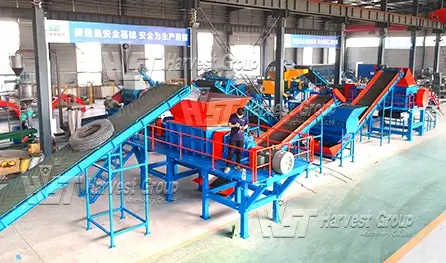
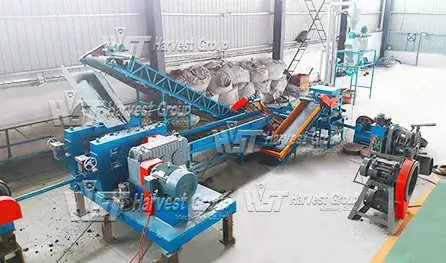
A complete tire shredding system consists of multiple coordinated sections:
Moves tires safely into the shredder. Common feeding options include:
Belt conveyors for passenger and light truck tires
Hydraulic lifting hoppers for heavy truck and OTR tires
A stable feeding system prevents material blockages and ensures continuous operation.
The core of the shredder. Inside the chamber:
Hardened alloy-steel blades are mounted on one or two shafts
Shafts rotate slowly but generate high torque
Blades grip, shear, and tear through rubber, steel wires, and fiber layers
Blade quality and shaft design determine shredding efficiency and lifespan.
Provides power for the shredding shafts:
Electric drive for standard applications
Hydraulic drive for high-torque requirements, especially heavy or OTR tires
Both systems typically include overload protection.
Transports shredded material using conveyors, chutes, or screw conveyors to:
Magnetic separators
Screening or fiber removal equipment
PLC-based systems provide:
Automated start and stop
Overload detection and reverse rotation
Emergency shutdown protection
A well-designed control system improves safety and reduces labor.
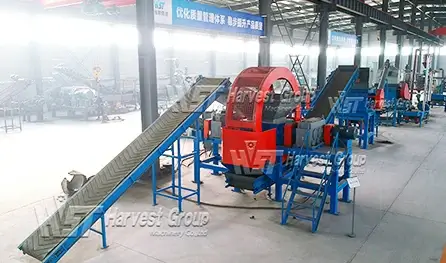
In actual recycling plants:
Car and light truck tires typically enter via belt conveyors
Large truck and OTR tires are loaded using hydraulic lifting hoppers or loaders
Feeding rate is adjusted to the shredder’s capacity to avoid overloading. Some shredders accept whole tires directly; others require pre-cutting for oversized industrial tires.

Primary shredding is usually done by a dual-shaft, low-speed shredder. During this stage:
Two shafts rotate toward each other
Interlocking blades grab and pull the tire into the chamber
The machine cuts through rubber layers, steel belts, and fiber reinforcements
The output consists of rough rubber strips or blocks around 50–150 mm in size. Primary shredding also disrupts the tire’s vulcanized molecular network, making steel and fiber easier to remove later.
After primary shredding, magnets remove the steel wires and bead wires that have already loosened. This step:
Protects secondary shredders from excessive wear
Improves the cleanliness of intermediate material
Allows early recovery of recyclable steel
Although not all steel is removed here, this step significantly reduces maintenance costs.
The partly cleaned rubber blocks then enter a secondary shredder (rasper or fine shredder). Here:
A high-speed rotor further reduces material size
Adjustable screens ensure consistent output dimensions
Impact and shearing forces separate remaining steel and fiber
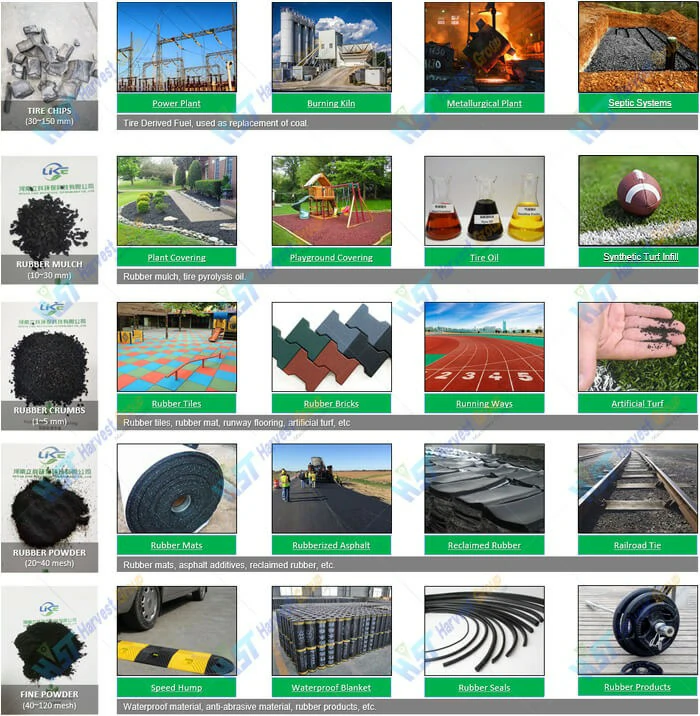
The resulting rubber chips typically measure 10–30 mm. These chips are suitable for TDF, landscaping mulch, sports surfacing, or as feedstock for granulation and rubber powder production.
To achieve clean, market-ready rubber material:
Magnetic separators remove remaining steel wires
Air separation or vacuum systems remove textile fibers such as polyester and nylon
A complete purification process results in rubber chips that are clean, uniform, and ready for sale or further processing.

The final stage involves collecting and packaging the finished rubber chips. They are typically:
Stored in silos
Loaded into bulk bags
Sent directly to downstream production lines
Compared with whole tires, rubber chips take up far less space, are safer to handle, and have consistent specifications—turning waste into a product with clear commercial value.

Reduced landfill demand – Shredding decreases tire volume dramatically, helping reduce pressure on landfills.
Lower fire risk – Shredded rubber is far less flammable than whole tires.
Better resource utilization – Rubber, steel, and textile fibers can all be recovered and reused.
New profit channels – Rubber chips can be sold as TDF, playground mulch, civil engineering aggregate, or as raw material for fine rubber processing.
Lower logistics and storage costs – Shredded material is compact and easy to transport.
Scalable business model – Operators can start with shredding and later expand into crumb rubber or powder lines.
Industrial shredding lines range from compact 500–1,000 kg/h systems to high-capacity lines exceeding 10–20 tons per hour.
Many regions prohibit the landfilling of whole tires. Shredding ensures compliance with waste management rules.
Automated feeding and controlled machinery reduce manual labor and workplace safety risks.
Rubber chips provide high heating value and are widely used in cement kilns, boilers, and industrial furnaces.
Wire-free rubber chips are used for:
Playgrounds
Garden beds
Landscaping
Walking trails
They offer shock absorption, weather resistance, and long service life.
Coarser rubber chips can be used for:
Road foundations
Drainage layers
Lightweight structural fill
Slope stabilization
Rubber chips are the starting material for:
Granulators
Cracker mills
Fine rubber powder lines
Final products include flooring, sports tracks, molded rubber parts, and modified asphalt.
Can one shredding line process car, truck, and OTR tires?
It depends on the shredder design. Heavy or OTR tires require higher torque and reinforced structure.
What capacity should I choose?
Entry-level lines handle 5–10 tons per hour; large automated plants may handle 20–50 tons per hour.
Is rubber mulch safe for playgrounds?
Yes. When produced properly with full steel and fiber removal, it meets international safety standards.
How much does a tire shredding system cost?
Cost depends on capacity, automation, output size, power configuration, and purity requirements. Prices range from small industrial systems to large turnkey plants.
When planning your investment, consider:
Types of tires you will process
Required output size and market
Available space and electrical capacity
Local regulatory requirements
Supplier support, spare parts, and installation services
A reliable shredding stage is the foundation of a profitable recycling plant and determines the performance of downstream equipment.
Tire shredding is more than cutting rubber—it is the essential first step in transforming end-of-life tires into reusable materials. From controlled feeding to final chip purification, each stage improves efficiency, sustainability, and profitability.
Whether you are starting a new recycling project or upgrading an existing facility, choosing the right shredding line helps turn waste into long-term economic opportunity.