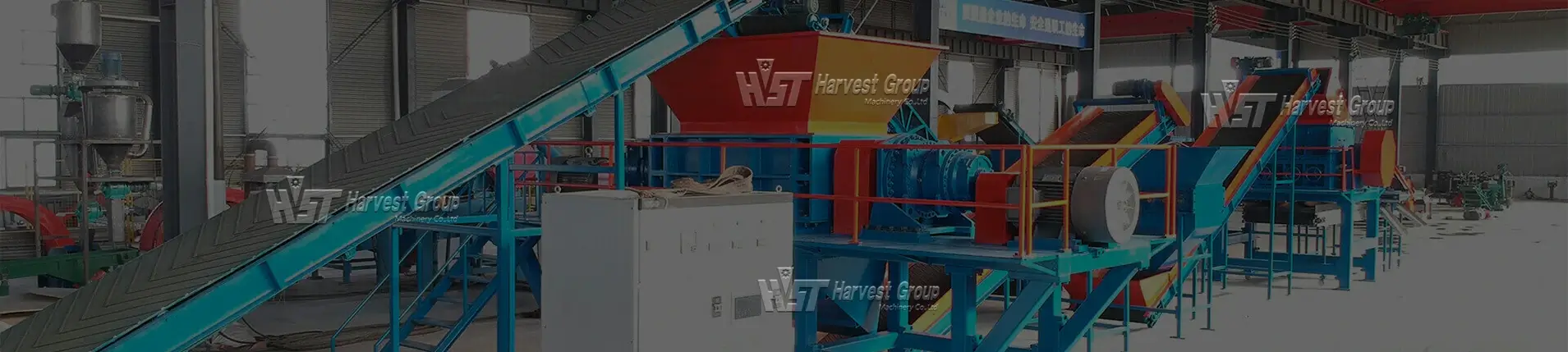
The price of a waste tire cutting machine can vary greatly from one supplier to another. A small cutter used for removing tire sidewalls may cost only several thousand dollars, while a heavy-duty hydraulic machine designed for truck, agricultural or OTR tires can require a much larger investment.
This does not necessarily mean that one supplier is expensive and another is cheap. In many cases, the quotations are for completely different machines. Tire size, tire construction, required cut size, hydraulic force, working table, production capacity and loading method can all change the final machine configuration.
Before comparing prices, buyers should first determine what type of tire cutting machine is actually required for their recycling process.
There is no single price that can represent every tire cutter. Public industrial equipment listings show that small tire preparation machines can start from a few thousand US dollars, while larger industrial cutting systems can reach tens of thousands of dollars.
| Machine Type | Typical Price Reference | Typical Application | Price Level |
| Tire Sidewall Cutter | About US$3,500–5,000 | Removing sidewalls from passenger and truck tires | Low |
| Tire Strip / Block Cutter | About US$5,500–11,000 | Cutting prepared tread or tire sections into strips or blocks | Low to Medium |
| Heavy-Duty Tire Cutter | About US$8,000–15,000+ | Truck tires and higher-duty preprocessing | Medium |
| Large Tire Cutting System | About US$20,000–30,000+ | Industrial tire size reduction | High |
| OTR / Mining Tire Cutter | Project Quotation | Agricultural, construction and mining tires | Customized |
These figures should only be used as general market references. A US$5,000 sidewall cutter cannot be compared directly with a hydraulic OTR tire cutter designed to section large steel-reinforced mining tires.
The real price should always be based on the tire that needs to be processed and the required output after cutting.
The term “tire cutting machine” is used for several different types of equipment. Some machines remove tire sidewalls, some cut tread into strips or blocks, and others section complete tires before they enter the next recycling stage.
A lower-cost machine may be suitable for passenger tires and common truck tires. A heavy hydraulic cutter, however, may need to handle large agricultural or OTR tires containing thick steel reinforcement.
That difference changes almost every major part of the machine, including the frame, blade, hydraulic cylinder, oil system, cutting table and material handling method.
A standard tire cutting machine is generally used for passenger tires, truck tires and other common waste tires. The machine structure is relatively compact because tire weight and cutting resistance are lower than those of large OTR tires.
Standard machines are commonly used to cut whole tires or prepared tire sections into smaller pieces before shredding or other processing.
An OTR tyre cutting machine is designed for much larger tires used in mining, construction, agricultural and earthmoving applications.
These tires can be extremely large and heavy and may contain considerably more steel reinforcement. The cutter therefore requires a larger working area, stronger frame, heavier hydraulic system and more robust blade structure.
For this reason, OTR tire cutters are usually quoted according to the actual tire dimensions and operating requirements instead of being sold at one fixed price.
The tire itself is normally the first factor used to determine machine configuration.
Important information includes tire outer diameter, width, approximate weight, tire construction, bead structure and steel content. Maximum diameter alone does not provide enough information.
Two tires with similar diameters can have very different weights and reinforcement structures. A machine designed for passenger tires should therefore not be priced or selected in the same way as a machine intended for truck, agricultural or mining tires.
For an accurate quotation, the supplier should know the largest and most difficult tire that will regularly enter the machine.
The required section size also affects equipment configuration.
Some recycling plants only need to divide a large tire into two or four sections so it can enter the shredder. Other projects need additional cuts to make the sections easier to handle or suitable for the next processing stage.
More cuts increase processing time, hydraulic working cycles and blade wear. The manufacturer therefore needs to know not only the original tire size but also the maximum acceptable size after cutting.
Industrial tire cutters normally rely on hydraulic force to cut through rubber, textile reinforcement and steel cords.
The hydraulic cylinder, pump, motor, valves, oil tank and cooling system all affect machine cost.
Large truck and OTR tires normally require greater cutting force. Continuous operation may also require a larger hydraulic power unit and more effective oil cooling than intermittent workshop operation.
Motor power or hydraulic pressure alone should not be used to compare machines. The complete hydraulic and structural system needs to work together.
The frame must withstand the force generated during every cutting cycle.
For small tires, the working area can be relatively compact. Larger tires require a wider and stronger table, reinforced frame and better tire support.
This additional steel structure can significantly increase machine weight and manufacturing cost, especially for equipment designed for OTR tires.
Capacity should be evaluated according to complete tires processed rather than only blade strokes per hour.
A normal working cycle may include loading, positioning, cutting, blade return, tire repositioning, additional cutting and unloading.
For a machine that makes multiple cuts on one large tire, cutting speed is only one part of overall productivity.
Projects requiring continuous operation may need a larger hydraulic system, improved cooling and more efficient loading and discharge arrangements.
Material handling becomes increasingly important as tire size increases.
Passenger tires may be loaded manually. Heavy truck or OTR tires may require a forklift, loader, crane or hydraulic loading platform.
After cutting, the tire sections must also be removed and transferred to the next machine. This means a bare cutter and a complete operating work cell can have very different project costs.
The blade has direct contact with rubber and steel reinforcement and is one of the most important wear components of the machine.
Blade material, heat treatment, thickness, replaceable structure and machining quality can affect both machine cost and long-term maintenance expenses.
Buyers should also check what spare blades and maintenance parts are supplied with the machine and how quickly replacements can be obtained.
Electrical configuration varies according to the destination market and automation requirement.
The machine may need to operate at 380V, 400V, 415V, 440V or 460V, depending on the customer’s factory power supply.
The control system may range from simple manual push-button operation to PLC control with sensors, interlocks and additional safety functions.
Not every tire recycling project can use exactly the same standard machine.
Changes to tire size, cutting table, loading equipment, conveyors, control system or downstream interface can increase the quotation.
Export packing, spare parts, installation guidance, commissioning and operator training may also be included in one supplier’s quotation and excluded from another.
The price gap between a standard cutter and an OTR cutter is mainly caused by the difference in tires rather than simply the name of the machine.
| Comparison | Standard Tire Cutter | OTR Tire Cutter |
| Typical Tires | Passenger and truck tires | Agricultural, construction and mining tires |
| Tire Weight | Relatively low | High to extremely high |
| Steel Reinforcement | Moderate | Heavy |
| Hydraulic Requirement | Standard | Heavy-duty |
| Machine Frame | Compact | Reinforced and heavier |
| Loading Method | Manual or forklift | Forklift, loader or crane |
| Price Method | Standard or semi-standard quotation | Usually project quotation |
If a project processes several tire types, the machine should normally be selected according to the largest tire that must be processed regularly.
The tire cutter quotation is only one part of the investment. International buyers also need to consider packing, transportation, installation and site preparation.
| Cost Item | Typical Scope | What to Confirm |
| Machine | Cutter, hydraulic system and controls | Exact machine configuration |
| Export Packing | Anti-rust protection and export packing | Whether included in quotation |
| Freight | Ocean, road or rail transportation | FOB, CIF or other delivery term |
| Import Cost | Customs, duties and local charges | Destination-country responsibility |
| Site Preparation | Foundation, power connection and lifting | Buyer preparation before delivery |
| Installation | Installation and commissioning | Whether engineer service is included |
| Spare Parts | Blades and maintenance components | Initial spare package |
A lower FOB machine price does not always mean a lower final project cost. When comparing quotations, buyers should identify which items are included and which remain the buyer’s responsibility.
A bare machine may be enough for a recycling plant that already has suitable forklifts, electrical infrastructure and experienced operators.
A complete standalone system may include the cutting machine, hydraulic station, working table, electrical cabinet and related handling equipment.
For a larger rubber recycling plant, tire cutting can also be integrated with a tire shredder machine and downstream separation or granulation equipment.
A common processing route is:
Waste Tire → Tire Cutting → Tire Shredding → Steel Separation → Granulation or Further Size Reduction
Pre-cutting is mainly required when the original tire is too large for the shredder opening or when smaller sections make material handling easier. Standard passenger and truck tires can often be fed directly into an appropriately selected shredder.
When several quotations are available, comparing the total price alone can be misleading. Every supplier should first be asked to quote against the same operating conditions.
| Item | Information to Compare |
| Tire | Maximum diameter, width, weight and tire type |
| Cutting Result | Required section size and number of cuts |
| Capacity | Completed tires per hour or shift |
| Hydraulic System | Cylinder, motor, pump and cooling configuration |
| Machine Structure | Frame, working table and tire positioning system |
| Blade | Material, replacement method and spare quantity |
| Electrical | Voltage, frequency and control system |
| Handling | Loading and discharge method |
| Commercial Scope | Packing, Incoterm, installation and commissioning |
| After-Sales Support | Warranty, spare parts and technical support |
Supplier A may quote only the cutting machine, while Supplier B includes the hydraulic station, electrical cabinet, spare blade and export packing. The higher quotation may therefore contain considerably more equipment and services.
The specifications and supply scope should be made comparable before the final price is evaluated.
The fastest way to receive an accurate quotation is to provide clear tire and production information from the beginning.
Useful information includes photos of the actual tires, maximum outside diameter, width, approximate weight and tire type. Buyers should indicate whether the project will process passenger tires, truck tires, agricultural tires, OTR tires or a mixture.
The required output should also be defined. Tell the manufacturer whether the tire needs to be divided into halves, quarters or smaller sections and what maximum feed size the downstream equipment can accept.
For projects where the cutter is part of a complete tire recycling machine system, the downstream process should also be provided so that the cutter can be matched correctly with the next production stage.
| Information | Example |
| Tire Type | Passenger, truck, agricultural or OTR |
| Maximum Diameter | Actual maximum tire outside diameter |
| Maximum Width | Actual maximum tire width |
| Approximate Weight | Weight of largest tire |
| Required Cut | Halves, quarters or smaller sections |
| Capacity | Tires/hour, tons/hour or tires/shift |
| Downstream Equipment | Tire shredder or other recycling machine |
| Power Supply | Voltage, frequency and phase |
| Destination | Country and destination port |
A lower-cost machine can be the right choice when the application is simple and clearly defined.
Passenger tire processing, sidewall removal, prepared tire sections and low-volume operations do not normally require the same heavy structure used for mining tires.
Buying a much larger hydraulic cutter for a simple application only increases investment without creating additional production value.
Heavy-duty equipment becomes necessary when the project involves large truck tires, agricultural tires, OTR tires, high steel content or continuous industrial production.
The right tire cutter is therefore not automatically the cheapest or the most expensive model. It is the machine that can reliably process the actual tire range and produce sections suitable for the next production stage.
Small sidewall and tire preparation cutters may start from several thousand US dollars. Larger industrial tire cutting systems can cost tens of thousands of dollars. OTR tire cutting machines are normally quoted according to actual tire dimensions and project requirements.
Some lower-priced machines only remove tire sidewalls or process small prepared tire sections. Machines capable of cutting complete truck or OTR tires require stronger hydraulic systems, heavier frames and more robust blades.
Not necessarily. The machine must be checked against the largest and most difficult tire in the project. A machine designed for normal passenger and truck tires should not automatically be considered suitable for large mining tires.
Not for every project. Passenger and standard truck tires can often enter a suitable shredder directly. Pre-cutting is more useful when tires exceed the shredder feed opening or when large sections need to be reduced for easier handling.
Maximum tire diameter, width, weight, steel reinforcement, required cutting size, hydraulic force, machine structure, blade configuration and loading method are among the main factors.
Send tire photos, maximum diameter, width, approximate weight, tire type, required cutting size, production target, power supply and information about the downstream recycling process.
Waste tire cutting machine price should always be considered together with tire size, cutting requirements, capacity and downstream equipment. Two machines may both be sold as tire cutters while being designed for completely different applications.
HVST provides tire cutting solutions for passenger tires, truck tires, agricultural tires and large OTR tires. By matching the cutting machine with the actual tire and subsequent recycling process, unnecessary equipment investment can be avoided while ensuring that the cut sections can be processed efficiently in the next stage.
Send us your tire photos, maximum tire dimensions, required cutting size and production target to receive a suitable machine configuration and quotation.