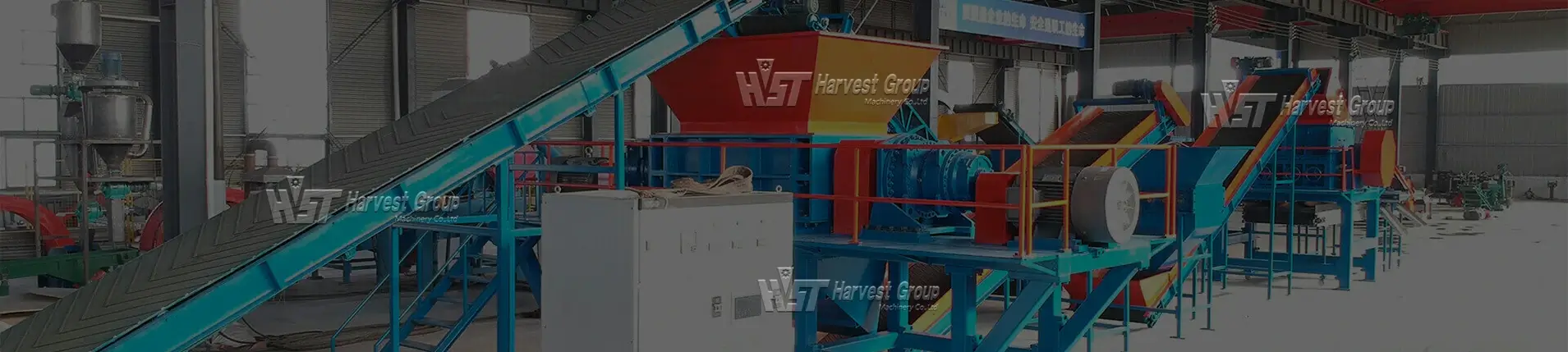
Managing large quantities of waste tires is a common challenge for landfills, transfer stations and waste management companies. Whole tires are bulky, difficult to compact and expensive to transport. A single-pass tire shredding system reduces whole tires into manageable tire shreds in one main shredding stage, making storage, transportation and downstream recycling much easier.
Unlike a complete tire recycling plant designed to produce fine rubber granules or crumb rubber, a landfill tire shredding system focuses on fast size reduction, high throughput and simple operation. A typical system combines an in-feed conveyor, a heavy-duty tire shredder machine, a screening or return system when required, and a discharge conveyor.
The finished tire shreds can be used for landfill volume reduction, TDF production, TDA applications or as feedstock for further processing. For landfill operators that mainly need to reduce tire volume, this simple configuration often provides a lower-cost alternative to a complete multi-stage recycling line.
Whole tires contain a large amount of empty space and are difficult to handle as bulk material. Shredding them into smaller pieces reduces their volume and makes them easier to move with conveyors, loaders, trucks and containers. This is especially important for facilities receiving a continuous supply of passenger car tires, truck tires and other commercial waste tires.
A single-pass system also reduces the number of machines required. Instead of using several shredders, grinders and granulators, whole tires pass through one primary shredding stage to produce coarse tire shreds. This means fewer machines to maintain, lower labor requirements and a simpler plant layout.
For many landfill applications, the required output does not need to be extremely small. Tire shreds in the range of approximately 50–150 mm are often suitable for volume reduction, transportation, TDF preparation or further recycling. When smaller or cleaner rubber products are required, additional tire recycling machine can be added downstream.
The process is straightforward. Whole tires are loaded onto an in-feed conveyor and transported toward the primary shredder. The shredder uses low-speed, high-torque cutting shafts to grab, tear and shear the tires into smaller pieces. The processed material then leaves the machine through a discharge conveyor.
When a more consistent output size is required, a screen can be installed to separate correctly sized tire shreds from oversized pieces. Oversized material can be returned to the shredder for further cutting. A vibrating screen for tire recycling can also be incorporated into larger processing systems when material classification is required.
The basic process can be summarized as:
Whole Waste Tires → In-Feed Conveyor → Tire Shredder → Screening / Size Control → Discharge Conveyor → Tire Shreds
For basic landfill volume reduction, the system can remain very simple. If the facility later wants to produce smaller rubber chips, rubber granules or crumb rubber, secondary shredding and separation equipment can be added without replacing the primary shredder.
The feeding conveyor delivers whole tires continuously to the shredder. Stable feeding helps maintain consistent capacity and reduces the need for operators to manually place tires into the cutting chamber. Conveyor length and width can be selected according to tire size, plant layout and required throughput.
The tire shredder is the core machine in the system. It should provide high torque, strong shafts, durable cutting blades and reliable overload protection. For landfill applications, the machine must be able to handle variations in tire diameter, rubber thickness and steel content.
Passenger tires are relatively easy to process, while truck and bus tires contain stronger steel reinforcement and require more powerful equipment. Very large OTR or mining tires may need pre-cutting before shredding. In these applications, a tire cutting machine can be used before the primary shredder.
A screening and return system is useful when the final tire shred size must stay within a controlled range. Properly sized pieces continue to the discharge conveyor, while oversized pieces are automatically returned to the shredder. This allows the system to maintain a more consistent final product without adding another major size-reduction machine.
The discharge conveyor transports finished tire shreds away from the shredder. Depending on the project, the material can be discharged into a stockpile, container, truck or downstream recycling system. A longer conveyor can create a larger stockpile and reduce loader handling frequency.
The correct tire shredder depends on the maximum tire size, required output size and tons of tires that must be processed each hour. Smaller systems may be suitable for collection centers or low-volume landfill operations, while large municipal or commercial facilities usually require higher-capacity industrial shredders.
| Model | Input Size | Output Size | Capacity | Motor | Blades | Dimensions | Weight |
| TS-800 | 800 mm | 50×50 mm | 1–2 T/h | 2×22 kW | 16 pcs | 4×2.6×3.2 m | 8 T |
| TS-1200 | 1200 mm | 60×60 mm | 3–5 T/h | 2×45/55 kW | 20 pcs | 4.8×2.8×3.5 m | 14 T |
| TS-1600 | 1600 mm | 50–150 mm | 6–8 T/h | 2×75 kW | 16–30 pcs | 5×2×3.4 m | 18 T |
| TS-1800 | 1800 mm | 50–150 mm | 7–10 T/h | 2×90/110 kW | 20–24 pcs | 5.6×2×3.4 m | 23 T |
| TS-2000 | 2000 mm | 75–200 mm | 10–15 T/h | 2×110 kW | 20–30 pcs | 6×2.4×4 m | 36 T |
| TS-2400 | 2400 mm | 100–200 mm | 20–30 T/h | 2×160 kW | 16–24 pcs | 7.4×3.2×5.2 m | 56 T |
The figures above provide a general reference for different production scales. Final capacity can vary according to tire type, feeding conditions, required shred size and system configuration. A plant processing mainly passenger tires will have different operating conditions from one handling a high percentage of truck tires.
The best output size depends on what happens to the tire shreds after processing. For simple landfill management and volume reduction, large tire shreds are usually sufficient. Producing a smaller particle size requires more cutting, more energy and potentially additional processing equipment.
| Output Size | Typical Product | Common Application | Recommended Processing |
| 100–200 mm | Rough Tire Shreds | Volume reduction, storage and transportation | Primary tire shredder |
| 50–150 mm | Tire Shreds / TDF Chips | TDF preparation and further recycling | Primary shredder with size control |
| 20–50 mm | Rubber Chips | Secondary recycling and material preparation | Additional shredding or rasper stage |
| 1–5 mm | Rubber Granules | Rubber tiles, sports surfaces and molded products | Granulation and material separation |
| Fine Mesh | Crumb Rubber Powder | Rubber products and modified asphalt | Multi-stage grinding system |
This is why a single-pass landfill tire shredder should not be confused with a complete crumb rubber production plant. The purpose of the landfill system is fast and economical size reduction, while fine rubber production requires several additional processing stages.
A single-pass tire shredding system and a complete tire recycling plant both begin with waste tires, but their final products and equipment configurations are very different.
| Item | Single-Pass Tire Shredding System | Complete Tire Recycling Plant |
| Main Purpose | Volume reduction and rough shredding | Material recovery and rubber production |
| Feed Material | Whole tires | Whole tires or pre-processed tires |
| Main Equipment | Shredder, conveyor and optional screen | Shredder, rasper, granulator and separators |
| Typical Output | 50–200 mm tire shreds | Rubber chips, granules or powder |
| Steel Separation | Usually not complete | High-level steel separation |
| Fiber Separation | Usually not required | Required for clean rubber granules |
| Investment | Lower | Higher |
| Typical User | Landfills, transfer stations and waste operators | Commercial tire recycling plants |
If the main objective is only to reduce tire volume or prepare tire chips for fuel, there is usually no reason to install a complete granulation line. A simple primary shredder system requires less space and is easier to operate.
When the target is clean rubber granules, crumb rubber or separated steel and fiber, the shredded tire material must continue into a complete rubber recycling plant.
Tire shredding does not mean the material must remain in the landfill. Once whole tires have been reduced to a manageable size, the tire shreds can enter several downstream applications.
One common option is tire-derived fuel. Tire shreds can be further sized according to the requirements of cement plants or industrial fuel users. Facilities focused on this market can use a dedicated TDF tire recycling line when tighter fuel specifications are required.
Large tire shreds can also be used as tire-derived aggregate in suitable civil engineering applications. Other landfill operators may sell the shredded material to downstream recycling plants, where the tires are processed into rubber chips, mulch, granules or crumb rubber.
This gives landfill operators more flexibility. A simple tire shredding system can first solve the immediate problem of bulky waste tires while leaving open the possibility of recovering more value from the material later.
The first factor is the type of tires being processed. A facility receiving mainly passenger car tires requires a different machine from one handling large quantities of truck, bus or agricultural tires. Maximum tire diameter should always be confirmed before selecting the shredder.
Capacity is equally important. Operators should calculate how many tons of tires need to be processed each day and how many hours the system will operate. A landfill processing 40 tons during an eight-hour shift requires an average capacity of about 5 tons per hour, but additional capacity should normally be allowed for feeding interruptions and routine maintenance.
The required output size must also be determined before equipment selection. If the goal is only volume reduction, 100–150 mm shreds may be sufficient. If the final material will be sold as TDF, a smaller and more consistent output may be required.
Maintenance access should also be considered. Tire shredding places heavy loads on blades, shafts and bearings. A practical machine design should allow operators to inspect and replace wear parts without excessive downtime. Automatic overload protection, reverse control and coordinated conveyor operation can further reduce operating problems.
A single-pass system is a practical choice when the main goal is to process whole tires quickly without installing a complex recycling plant. It is particularly suitable for landfills, tire collection centers, transfer stations, waste management companies and tire stockpile cleanup projects.
The system works best when the required final product is a coarse tire shred for volume reduction, TDF, TDA, transportation or secondary recycling. If the target product is steel-free rubber mulch, 1–5 mm rubber granules or fine crumb rubber powder, additional shredding, grinding and separation equipment will be required.
The most effective system therefore begins with the final product. By confirming tire size, hourly capacity, desired output and downstream use before selecting equipment, operators can avoid unnecessary investment and build a tire shredding line that matches their actual waste stream.
For many landfill applications, a properly configured single-pass tire shredding system provides the simplest route from bulky whole tires to manageable, reusable tire shreds while keeping operating and maintenance requirements under control.