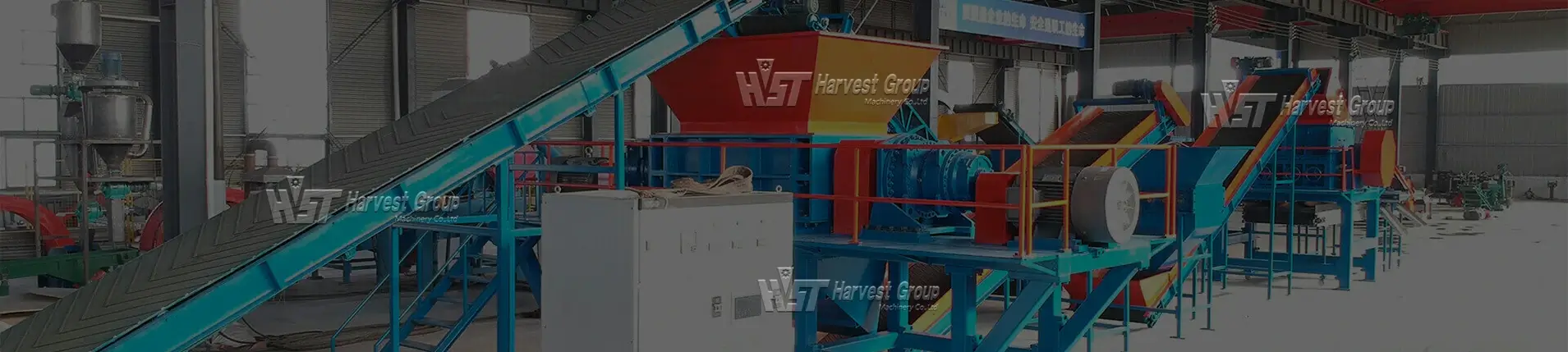
A truck tire looks simple from the outside, but it is one of the more difficult materials to process in a tire recycling plant. The rubber is thick, the tire body is heavy, and the concentrated bead wire can place severe stress on a light-duty shredder. That is why the real buying question is rarely, “Which shredder is the cheapest?” It is usually, “Which process route will keep the line feeding, cutting, and discharging predictably every day?”
For truck and bus tire recycling, choose a tire shredder with a heavy-duty cutting chamber, strong shafts and blades, a controllable screening system, and sufficient space for feeding, discharge, and maintenance.
Passenger car tires can be processed directly in many primary shredding layouts. Truck tires are different. Their higher steel content, stronger bead areas, and larger tire bodies increase torque demand and place more stress on blades, gearboxes, and feeding equipment. For this reason, wire drawing, bead cutting, or tire cutting is often recommended before shredding to reduce the cutting load.
The shredder is only one part of the system, and this distinction is very important. A truck tire line also needs a practical loading method, space for pre-cut or debeaded material, a way to control oversized output, and a downstream route for steel, rubber, and fiber separation.
When the feedstock consists mainly of all-steel radial truck tires, the pretreatment route should be the first design decision, rather than motor power. A larger motor alone cannot fully solve bead wire wrapping, unstable feeding, or a mismatched output size.
For projects using industrial tire recycling equipment, the front-end process should be selected after confirming the tire type, steel content, target discharge size, and final product. A TDF chip project does not require the same downstream machines as a crumb rubber or rubber powder plant.
When bead wire protection is important, a tire wire drawing machine can pull the bead steel wire from prepared tire rings before cutting or shredding. When the project needs to open the bead or sidewall area first, a waste tire bead cutting machine helps reduce the direct stress placed on the shredder blades by concentrated steel rings.
For large all-steel truck tires, agricultural tires, or oversized tires that are difficult to feed directly, a tire cutting machine can divide whole tires into manageable sections.
After pretreatment, a heavy-duty tire shredder machine uses a low-speed, high-torque, dual-shaft shearing structure. A disc screen and return system control oversized pieces and help maintain a more consistent output.
| Incoming Tire Condition | Recommended Front-End Route | Reason |
| Truck and bus tires with heavy bead wire | Wire drawing or bead cutting → tire shredding | Reduces the impact of hard steel and helps protect the shredder blades. |
| Mixed passenger car and truck tires | Sorting → adaptable feeding → primary shredding with screen return | Improves the feeding rhythm and reduces uneven discharge. |
| Large all-steel tires or tires with thick bodies | Hydraulic cutting → primary shredding | Makes oversized tires easier and safer to feed. |
| TDF chip production | Pretreatment as needed → shredding → screening and return → optional magnetic separation | Chip size consistency and steel tolerance determine market acceptance. |
A practical truck tire shredder quotation should not be based on the machine name alone. The same phrase, “truck tire shredder machine,” can describe very different layouts depending on tire diameter, steel content, target chip size, and capacity.
Before asking for a price, provide the maximum tire outer diameter, width, and weight.
State whether truck tires appear occasionally, form part of a mixed feedstock, or account for most of the truck and bus tires being processed.
Confirm whether the bead wire will be removed, cut, or fed into the shredder.
Specify whether the required output is rough tire shreds, TDF chips, rubber chips, granulator feedstock, or material for a rubber powder line.
Provide the target hourly capacity and daily operating hours.
Explain whether the downstream plan includes TDF shipment, magnetic separation, granulation, fiber removal, or grinding.
Provide the workshop space, power supply, loading method, and available maintenance access.
Truck tire shredding is not complete simply because the tire has become smaller. The value of the output depends on whether it meets the requirements of the next buyer or the next machine. EPA materials identify tire-derived fuel, civil engineering applications, ground rubber, and rubberized asphalt as major scrap tire markets. Therefore, the shredder should be selected with the end market in mind rather than as an isolated machine.
If the target product is TDF, the line usually focuses on larger fuel chips and stable oversize control. If the target is landscaping or civil engineering rubber chips, a rubber mulch production line requires additional steel liberation, magnetic separation, and screening. Producing smaller material in a tire crumb rubber or rubber powder plant requires further granulation, fiber separation, and grinding.
| Output Target | Typical Purpose | Production Line Requirement |
| Rough tire shreds | Volume reduction and first-stage sizing | Focuses on primary shredding; screening may be basic or project-specific. |
| TDF chips | Alternative fuel preparation | Requires controlled chip size, a possible return conveyor, and metal handling. |
| Rubber chips or mulch | Landscaping, civil engineering, and secondary recycling | Requires further steel liberation, magnetic separation, and screening. |
| Granulator feedstock | Crumb rubber production | The primary output must match the granulator and separation system. |
| Crumb rubber or rubber powder | Rubber products, asphalt modification, and rubber compounds | Requires multiple downstream size-reduction and cleaning stages. |
Truck tire shredding equipment operates within a larger scrap tire management system. USTMA reported that 79% of U.S. end-of-life tires entered tire recycling and reclamation markets in 2023, while also noting that continued market development is needed to manage end-of-life tire generation. For buyers, the conclusion is straightforward: the shredder should be selected around a real market for the output.
CalRecycle describes tire-derived aggregate as chipped tire material used in applications such as lightweight fill, vibration mitigation, road repair, embankment construction, and drainage. ASTM D6270 also provides guidance for using processed or whole scrap tires in civil engineering applications. These references do not replace local permitting requirements, but they demonstrate why controlled size reduction and material cleanliness matter beyond the machine room.
For TDF, the EPA notes that scrap tires have a high heating value and can be used as fuel in suitable industrial systems. However, the EPA also emphasizes state and local regulation of scrap tire storage, collection, processing, and use. A serious truck tire shredding project should therefore check local requirements for tire storage, fire prevention, hauling records, and permitted end markets before finalizing the equipment.
Truck tires are elastic and reinforced with steel. A low-speed, high-torque dual-shaft shredder grips and shears tires instead of relying on high-speed impact. This design is better suited to irregular rubber materials and sudden changes in the feeding load.
Blade thickness, alloy selection, hook geometry, and spacer arrangement affect the output size, cutting stability, and maintenance cost. A buyer should ask about spare blade planning and maintenance access, rather than reviewing only the motor list.
Oversized discharge is common when a tire is tough, elastic, or only partially cut. A disc screen and return conveyor can send large pieces back for another cutting cycle, reducing manual sorting and improving downstream consistency.
Truck tires are heavy. The conveyor angle, hopper opening, forklift access, emergency stop positions, inspection platforms, and discharge height should be checked on the layout drawing before purchase.
Steel can be managed before shredding through bead wire removal, during shredding through stronger blades and sufficient torque reserve, or after shredding through magnetic separation. The correct choice depends on the final output and the acceptable residual steel level.
Torque, shaft design, blade structure, the screening and return system, and the feeding method matter more than a single motor power figure.
Heavy bead wire can accelerate wear, wrap around the shafts, and reduce output stability.
TDF, rubber mulch, crumb rubber, and rubber powder require different processing routes.
A shredder that is difficult to inspect will create more downtime and higher maintenance costs.
A truck tire line may require sorting, cutting, debeading, or loader support to keep the shredder supplied at a stable rate.
It can be configured to process whole or pretreated truck tires, but the correct configuration depends on the maximum tire diameter, steel content, bead condition, and target output size. For many heavy radial truck tires, bead wire removal, bead cutting, or pre-cutting is recommended before shredding.
Heavy-duty dual-shaft shredders are commonly used for large truck tires because they operate with low-speed, high-torque shearing. The exact model should be selected according to the tire size, hourly capacity, output target, and downstream process.
If the project processes many truck or bus tires with strong bead wire, a tire debeader or bead cutter can reduce the impact of thick steel and help protect the downstream blades. If the feedstock consists mainly of smaller passenger car tires, direct shredding may be practical, depending on the shredder design.
TDF projects commonly use larger tire chips than crumb rubber plants. The exact size and steel tolerance should be confirmed with the fuel user because cement kilns, boilers, and other industrial users may have their own specifications.
Provide tire photographs, tire types, maximum tire diameter, the percentage of truck tires, required output size, target capacity, downstream product, power supply, and workshop layout. This information makes it possible to prepare a practical production line proposal rather than a generic machine list.
Provide the tire size range, truck tire ratio, output target, and workshop space. HVST can match the pretreatment equipment, primary shredder, screening and return system, conveyors, and downstream separation equipment to the project.
Request a customized configuration for your truck tire recycling project.