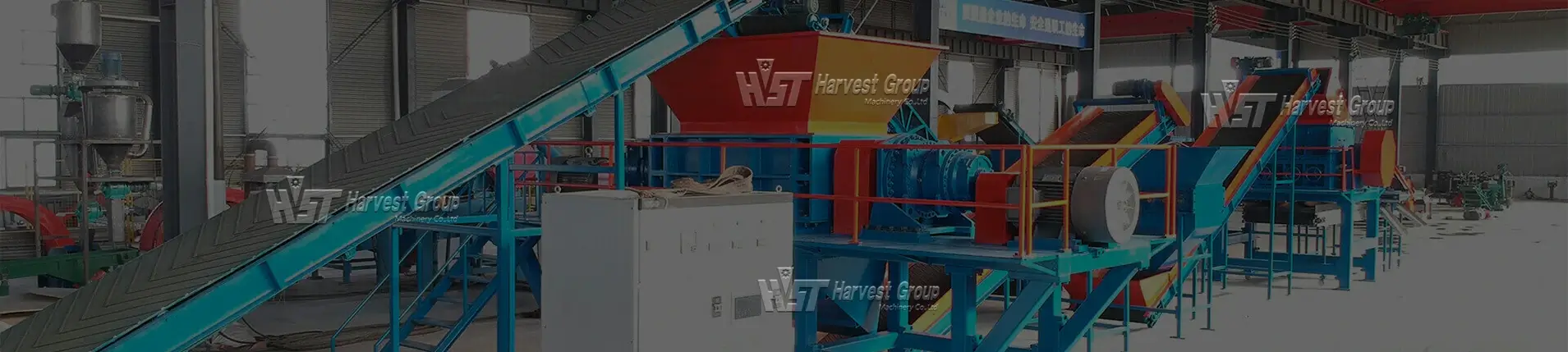
End-of-life tires, also known as ELTs or scrap tires, have long been regarded as a difficult form of solid waste. They are bulky, resistant to natural degradation, and may create fire hazards, standing water, mosquito breeding, and environmental pollution when stored outdoors for extended periods.
From a resource recovery perspective, however, end-of-life tires are not worthless waste. Tires contain rubber, bead wire, body steel, and textile fibers. Through proper sorting and mechanical processing, they can be converted into used tires, tire-derived fuel chips, tire-derived aggregate, rubber granules, rubber powder, recovered steel, and pre-processed pyrolysis feedstock.
There is no single answer to the question, “How can you make money from end-of-life tires?” A sustainable business model must consider how many waste tires are consistently available, whether disposal fees can be charged, what local buyers need, the particle size and purity they require, transportation distance, operating costs, and local environmental and fire-safety rules.
For entrepreneurs, small and medium-sized recycling plants, and environmental project investors, a tire recycling business can begin with collection and resale services and gradually expand into tire shredding, rubber granulation, rubber powder production, and recycled rubber product manufacturing. A properly planned rubber recycling plant can generate revenue from several products instead of relying on a single output.
End-of-life tire recycling can be profitable, but purchasing a set of machines does not automatically guarantee profitability. A project can only produce sustainable returns when feedstock supply, equipment configuration, finished products, and buyer demand work together.
Some companies earn revenue from tire collection and disposal services. Others rely on the sale of rubber chips, granules, steel wire, or other recycled products. In suitable markets, a business may earn from both the incoming tires and the products made from them.
A tire recycling business generally has three sources of revenue:
Conventional manufacturers normally pay for their raw materials. In some markets, tire recycling companies can obtain scrap tires at a low cost or free of charge. They may even be paid by the tire generator to remove and process them.
After sorting and processing, those tires can be converted into several saleable products. Depending on local conditions, income may come from collection services, used tire sales, recovered steel, recycled rubber products, textile fiber, and other by-products.
Disposal fee policies, product prices, and recycling costs vary significantly by country and region, so a universal profit margin should not be applied to every project.
An end-of-life tire is a composite resource made from several different materials. Each component corresponds to a different market and processing method.
| Resource in the Tire | Potential Product | Typical Buyers or Applications | Main Factors Affecting Value |
| Reusable whole tire | Used tire | Used tire dealers, repair shops, and vehicle fleets | Tread depth, aging, bulges, and structural damage |
| Retreadable casing | Retreaded tire | Transportation fleets and industrial vehicle operators | Casing integrity and tire type |
| Bead wire and body steel | Recovered steel wire | Metal recyclers and steel companies | Steel purity and residual rubber |
| Coarse rubber chips | TDF, TDA, or downstream processing feedstock | Cement plants, engineering contractors, and crumb rubber plants | Particle size, steel content, and available supply |
| Rubber granules | Sports surfacing, rubber tiles, and rubber mulch | Building material manufacturers and surfacing contractors | Particle size, fiber content, and purity |
| Rubber powder | Modified asphalt and reclaimed rubber products | Asphalt plants and rubber product manufacturers | Mesh size and residual steel and fiber content |
| Tire textile fiber | Selected filling or auxiliary material | Construction material, energy, or other industrial users | Purity, rubber content, and local demand |
| Pre-processed tire material | Pyrolysis feedstock | Tire pyrolysis plants | Size, moisture, impurities, and steel requirements |
Tires that still meet tread depth requirements and show no obvious cracks, bulges, deformation, or internal structural damage may enter the used tire market after professional inspection. This model does not require complex processing, and an individual reusable tire may be worth more than the material recovered by shredding it. Safety inspection and compliance with local regulations remain essential.
The steel contained in tires can be separated through debeading, size reduction, and magnetic separation. The higher the steel purity and the lower the residual rubber content, the easier it is to sell. Recovered steel should be included in the project’s total revenue calculation rather than treated merely as waste.
After shredding, steel separation, granulation, fiber separation, and screening, waste tires can be converted into 50–150 mm tire chips, 20–50 mm rubber chips, 1–4 mm rubber granules, 10–20 mesh rubber powder, 20–40 mesh rubber powder, and finer material for specialized applications.
As the required product becomes finer, the number of processing stages generally increases. Electricity consumption, cooling, dust collection, screening, and maintenance requirements also become more demanding.
The profitability of an end-of-life tire project does not depend only on the selling price of the final product. Feedstock, transportation, tire type, product purity, actual plant output, and downstream demand often have a greater effect on the final result.
Waste tire feedstock is generally purchased, collected free of charge, or collected while charging a disposal fee. The difference between these models directly affects the profit generated from every ton of tires processed.
Whole tires are bulky and have a low bulk density. Even when the tires themselves are free, long transport distances can consume a large portion of the expected margin through fuel, vehicles, labor, loading, and unloading costs.
Passenger car tires, truck tires, and OTR tires differ in size, construction, steel content, and rubber composition. They also require different pre-processing equipment, shredder torque, blade designs, and production capacities.
Residual steel and textile fiber directly affect the grade and selling price of rubber granules. Producing high-purity material usually requires more complete magnetic separation, air separation, screening, and recirculation systems.
The rated capacity of a machine is not necessarily the same as the plant’s long-term operating capacity. Actual output changes with feedstock size, tire type, required output size, screening ratio, operator experience, blade wear, maintenance, and shutdown time.
Demand for the same recycled tire product varies between regions. TDF may be easier to sell near cement plants, while 1–4 mm granules or rubber powder may be more attractive in regions with established rubber tile, sports surfacing, or rubberized asphalt industries.
Sending every collected tire directly into a shredder does not necessarily generate the highest possible profit. The processing route should be based on the remaining value and physical condition of each tire.
| Tire Condition | Recommended Processing Method | Investment Level | Main Revenue Source |
| Still safe for use | Resale as a used tire | Low | Whole-tire sales |
| Casing remains suitable for retreading | Tire retreading | Medium to high | Retreaded tire sales |
| Unusable but suitable for material recovery | Mechanical recycling | Medium to high | Steel, rubber chips, granules, and powder |
| Suitable for a pyrolysis feed system | Pre-processing and supply to a pyrolysis plant | Medium | Standardized pyrolysis feedstock |
| Severely contaminated or mixed with excessive impurities | Cleaning and further evaluation | Depends on the project | Depends on cleaning and disposal costs |
Tires that still meet the required tread, sidewall, and structural conditions may be more valuable when sold directly than when mechanically processed. Potential buyers include used tire dealers, repair shops, transportation fleets, agricultural vehicle operators, and compliant overseas markets. Whether a tire can safely return to service should be determined according to applicable inspection standards rather than appearance alone.
Truck tires, bus tires, and selected industrial tires have relatively thick casings and may be suitable for retreading. Retreading can create significant value, but it requires casing inspection, buffing, tread application, curing, and strict quality control. It is not suitable for every start-up recycling project.
Tires with severe wear, cracking, deformation, or no retreading value can enter a mechanical recycling line to produce rubber chips, granules, powder, and recovered steel wire.
The following eight business models cover the main profit opportunities, from low-investment collection services to higher-value material processing and finished-product manufacturing.
| Business Model | Typical Product or Service | Investment Level | Main Customers | Main Challenge |
| Collection and disposal services | Waste tire collection service | Low | Tire shops, fleets, and repair centers | Transportation and licensing |
| Used and retreadable tire sales | Reusable whole tires | Low to medium | Dealers and vehicle fleets | Safety inspection |
| TDF production | Tire-derived fuel chips | Medium | Cement plants and industrial boilers | Size, steel content, and environmental standards |
| TDA production | Engineering tire aggregate | Medium | Engineering contractors and municipal projects | Engineering standards and project approval |
| Semi-finished rubber chips | Downstream processing feedstock | Medium | Granule plants, powder plants, and pyrolysis plants | Consistent specifications and transportation |
| Rubber granules and powder | 1–4 mm granules and rubber powder | Medium to high | Tile plants, asphalt plants, and rubber manufacturers | Purity, energy use, and market demand |
| Rubber mulch and molded products | Mats, speed bumps, and related products | High | Building material suppliers and end users | Molds, certification, and sales channels |
| Pyrolysis feedstock preparation | Uniformly sized tire material | Medium | Pyrolysis plants | Size, moisture, and impurity control |
Companies that generate waste tires need a compliant way to handle them. A recycling company can establish long-term cooperation with tire dealers, repair centers, transportation companies, bus fleets, logistics companies, mining and construction fleets, municipal collection centers, and vehicle dismantling businesses.
How the model earns revenue. Income may come from scheduled collection fees, disposal fees charged per tire, bulk transportation charges, and the subsequent resale or processing of the collected tires. Whether disposal fees can be charged depends on local solid-waste policies and market competition.
Who it suits. This approach may suit first-time entrepreneurs, companies that already own transport vehicles, operators with established relationships with tire dealers, and investors who do not yet have the budget for a large processing line.
Separating reusable tires from the waste stream helps avoid unnecessary processing. Inspection should cover remaining tread depth, sidewall cracking, bulges, deformation, repair history, casing damage, aging, production date, and the minimum standards permitted locally.
Truck tires, bus tires, selected industrial tires, and selected OTR tires may be evaluated for retreading. Not all OTR tires can enter the same retreading or recycling line; equipment must be selected according to diameter, width, weight, and construction.
TDF is the abbreviation for Tire-Derived Fuel. Tire rubber has a relatively high heating value and, after shredding, may be used as an alternative fuel in industrial facilities that meet the applicable permitting and emission requirements.
Typical buyers include cement kilns, paper mills, lime kilns, industrial boiler operators, and selected power-generation or metallurgical facilities. A dedicated TDF shredder and screening system can be configured around the chip size and steel-content requirements of the intended buyer.
| Specification | What the Buyer May Evaluate |
| Particle size | Whether the tire chips are suitable for the conveying and combustion system |
| Steel content | Whether exposed or residual steel is permitted and the maximum acceptable percentage |
| Moisture content | Whether moisture affects heating value and storage |
| Heating value | Whether the material meets the alternative fuel requirement |
| Impurities | Whether the material contains soil, stones, or other foreign materials |
| Supply volume | Whether a stable monthly supply can be maintained |
| Packaging and transportation | Whether the product will be shipped in bulk, jumbo bags, or another form |
The TDF market may require large volumes, but investors should first confirm that industrial buyers with the required legal permits are available within a practical transportation radius.
TDA is the abbreviation for Tire-Derived Aggregate. It generally refers to tire chips or rubber pieces prepared for civil engineering applications such as road foundations, embankment fill, lightweight fill, drainage layers, landfill drainage structures, thermal insulation, and vibration or noise reduction.
TDA is not simply any form of shredded tire material. Products may need to meet project-specific requirements for particle size, exposed metal, impurities, density, drainage performance, and environmental or engineering standards. This route is therefore more suitable for companies that have already confirmed demand from engineering contractors or municipal projects.
Not every company needs to process whole tires all the way into fine rubber powder. Projects with limited equipment budgets, or those located near established granule and powder factories, can focus on primary processing.
Potential buyers include rubber granule plants, rubber powder plants, reclaimed rubber manufacturers, pyrolysis plants, molded-product factories, and TDF processors. This model requires fewer machines, consumes less energy than fine grinding, and is easier to operate and maintain. Granulation and grinding equipment can be added later as the buyer network develops.
The main limitation is transport. Rubber chips still occupy considerable volume, so the model works best when downstream processing companies are located nearby.
Rubber granules and rubber powder are common higher-value products in mechanical tire recycling. A complete crumb rubber machine line normally combines size reduction, steel separation, granulation, fiber removal, screening, and material recirculation.
| Product | Example Specification | Typical Application |
| Coarse rubber granules | 5–20 mm | Rubber mulch, selected engineering uses, and molded products |
| Fine rubber granules | 1–4 mm | Rubber tiles, sports surfaces, and shock-absorbing products |
| Standard rubber powder | 10–20 mesh | Reclaimed rubber and construction materials |
| Fine rubber powder | 20–40 mesh | Rubberized asphalt and rubber products |
| Finer rubber powder | According to buyer requirements | Specialized composite materials and other demanding applications |
Specific product specifications must always be determined according to buyer requirements and local standards.
Rubber granules can be used in rubber floor tiles, gym flooring, playground cushioning, sports surfaces, artificial turf systems, industrial shock-absorbing products, and molded rubber goods. Certain sports and children’s applications may also require stricter testing for material safety, heavy metals, volatile substances, and environmental performance.
Rubber powder can be used in rubberized asphalt, reclaimed rubber, waterproofing products, acoustic materials, composite construction materials, and industrial rubber products.
Finer powder is not automatically more profitable. Fine grinding generally requires more machinery, electricity, cooling, screening, dust control, and wear-part replacement. It only makes commercial sense when the market price covers these additional costs and stable orders are available.
Processing granules into finished products can reduce dependence on commodity material prices. Rubber mulch may be used in landscaping, pathways, pet areas, and selected playground or community applications, provided the product complies with local safety and environmental standards.
A rubber mulch machine can be configured to produce screened and cleaned mulch in the sizes required by landscaping or surfacing buyers.
Rubber granules can also be mixed with binders or other materials to manufacture floor mats, speed bumps, wheel stops, livestock mats, gym tiles, impact blocks, industrial vibration pads, and sound-insulation components. These products normally require mixing equipment, binder dosing, molds, hydraulic presses, curing, finishing, and quality inspection.
Molded products may sell for more than loose granules, but they also bring higher costs for product development, certification, molds, sales, and inventory.
A company does not need to invest in pyrolysis equipment to participate in that supply chain. It can instead prepare whole tires, cut tires, debeaded tires, uniformly sized chips, or low-steel rubber material according to the feed requirements of a nearby pyrolysis plant.
Standardized pre-processing can improve feeding efficiency, reduce blockage, simplify storage and loading, control moisture and impurities, and create more consistent batches. Pyrolysis itself can produce oil, recovered carbon black, steel, and combustible gas, but it is subject to separate permitting, emission-control, and product-quality requirements.
There is no single product that delivers the highest profit in every market. The best choice depends on investment capacity, local demand, energy prices, available feedstock, and the ability to operate and maintain the plant.
| Investment Level | Suitable Business Model | Main Equipment | Advantages | Main Risks |
| Low | Collection, sorting, and used tire resale | Transport, inspection tools, and basic handling equipment | Fast start-up and limited machinery | Dependence on feedstock access and manual sorting |
| Medium | TDF, TDA, and coarse rubber chips | Pre-processing, shredding, and screening equipment | Relatively simple production and large-volume markets | Dependence on bulk industrial buyers |
| Medium to high | Rubber granules | Shredding, steel separation, granulation, and fiber separation | More potential applications | Higher purity and market requirements |
| High | Fine rubber powder | Complete granule line, grinding, cooling, and dust collection | Higher potential product value | High energy and maintenance costs |
| High | Molded rubber products | Granule line, mixing, molding equipment, and molds | Access to end-product markets | Sales, certification, and inventory pressure |
A reliable project model should calculate finished-product revenue minus feedstock, transportation, electricity, labor, wear parts, maintenance, packaging, site, and compliance costs.
If a nearby cement plant buys TDF in large volumes, a simple chip line may outperform a fine-powder project. In a market with established rubber-product and asphalt industries, granules or powder may offer more value. The profitable option is the product that has a buyer, can be made consistently, and leaves an acceptable margin after all costs.
The equipment configuration should be selected around the target product. A TDF line and a 20–40 mesh rubber powder plant do not require the same machinery, power, or process controls. Buyers comparing tire recycling equipment should therefore begin with tire type, required output size, product purity, and hourly capacity.
Common pre-processing machines include tire hook debeaders, bead cutters, sidewall cutters, tire sectioning machines, and OTR dismantling equipment. Large OTR tires generally cannot be fed into an ordinary passenger-car or truck-tire shredder without first being reduced to manageable sections.
A tire sidewall cutter machine separates the sidewall from the tread, while a tire debeader machine removes the heavy bead wire before downstream size reduction. Whether these steps are necessary depends on tire construction, shredder design, and the target product.
The tire shredder converts whole or pre-cut tires into larger chips. Selection should be based on the maximum feed size, tire type, whole-tire feeding requirement, target output, actual capacity, motor and gearbox configuration, blade material, screen and recirculation design, steel-wrapping control, and safety protection.
The initial investment should not be judged only by the advertised tire shredder machine price. Blade life, energy use, maintenance access, throughput under the required output size, and the cost of unplanned stoppages all affect the real cost per ton.
Bead wire may be removed before shredding to reduce the load on later equipment. Fine steel released during secondary size reduction can then be recovered with suspension magnets, drum magnets, or multi-stage magnetic separation.
A rubber granulator machine reduces the cleaned rubber material into smaller granules. Producing a consistent 1–4 mm product usually requires multi-stage processing, screening, and recirculation rather than a single pass through one machine.
Textile fiber is separated by air classification, negative pressure, and screening. The removal efficiency affects surface cleanliness, density, molding performance, and the price accepted by downstream buyers.
Producing 20–40 mesh or finer powder requires grinding equipment, cooling, screening, and dust collection. A properly matched rubber powder machine must control heat buildup, rubber softening, screen blockage, dust, wear, and final particle-size consistency.
| Target Product | Typical Equipment Process |
| TDF tire chips | Tire pre-processing → tire shredder → screening or recirculation |
| TDA engineering aggregate | Pre-processing → shredding → size control → metal inspection |
| Steel-free rubber chips | Shredding → secondary size reduction → magnetic separation |
| 1–4 mm rubber granules | Pre-processing → shredding → steel separation → granulation → fiber separation → screening |
| 20–40 mesh rubber powder | Granule production line → grinding → cooling → screening → dust collection |
| Molded rubber products | Granule production → screening → mixing → molding → curing |
| Pyrolysis feedstock | Cutting or shredding → impurity removal → size control → storage and conveying |
The best model is not necessarily the one with the most equipment or the finest output. It is the one that fits the local feedstock, buyers, operating costs, and available capital.
Before selecting equipment, determine the daily or monthly supply, the proportion of passenger, truck, and OTR tires, the amount of soil and moisture, whether the tires must be purchased, whether disposal fees can be collected, whether supply changes seasonally, and the maximum tire size.
Potential buyers should be asked whether they need TDF, TDA, rubber chips, granules, powder, or pyrolysis feedstock. Confirm the accepted size, steel and fiber limits, moisture, monthly volume, packaging, delivery method, inspection, and payment terms before finalizing the process design.
| Parameter | Question to Confirm with the Buyer |
| Particle size | What are the minimum and maximum acceptable sizes? |
| Residual steel | Is steel permitted, and what is the maximum acceptable percentage? |
| Fiber content | Is there a purity or residual fiber requirement? |
| Moisture | Is there a maximum moisture-content limit? |
| Density | Will the product be purchased by weight or by volume? |
| Packaging | Will the material be shipped in bulk, jumbo bags, or smaller bags? |
| Supply volume | What are the minimum and maximum monthly requirements? |
| Testing | Is a third-party test report required? |
Equipment capacity should match the quantity of tires that can be secured consistently. If only three tons per day are available, installing a much larger line will increase depreciation, labor, site, and financing costs per ton while leaving the machinery idle.
There is no universal investment figure. Cost depends on tire type, hourly capacity, final product, automation level, local voltage, environmental requirements, building conditions, and installation scope.
Capital equipment may include pre-processing machines, tire shredders, conveyors, steel separation equipment, magnets, rubber granulators, fiber separators, screens, powder grinders, dust collection, and electrical control systems.
Ongoing expenses include tire purchasing or collection, feedstock transport, product delivery, electricity, labor, blades, screens, maintenance, rent, packaging, loading, and storage.
| Hidden Cost | Typical Items |
| Electrical system | Transformer, cables, distribution cabinets, and power-capacity upgrades |
| Civil work | Machine foundations, floor reinforcement, and building modification |
| Environmental systems | Dust collection, noise control, and waste-gas or wastewater treatment |
| Fire protection | Sprinklers, extinguishers, water supply, and spark detection |
| Material handling | Forklifts, loaders, and grab equipment |
| Storage | Feedstock, semi-finished product, and finished-product areas |
| Spare parts | Blades, screens, bearings, belts, and electrical components |
| Compliance | Permits, assessments, testing, and insurance |
A project budget should be based on the complete installed cost rather than the quoted price of the main machines alone.
Stable sales channels are central to the long-term operation of a tire recycling project. Local industrial buyers usually reduce transport costs and make regular supply arrangements easier.
Potential customers include cement plants, paper mills, industrial fuel users, building-material manufacturers, rubber tile factories, sports-surface suppliers, road contractors, asphalt companies, landscaping suppliers, pyrolysis plants, and metal recyclers.
Rubber granules, powder, recovered steel, and selected molded products may also be exported. Before signing an order, confirm the customs code, import requirements, packaging, product testing, minimum order quantity, container loading, freight, payment method, and dispute or return terms.
International transport can be particularly expensive for low-density tire chips, so container loading and delivered-cost calculations should be completed before production.
Before the plant starts production, confirm monthly purchasing volume, specifications, price-adjustment mechanisms, payment periods, inspection standards, nonconforming-material procedures, minimum supply, and contract duration with the main buyers. Long-term agreements reduce the risk of inventory accumulation and sudden price changes.
Tire recycling is a resource-recovery activity, but it still needs to comply with local solid-waste, fire, occupational-safety, and environmental regulations.
Outdoor tire storage can create fire hazards, standing water, mosquito breeding, runoff, congestion, and blocked emergency access. The site should separate incoming tires, tires awaiting inspection, processed material, steel, rubber products, and rejected material while maintaining drainage and fire lanes.
Shredding, granulation, and grinding may generate rubber dust, textile fiber, noise, heat, and metal sparks. Depending on the process and local requirements, the plant may need centralized dust collection, negative-pressure extraction, spark detection, automatic spraying, firefighting equipment, guards, emergency stops, bearing-temperature monitoring, motor-overload protection, and noise isolation.
TDF may be subject to alternative-fuel standards, TDA to engineering specifications, sports-surface granules to material-safety requirements, pyrolysis feedstock to waste-storage and transport rules, and used tires to road-safety and resale regulations. Investors should obtain advice that applies to the country and region where the plant will operate.
This is one of the most common mistakes. A plant may be completed only to discover that local buyers need another size, do not accept residual steel, purchase much less than the installed capacity, or are too far away for economical delivery.
The safer sequence is: investigate feedstock, confirm buyers, define the product specification, design the process, and then select equipment.
Whole tires, chips, granules, and powder have different loading densities. Feedstock collection, internal handling, product delivery, empty return journeys, and cross-border freight should all be included in the cost model.
Producing a finer product without confirmed demand can increase electricity, wear, dust-control pressure, and inventory without improving profit.
Residual steel can damage downstream equipment, while excess fiber affects bonding and product quality. High-purity products require a complete separation system rather than a single basic magnet.
Maximum rated output is normally measured under specific feed and discharge conditions. Larger tires, finer output, high steel content, recirculation, moisture, contamination, and worn blades can all reduce actual capacity.
The budget should also include blade repair and replacement, screens, bearings, seals, belts, motor and gearbox service, spare-parts inventory, and planned shutdown time.
A project has a better chance of operating successfully when it has a stable local tire supply, manageable transportation distance, identified buyers, clear product standards, an appropriate industrial site, access to environmental and fire approvals, sufficient working capital, capacity matched to feedstock, and reliable technical support.
If neither feedstock supply nor product sales have been confirmed, the presence of a large number of waste tires alone is not a sufficient reason to install a large production line.
There is no fixed figure that applies to every project. Annual profit depends on throughput, feedstock price, disposal fees, product mix, electricity, labor, transportation, equipment utilization, selling price, maintenance, and shutdown time. A per-ton revenue and cost model is more reliable than a universal profit estimate per tire.
There is no absolute answer. TDF and TDA involve relatively simple processing and may suit markets with large industrial buyers. Granules and powder may offer higher value but require more equipment, power, purity control, and buyer development. The best product is the one that has stable demand and leaves an acceptable margin after all costs.
Yes. A collection business may earn from collection fees, disposal fees, sorting, resale, and supplying whole or pre-cut tires to other processors. Its profitability depends heavily on transport distance, local policy, and the number of regular customers.
Feedstock requirements should be calculated from the planned operating hours and realistic plant capacity. A nominal 1-ton-per-hour line running for eight hours would require approximately eight tons of tires per day before accounting for maintenance, stoppages, recirculation, and actual operating efficiency.
The most basic mechanical-recycling machine is a tire shredder. Depending on the final product, the line may also require debeading, sidewall cutting, steel separation, magnetic separation, granulation, fiber separation, screening, powder grinding, cooling, and dust collection.
Yes. Shredded tires can be sold as TDF, TDA, pyrolysis feedstock, or semi-finished material for granule and powder plants. The process uses fewer machines and less energy, but local buyers must be confirmed first.
Potential buyers include cement plants, industrial fuel users, civil-engineering companies, pyrolysis plants, rubber tile factories, sports-surface suppliers, asphalt companies, reclaimed-rubber manufacturers, and landscaping-material suppliers.
Some recycling lines can process both, but the actual capacity, pre-processing method, and machine load will differ. The maximum tire diameter, width, weight, bead construction, shredder inlet, motor power, and gearbox torque must be checked.
Large OTR tires generally cannot be fed directly into an ordinary passenger-car or truck-tire line. They usually require dedicated OTR cutting, dismantling, bead-wire removal, and heavy pre-shredding equipment before entering downstream separation and granulation systems.
End-of-life tire recycling offers several possible revenue routes. A business can begin with collection, used tire resale, and sorting, then move into TDF, TDA, rubber granules, powder, molded products, or standardized pyrolysis feedstock as the market develops.
The key is not to pursue the finest output or the largest machine without a commercial reason. A viable project is built on three foundations: a stable and economical tire supply, buyers who can purchase the intended product over the long term, and an equipment process matched to the feedstock, product specification, and realistic capacity.
For most mechanical recycling projects, the tire shredder is the first step in converting whole tires into saleable industrial material. Steel separation, granulation, fiber removal, grinding, and molding should then be added according to local demand, investment capacity, and buyer standards.
When feedstock, processing, product quality, and sales channels form a stable loop, end-of-life tires can move from a disposal burden to a long-term commercial resource.