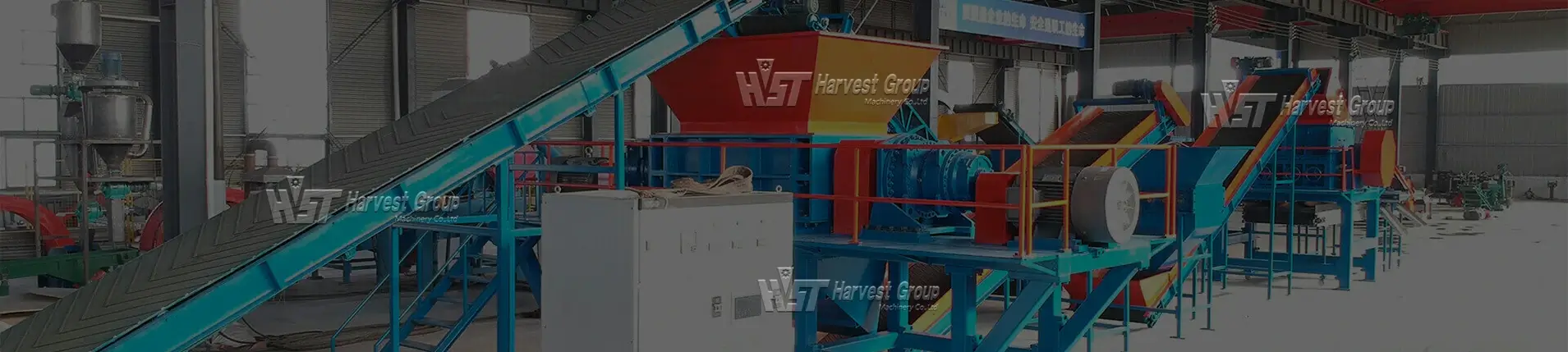
Scrap tires are one of the more difficult solid waste materials to handle in the recycling industry. Whole tires are bulky, irregular in shape and inefficient to stack, which makes storage and long-distance transportation more difficult. They are also made from a strong combination of rubber, steel wire and textile fiber, so they cannot simply be turned into tire-derived fuel, rubber mulch, rubber granules or crumb rubber without first being reduced in size.
Tire shredding is therefore one of the first and most important steps in a modern tire recycling process. An industrial tire shredder machine cuts and tears whole or pre-processed tires into manageable pieces that can be transported, separated and processed more efficiently. In a complete tire recycling plant, shredding normally takes place before steel separation, granulation and fine rubber processing.
This guide explains how industrial tire shredders work, the types of tires they can process, the main shredder configurations, tire pre-processing requirements, output materials, applications, capacity factors, blade maintenance, safety and equipment selection.
A tire shredder is an industrial size-reduction machine designed specifically for processing scrap tires. It uses cutting, tearing and compression forces to break whole tires into smaller rubber pieces or tire shreds. In the recycling industry, similar equipment may also be described as a waste tire shredder, scrap tire shredder or tire shredding machine.
The shredder normally works at the front end of a tire recycling system. A typical process starts with whole scrap tires, followed by tire shredding, secondary size reduction and material separation. The rubber can then be processed further according to the required final product.
Whole Scrap Tires → Tire Shredding → Tire Shreds → Secondary Processing → Steel and Fiber Separation → Rubber Granules or Further Processing
A common misunderstanding among first-time buyers is that a tire shredder can directly turn whole tires into fine crumb rubber. In practice, shredding and fine grinding are different stages. A primary shredder mainly reduces tire size and breaks the original tire structure so that the material becomes suitable for downstream equipment.
After shredding, tires are easier to store, transport and feed into a production line. The process also begins to loosen the bond between rubber, steel and textile fiber, making magnetic separation, fiber removal, granulation and screening more effective. Depending on the required output, tire shreds can also be used directly for applications such as TDF or civil engineering.
Whole tires have a large internal empty space and poor stacking density. A truck carrying intact tires may reach its volume limit long before it reaches its allowable payload, while a tire storage yard can quickly become crowded even when the actual weight of material is relatively low.
Once the tires have been shredded, the material can be stacked more densely and handled more easily by conveyors, loaders and storage systems. This can improve transportation efficiency and make large-volume tire processing easier to manage.
Waste tires contain rubber, steel reinforcement and textile fiber that are tightly bonded together. These materials cannot be separated efficiently while the tire remains intact. Shredding opens the tire structure and gradually releases the embedded reinforcement materials.
Downstream tire recycling equipment can then remove the steel with magnetic separation, separate textile fiber with air separation systems and classify rubber material with vibrating screens. This process allows rubber, steel and fiber to be recovered as separate material streams instead of remaining mixed together.
Whole scrap tires have limited direct-use applications, while shredded tires can be processed into a much wider range of products. Depending on particle size and material purity, recycled tire rubber can be used for TDF, rubber mulch, civil engineering applications, rubber granules, crumb rubber, rubber powder, flooring products and rubber-modified construction materials.
This is why shredding is usually considered one of the fundamental stages of tire recycling equipment systems rather than a standalone waste disposal operation.
Industrial tire shredders normally use a low-speed, high-torque cutting system rather than the high-speed impact principle used by many conventional crushers. This design is better suited to tires because tire rubber is highly elastic and contains steel belts, bead wire and other reinforcing materials that resist cutting.
Passenger car tires can usually be fed directly into a properly sized industrial shredder. Many truck tires can also be processed whole when the feed opening, cutting chamber and drive system are designed for them. Large agricultural and OTR tires are different because their diameter, width and steel structure may exceed the limits of a standard shredder.
For these larger materials, tire diameter and width must be checked before equipment selection. Feed opening size, shaft torque, blade configuration and installed power all influence whether a tire can enter the shredder directly or requires pre-processing first.
Running the shredder at relatively low speed reduces sudden impact loads, heat generation and unnecessary blade wear. At the same time, high torque provides the force needed to tear through thick rubber, steel belts and reinforced bead areas.
This operating principle also gives the machine more control when a difficult section of tire enters the cutting chamber. Instead of relying on impact, the blades grip the tire and gradually pull it between the rotating shafts.
The double-shaft shredder is one of the most common configurations used for primary tire processing. Two heavy-duty shafts rotate in opposite directions, while the cutting blades installed on the shafts grip the tire and pull it into the cutting chamber.
As the two shafts rotate, the overlapping cutters generate shearing, tearing and compression forces. The tire is gradually broken into smaller pieces and discharged below or behind the cutting chamber.
Tire Feeding → Blade Gripping → Material Pull-In → Cutting and Tearing → Tire Shreds
The output of a tire shredder is not determined by one parameter alone. Blade width, blade geometry, cutter spacing, shaft speed, screening systems and material recirculation all influence the final size. Coarse shredding generally provides higher throughput, while smaller and more uniform output normally requires additional cutting cycles or secondary processing.
Heavy bead wire, folded tire sections or unexpectedly difficult material can increase the load on the shredder. Industrial machines normally monitor motor load and can automatically reverse the shafts when a jam or overload occurs. Once the material is released, the shafts return to normal forward operation.
This function reduces unnecessary stress on the blades, shafts, gearbox and motors and helps the machine maintain more stable operation during continuous tire processing.
A complete tire recycling process normally uses several stages of size reduction. Primary shredding, secondary reduction and fine grinding serve different purposes and should not be treated as the same process.
Primary shredding begins with whole tires or large pre-cut tire sections. The purpose is to reduce volume, destroy the original tire structure and prepare manageable feed material for the next stage. The resulting tire shreds normally still contain steel wire and textile fiber.
Large shreds can then enter secondary shredders, raspers, crushers or granulators. At this stage the rubber becomes smaller and more uniform, while more steel is released from the rubber structure. Magnetic separation becomes increasingly effective as the wire is liberated.
Producing clean rubber granules requires more than a primary shredder. After coarse size reduction, the material usually passes through further crushing or granulation, steel separation, fiber separation and screening. The exact configuration depends on the required particle size and purity.
Tire Shreds → Secondary Size Reduction → Steel Liberation → Magnetic Separation → Granulation → Fiber Separation → Screening
Fine crumb rubber and rubber powder require additional size reduction and classification. A primary tire shredder cannot normally produce fine rubber powder directly. The material must continue through granulation, separation, grinding and screening until the required particle size and purity are achieved.
There is no single shredder configuration suitable for every tire recycling project. Machine selection depends on tire type, processing capacity, operating conditions and whether the equipment will be installed permanently or moved between different sites.
Double-shaft tire shredders are widely used for primary size reduction because they combine strong gripping performance with high torque and relatively low operating speed. They are well suited to continuous processing of passenger car tires, truck tires and mixed scrap tire streams when correctly configured.
A small tire shredder is generally selected for lower-throughput operations, limited tire volumes or projects with restricted installation space. The term “small” is more closely related to capacity, feed size and operating duty than to the physical dimensions of the machine itself.
Industrial tire shredders are built for commercial recycling operations that require higher throughput and longer operating hours. They normally use reinforced shafts, heavy-duty transmission systems, larger cutting chambers and stronger wear-resistant blades. These machines are more suitable for large recycling plants and projects handling substantial volumes of truck or mixed waste tires.
A mobile tire shredder combines tire shredding equipment with a transportable platform. It can be useful for landfill cleanup, temporary projects, remote tire collection sites and other operations where moving whole tires to a central plant would be inconvenient or expensive.
Passenger car tires are among the easiest scrap tires to process because they are relatively small and contain less steel than heavy truck or OTR tires. A properly sized industrial shredder can normally accept them as whole tires without complicated pre-processing.
Truck tires have larger diameters, thicker rubber sections, heavier bead wire and more steel reinforcement. These features increase cutting resistance and place greater demands on the shredder drive system and cutting chamber.
Heavy-duty industrial machines can process many truck tires directly, although some applications may benefit from bead removal or other pre-processing when blade wear or downstream steel recovery is an important consideration.
Tractor and agricultural tires can be substantially larger than passenger tires. Some can enter heavy-duty shredders directly, while larger versions may need to be divided into smaller sections first. The decision depends primarily on tire dimensions and the available shredder feed opening.
Large mining and construction tires can reach several meters in diameter and contain much heavier reinforcement than ordinary road tires. These tires generally cannot be fed directly into a conventional shredder and normally require a dedicated tire cutting machine or other pre-processing equipment.
Whole OTR Tire → Bead Processing → Sidewall Cutting → Sectioning → Pre-Cutting → Industrial Tire Shredding
Pre-processing is not required for every tire. Passenger car tires can often be shredded directly, while larger tires or tire streams containing heavy steel reinforcement may benefit from rim removal, debeading, sidewall cutting or sectional cutting before shredding.
A steel or alloy wheel rim should not enter the tire shredder. The rim is much harder than tire reinforcement and can damage cutting blades, create severe impact loads and contaminate downstream recovered steel. Removing the rim also allows the metal to be recovered separately.
The bead area contains concentrated bundles of high-strength steel wire. Removing this wire before shredding can reduce cutting resistance and blade wear, particularly when the project handles large numbers of truck or heavy-duty tires.
Sidewall cutting can make large truck tires easier to handle and reduce the amount of material entering the cutting chamber at one time. It can also be used as part of a larger pre-processing sequence before primary shredding.
Giant OTR tires are normally divided into manageable sections before shredding. In these projects, tire cutting and tire shredding are consecutive processing steps rather than competing technologies.
The output depends on how many size-reduction stages are used and what the final market requires. Primary shredders normally produce relatively large tire shreds, while secondary equipment reduces the material into smaller chips or granules.
| Processing Stage | Typical Output | Main Purpose |
| Primary Shredding | Large Tire Shreds | Volume reduction, storage, transportation and secondary processing |
| Secondary Shredding | Uniform Tire Chips | TDF production, civil engineering and downstream size reduction |
| Granulation | Rubber Granules | Steel and fiber separation and rubber product manufacturing |
| Fine Processing | Crumb Rubber / Rubber Powder | Sports surfaces, rubber flooring, modified asphalt and other rubber applications |
Coarse tire shreds are commonly produced during primary size reduction. They are easier to store and transport than whole tires and can be fed into secondary processing equipment when a smaller output is required.
Further size reduction produces smaller tire chips that can be used for TDF, civil engineering or as feedstock for additional rubber processing. Required chip dimensions vary according to the final application.
Rubber granules require further processing after shredding, while crumb rubber requires even finer size reduction. Steel wire and textile fiber also need to be removed before clean recycled rubber is suitable for higher-value applications.
Tire-derived fuel is one of the established markets for processed scrap tires. Rubber has a high calorific value, and suitable tire chips can be used in permitted industrial applications such as cement kilns and certain industrial thermal processes. TDF generally requires much less size reduction than crumb rubber production.
After steel removal and cleaning, recycled tire rubber can be processed into rubber mulch for landscaping, playground areas and other outdoor applications. Material cleanliness is particularly important because exposed steel wire is unacceptable in most finished mulch products.
Fine rubber granules can be used for rubber flooring, mats, sports surfaces, playground systems and molded products. These applications normally require more complete steel and fiber separation than coarse tire-chip applications.
Fine recycled rubber can also be used in selected rubber-modified asphalt systems. The rubber must first be processed to the particle size and quality required by the road material specification.
Larger tire chips can be used in some civil engineering projects as lightweight fill, drainage material, embankment material or other geotechnical applications. Requirements vary by country, so the processed tire material needs to comply with local engineering standards.
Reducing whole tires into smaller pieces improves stacking density and material handling. Shredded material is also easier to convey, load, weigh and move between different stages of a recycling line.
Shredding breaks the composite tire structure and allows steel and textile fiber to be progressively released. This makes later magnetic separation and fiber separation more effective and improves the quality of the recovered rubber fraction.
A whole scrap tire has relatively few direct markets. Once it has been shredded and separated, the material can move into TDF, rubber mulch, civil engineering, rubber granules, crumb rubber or rubber powder production. The same scrap tire can therefore become several different commercial material streams depending on the level of processing.
Tire shredder throughput varies with the incoming material and required output. Tire size, steel content, feeding method, motor power, shaft torque, blade configuration, target output size and machine condition all influence actual processing capacity.
Passenger car tires are lighter and easier to cut than truck and OTR tires. A shredder processing a heavy truck tire stream will therefore operate under different load conditions from the same machine processing passenger tires.
Stable feeding helps maintain consistent load across the cutting shafts. Continuous controlled feeding is normally preferable to repeatedly overloading the cutting chamber with large quantities of material.
Blade width, tooth geometry, spacing and material influence gripping performance, cutting efficiency, output size, energy consumption and wear rate. A configuration designed for coarse high-throughput shredding may not perform the same way when a much smaller output is required.
Smaller target output generally requires more cutting cycles, recirculation or additional processing stages. This can reduce effective throughput compared with coarse shredding.
The weight difference between passenger car tires, truck tires and heavy OTR tires can be very large. For this reason, evaluating capacity only by the number of tires processed per hour can be misleading.
Industrial projects are generally better compared using tons per hour. Tire type, average tire weight, maximum tire dimensions and required output size should be defined at the same time. Only when these conditions are clear can shredder capacities be compared meaningfully.
Cutting blades are among the most important wear parts in an industrial tire shredder. Their service life depends on the tire stream, steel content, feeding conditions, blade material, operating load and maintenance practices.
Heavy bead wire creates high local loads when it passes through the cutting chamber. Projects that process truck tires continuously therefore need cutting systems designed for higher steel content and stronger tire construction.
Wheel rims, loose metal parts, stones and other hard objects can damage blades or create sudden loads on the shafts and gearbox. Incoming tires should be checked before feeding whenever the tire source creates a significant contamination risk.
Blade hardness, toughness, heat treatment and thickness all affect wear resistance. Continuous operation above the intended machine load can also shorten the life of blades, bearings and drive components. For an industrial recycling plant, maintenance cost per ton of processed material is often more useful than comparing blade purchase price alone.
Removing rims, heavy bead wire and oversized tire sections before shredding can reduce blade load. This is especially useful when a project handles large truck, agricultural or OTR tires on a regular basis.
Industrial tire shredders should be equipped with suitable load monitoring, overload protection and automatic reversing functions. These systems help prevent a temporary material jam from developing into serious damage to the cutting system or drive components.
Moving shafts, cutting chambers and transmission components need appropriate physical guarding. Emergency stop devices should also be positioned where operators can reach them quickly during feeding, inspection and normal line operation.
Coarse shredding produces less dust than fine grinding, but a complete tire recycling process can still generate rubber dust as the material becomes smaller. Good housekeeping, ventilation, dust extraction and fire prevention should therefore be considered as part of the overall plant design.
Operators should not reach into an operating cutting chamber. Conveyor feeding is normally more suitable for high-volume plants. Blade inspection, chamber cleaning and maintenance should only be carried out after the equipment has stopped and appropriate energy isolation procedures have been completed.
Choosing a tire shredder should begin with the actual tire stream and the required final product rather than simply comparing motor power or machine price. A machine that is oversized for the available tire supply can operate inefficiently, while an undersized shredder can create a bottleneck for the entire recycling line.
Passenger car tires can normally be processed by conventional tire shredders. Projects containing a high percentage of truck tires need heavier-duty cutting and drive systems. Agricultural and OTR tires require additional attention to feed dimensions and may need pre-processing before shredding.
The available tire supply, daily operating hours and required production rate should be established before equipment selection. Capacity should be evaluated together with the actual tire mix and desired output rather than based on a headline throughput figure alone.
TDF production requires a different level of size reduction from rubber mulch, granules or fine powder. A customer planning to produce TDF may only need relatively coarse tire chips, while a crumb rubber project requires additional crushing, steel separation, granulation, fiber removal, screening and fine processing.
The equipment should be configured to produce tire chips that meet the required fuel specification without unnecessary fine grinding.
The system needs to provide suitable particle size while also removing exposed steel and producing clean rubber material.
Granule production requires additional size reduction and separation after the tire shredder. The entire line should therefore be designed around the required granule size and purity.
Fine rubber products require the most complete processing system. Shredding is only the first stage and must be followed by further reduction, steel and fiber separation, classification and grinding.
Large truck, agricultural, mining and OTR tires should be checked against the maximum feed dimensions of the shredder. When the tires exceed those limits, pre-cutting can reduce the material to a size the primary shredder can process efficiently.
A single tire shredder only performs size reduction. Depending on the product, the complete line may also need conveyors, magnetic separators, steel separation equipment, granulators, fiber separators, vibrating screens, grinding equipment and dust collection systems. For this reason, equipment selection should be based on the complete production process rather than a single machine in isolation.
A tire cutter divides large tires into manageable sections before further processing, while a tire shredder continuously reduces whole or pre-cut tires into smaller shreds. Large OTR recycling systems may use both machines in sequence.
Tire Cutter → Tire Shredder
A tire shredder is generally used for coarse primary size reduction, while downstream crushers or similar machines reduce the material further. Equipment names vary between manufacturers, so the actual cutting principle, feed size and output specification are more useful than the product name alone.
A shredder accepts relatively large tire material and produces coarse shreds, while a granulator processes smaller feedstock into more uniform rubber particles. They normally operate at different stages of the same recycling process rather than replacing each other.
A tire shredder reduces whole or pre-processed scrap tires into smaller pieces so that they can be transported, separated and processed more efficiently. It is commonly used before TDF production, rubber granulation, steel separation and other tire recycling processes.
Industrial tire shredders normally use low-speed, high-torque rotating shafts equipped with heavy-duty cutters. The cutters grip the tire, pull it into the cutting chamber and tear it into smaller pieces.
Yes. Many industrial tire shredders can accept whole passenger car tires and suitable truck tires. Large OTR tires usually require sectional cutting before entering a standard shredder.
Yes, but truck tires have heavier steel reinforcement and thicker rubber, so the shredder must have suitable torque, blade strength and feed dimensions. Some projects also use debeading or pre-cutting to reduce wear.
Large mining and construction tires normally need pre-processing because they are too large for conventional shredder feed openings. Sectional cutting makes these tires easier to handle and reduces the load on the primary shredder.
Output size depends on blade width, cutting chamber design, screen configuration, material recirculation and the number of processing stages. Primary shredders produce relatively large tire shreds, while secondary equipment produces smaller and more uniform chips.
Normally no. A tire shredder performs coarse size reduction. Fine crumb rubber requires additional crushing or granulation, steel separation, fiber removal, screening and, where required, fine grinding.
The main differences are processing capacity, feed size, machine strength, duty cycle and continuous operating capability. Small machines are better suited to lower-volume operations, while industrial shredders are built for heavier loads and commercial production.
Capacity should be selected according to the available tire supply, tire type, daily operating hours, required output size and capacity of downstream equipment. For industrial projects, tons per hour is generally more useful than simply comparing tires per hour.
The answer depends on the final product. TDF production may require relatively simple downstream processing, while high-purity rubber granules or rubber powder may require secondary size reduction, magnetic separation, steel separation, granulation, fiber separation, screening and dust collection.
An industrial tire shredder is one of the key upstream machines in a modern waste tire recycling system. It converts bulky, difficult-to-handle tires into manageable feedstock that can move through storage, transportation, material separation and further size reduction much more efficiently.
Passenger car tires can often be shredded directly, while truck, agricultural and OTR tires may require stronger shredders or additional pre-processing. The correct configuration depends on tire dimensions, processing capacity and the final product rather than on one machine specification alone.
Shredding is also only the first stage of many recycling projects. TDF, rubber mulch, rubber granules and crumb rubber require different levels of downstream processing. Selecting the right industrial tire shredder together with the appropriate downstream equipment provides a more reliable basis for stable production, controlled maintenance costs and efficient material recovery.