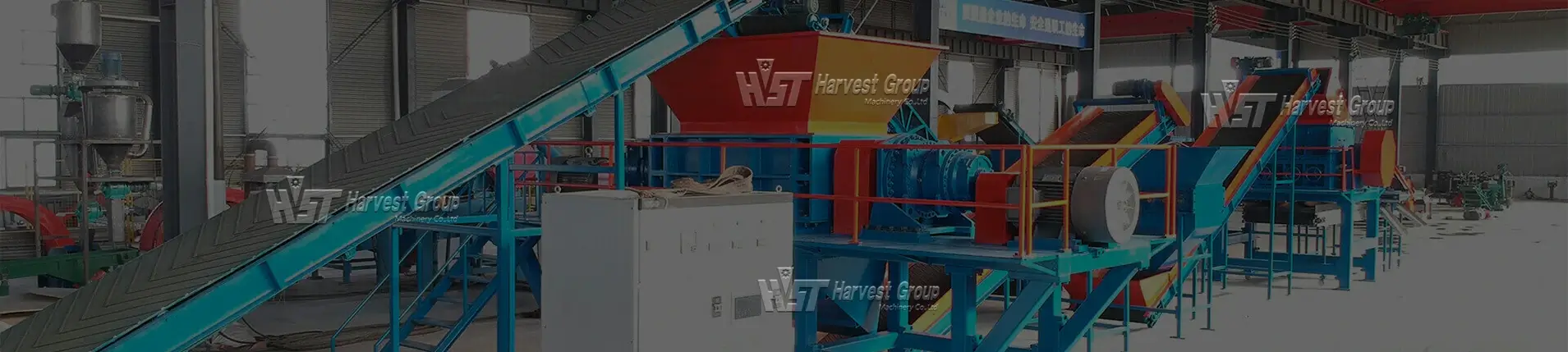
Choosing a tire recycling equipment manufacturer for Bulgaria and Europe involves more than comparing machine prices. European recycling projects usually require a complete review of tire type, production capacity, final rubber size, steel and fiber separation, workshop layout, electrical conditions, installation and long-term maintenance.
HVST is a China-based manufacturer of tire recycling machine supplying individual machines and complete recycling systems to international markets. Our equipment has been exported to Bulgaria, where the project was configured around the customer’s tire supply, target products, available space and operating requirements.
This project shows how tire recycling equipment can be designed, manufactured and shipped from China to Bulgaria while keeping the complete recycling process in view rather than treating each machine as an isolated purchase.
The Bulgaria customer required more than a standalone shredder. The project needed a connected tire recycling process capable of reducing waste tires, recovering reusable rubber, separating steel wire and removing textile fiber before the final material was screened and collected.
For this reason, the project was developed as a complete equipment configuration. The machines were selected according to the required processing depth rather than simply choosing the largest available shredder.
| Project Item | Project Requirement |
| Destination | Bulgaria, Europe |
| Raw Material | End-of-life passenger and truck tires |
| Processing Method | Mechanical tire recycling |
| Main Outputs | Recycled rubber, recovered steel and separated textile fiber |
| Equipment Scope | Size reduction, conveying, separation, screening and control equipment |
| Project Support | Process design, equipment configuration, layout, technical documents, shipment and installation support |
Before production began, the project scope had to answer several practical questions. What tires would be processed? What rubber product would be sold locally? How much space was available? What particle size was required? How clean did the recovered rubber need to be? These decisions determined the equipment that followed.
A tire recycling system is different from a general industrial shredding project. The first shredder only reduces tire size. If the customer wants clean rubber granules or smaller recycled rubber products, additional stages are required to liberate steel, remove textile fiber and control particle size.
This is why tire recycling equipment manufacturers can have very different project capabilities. Some suppliers specialize in one machine, while others can connect shredding, separation, granulation and screening into one working process.
A customer upgrading an existing plant may only need a tire cutter, shredder, granulator or separator. In this situation, the new machine must be matched to the customer’s existing upstream and downstream equipment.
A new recycling project usually needs several connected stages. Conveyors, screens, return systems, magnetic separators and dust or fiber control become just as important as the main size-reduction machines.
For customers building a new facility, a complete rubber recycling plant should therefore be designed around the final product rather than around one machine model.
The first step in the Bulgaria project was to define the processing route. The equipment required for large tire chips is very different from the equipment required for crumb rubber or fine rubber material.
A practical tire recycling process normally moves from coarse size reduction to controlled material separation. Each stage prepares the material for the next machine.
| Processing Stage | Main Function | Typical Equipment |
| Pre-Processing | Prepare difficult or large tires before shredding | Debeader, sidewall cutter or tire cutting equipment |
| Primary Size Reduction | Reduce whole tires into manageable tire shreds | Double-shaft tire shredder |
| Screening and Return | Control first-stage particle size and return oversized pieces | Screen and return conveyor |
| Steel Liberation | Reduce rubber further and release embedded steel wire | Rasper or secondary processing equipment |
| Granulation | Produce smaller and more uniform rubber particles | Rubber granulator |
| Material Separation | Remove steel and textile fiber | Magnetic and fiber separation systems |
| Final Screening | Separate recycled rubber by required size | Vibrating screening equipment |
The final equipment combination depends on the target product, but the Bulgaria project followed the same principle used in complete mechanical tire recycling systems: reduce the tire step by step while separating the materials released at each stage.
The tire shredder machine performs the first major size-reduction stage. Whole or pre-processed tires enter the shredder and are reduced into rough tire pieces that can be screened and processed further.
Shredder selection should consider tire diameter, passenger and truck tire ratio, required throughput and downstream equipment capacity. Installing a shredder with much higher capacity than the rest of the line does not automatically improve plant output.
After primary shredding, the material passes through a screening section. Pieces larger than the accepted size are returned to the shredder instead of being allowed to overload the next processing stage.
This return loop helps maintain a more stable feed size and makes downstream separation more consistent.
When clean rubber is required, the tire chips must be processed further so that the remaining steel wire is released from the rubber.
A tyre rasper machine can be used after primary shredding to reduce the rubber further and improve steel liberation before magnetic separation.
For crumb rubber production, the material passes through additional size reduction after most of the steel has been removed. A rubber granulator produces smaller and more uniform recycled rubber particles suitable for screening and further cleaning.
Steel wire and textile fiber should not remain mixed with the final rubber product. Magnetic separation removes liberated steel while airflow and fiber separation equipment remove lightweight textile material.
Where a higher-purity rubber product is required, separation may be carried out at more than one processing stage.
After size reduction and separation, the rubber is screened according to the required particle range. Material that meets the product specification is collected, while oversized material can be returned for additional processing.
Waste passenger and truck tires are prepared for processing and transferred to the primary size-reduction section. Tire pre-processing can be added when required by tire size, construction or the selected recycling route.
The primary shredder reduces the tire structure into smaller rubber and steel-containing pieces. At this stage, the objective is controlled volume reduction rather than production of the finished rubber product.
The first-stage material is screened. Oversized pieces return to the shredder until they fall within the required feed range for downstream processing.
The screened tire chips are reduced further. This processing breaks the bond between rubber and embedded steel wire. Magnetic equipment then removes the released steel from the material flow.
For smaller rubber products, the cleaned rubber moves through additional granulation. Textile fiber released during this stage is removed before final screening.
The recycled rubber is separated into the required particle ranges and transferred to the collection or packaging section.
Mechanical tire recycling creates several material streams rather than one single product. The commercial value of the project depends partly on how effectively these materials are separated.
Recycled tire rubber can be produced in different sizes depending on the equipment configuration. Larger material can be used for TDF or rubber mulch, while deeper processing produces crumb rubber and feedstock for fine rubber powder.
Typical downstream applications include sports surfaces, rubber flooring, molded products, rubber tiles, playground materials and modified asphalt.
Tire steel removed by magnetic separation can be collected as a recyclable metal fraction. Better steel liberation produces cleaner rubber and cleaner recovered steel at the same time.
Textile fiber is released as the rubber is reduced to smaller particle sizes. The fiber is separated from the rubber stream and collected separately. Its reuse depends on local material quality requirements and available downstream markets.
Export equipment must fit the customer’s actual building. A production line that works well on paper can become difficult to operate if conveyors block forklift routes, collection bags are inaccessible or maintenance space is insufficient.
Before finalizing the layout, the project should consider raw tire storage, machine access, conveyor direction, steel collection, fiber collection, finished product handling, electrical cabinets and future equipment expansion.
Voltage, frequency, total connected power and control requirements should be confirmed before manufacturing. This allows motors, cabinets and electrical components to be prepared for the destination project instead of being modified after arrival.
The layout should keep material movement as direct as possible while leaving enough operating and maintenance space around the machines. A shorter layout is not always a better layout if service access becomes difficult.
Once the process, equipment configuration and layout were confirmed, the machines were manufactured and assembled in China.
For an overseas tire recycling project, factory preparation includes more than checking whether a motor starts. The mechanical and electrical relationship between the connected machines should also be reviewed.
| Factory Check | What Is Verified |
| Mechanical Operation | Machine rotation, bearings, transmission, cutters and moving components |
| Conveying | Belt direction, material transfer and connection between processing stages |
| Electrical Control | Motor control, interlocks, alarms and operating sequence |
| Safety Functions | Emergency stops and required protection functions |
| Screening | Screen operation and oversize return route |
| Separation | Magnetic and fiber separation equipment operation |
| Documentation | Equipment information, manuals, spare-parts information and installation references |
Large recycling equipment requires advance loading planning. Shredders, processing machines, conveyors and supporting structures vary significantly in weight and dimensions, so the equipment cannot simply be loaded in the order in which it leaves production.
Before shipment, large components may be partially disassembled for container transport. Electrical components, smaller parts and spare parts should be packed and marked so that they can be identified easily when the equipment arrives in Bulgaria.
The loading sequence should also consider installation order. Equipment that will be positioned first at the site should not be buried behind components that are needed later.
Clear machine and component identification reduces installation time, especially where one production line includes multiple conveyors, steel structures and collection systems.
The customer should receive the commercial and technical documents required for transport, unloading and installation preparation. Workshop preparation can continue while the equipment is in transit.
Equipment delivery is not the final stage of an overseas tire recycling project. After arrival, the machines must be positioned, connected and tested as one production process.
The customer should prepare the workshop, lifting equipment, electrical supply and raw tires before commissioning begins. Installation guidance should follow the confirmed equipment layout rather than placing machines individually without considering the complete material flow.
During commissioning, the objective is to verify stable feeding, material transfer, size reduction, separation and screening throughout the line.
A reliable equipment comparison starts with giving each manufacturer the same project information. Without the same technical basis, two quotations may appear similar while covering completely different processing scopes.
| Information | What the Buyer Should Confirm |
| Tire Type | Passenger, truck, agricultural or OTR tires |
| Maximum Tire Size | Maximum diameter, width and approximate weight |
| Tire Supply | Daily, monthly or annual quantity available for processing |
| Target Capacity | Required incoming tire processing rate |
| Final Product | TDF, rubber chips, mulch, crumb rubber or powder |
| Particle Size | Required finished rubber size or mesh range |
| Purity | Acceptable residual steel, fiber, dust and oversized material |
| Workshop | Length, width, height, columns, doors and storage areas |
| Power Supply | Local voltage, frequency and available electrical capacity |
| Equipment Scope | Machines, conveyors, separators, screens, controls, dust collection and spare parts |
| Site Support | Installation guidance, commissioning, training and after-sales service |
Two suppliers can both quote a “complete tire recycling line” while including very different equipment.
One quotation may end after primary shredding. Another may include screening, oversize return, secondary processing, magnetic separation, fiber separation, controls, dust collection, spare parts and commissioning support.
Comparing only the headline price can therefore give a misleading result.
The equipment boundary should be clear before comparing quotations. Buyers should know exactly where the incoming tire enters the supplier’s scope and where the accepted finished product leaves it.
Electricity, blades, screens, bearings, belts, labor, downtime and maintenance all affect the long-term cost of producing one ton of saleable recycled rubber.
A lower initial quotation is not necessarily the lower-cost project if the system requires frequent maintenance or cannot consistently produce the required finished product.
HVST manufactures tire recycling machinery in China and supplies equipment to international recycling projects. For Bulgaria and other European markets, the objective is not to present HVST as a European manufacturer, but to provide a complete equipment solution manufactured in China and configured for the customer’s actual project conditions.
HVST can supply equipment for tire pre-processing, primary shredding, steel liberation, granulation, magnetic separation, fiber removal, final screening and material handling.
The line can be developed around TDF, rubber mulch, crumb rubber or fine rubber processing rather than using one standard configuration for every project.
Machine selection can be adjusted according to tire type, required capacity, workshop dimensions, final particle size, automation level and destination electrical conditions.
Manufacturing, factory testing, loading preparation and technical documentation are coordinated before the machines leave China. Installation and commissioning support can then continue after the equipment arrives at the customer’s site.
Customers planning a new European recycling facility can contact HVST with their tire type, capacity, target product and workshop dimensions for a customized equipment proposal.
No. HVST is a China-based tire recycling equipment manufacturer that supplies machines and complete recycling systems to Bulgaria and other international markets.
Yes. The project should confirm the complete equipment scope, electrical conditions, workshop layout, transport requirements, technical documentation and installation plan before shipment.
A complete system may include tire pre-processing equipment, a primary shredder, conveyors, screening and return equipment, a rasper, magnetic separators, granulation equipment, fiber separation, vibrating screening, dust control and an electrical control system.
Depending on the processing depth, waste tires can be converted into TDF chips, rubber mulch, crumb rubber, rubber granules or fine rubber material. Steel and textile fiber are separated as additional material fractions.
Capacity should be matched to the available tire supply and the expected market for the finished product. A larger line is not automatically more profitable if the local supply of waste tires cannot support continuous operation.
The most useful information includes tire type, maximum tire size, available tire quantity, required capacity, final product, required particle size, purity requirements, workshop dimensions and local voltage and frequency.
The Bulgaria project demonstrates that exporting tire recycling equipment to Europe involves much more than manufacturing and loading machines into containers. The complete process begins with the customer’s raw tires and target product, followed by equipment selection, process design, workshop layout, electrical preparation, manufacturing, factory testing, packing, shipment and site commissioning.
For buyers comparing tire recycling equipment manufacturers for Bulgaria and Europe, the most useful supplier is not simply the company offering the lowest machine price. It is the manufacturer that can define the complete equipment scope and configure the process around the material that enters the plant and the saleable product that leaves it.