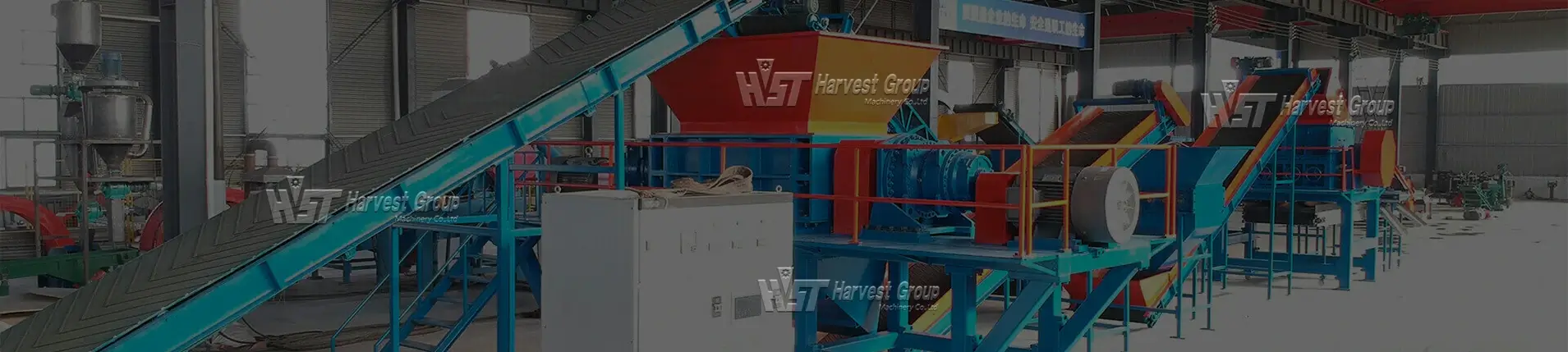
Choosing a tire recycling machine manufacturer is not simply a matter of finding the largest shredder or the lowest quotation. A plant producing coarse TDF chips has very different equipment requirements from a line designed to make wire-free rubber mulch, 1–4 mm crumb rubber or fine rubber powder.
Some manufacturers specialize in heavy-duty tire shredding, while others provide deeper processing systems covering steel liberation, magnetic separation, granulation, fiber removal and fine grinding. For buyers planning a complete project, the most important question is therefore not only “Who makes tire recycling machines?” but “Which manufacturer can deliver the process required for my tires and final product?”
This 2026 shortlist compares ten well-known tire recycling equipment suppliers based on process coverage, tire-specific experience, output flexibility, separation capability, automation, service support and project fit. It is an editorial buyer guide rather than a universal ranking: the best manufacturer for a TDF plant may not be the best supplier for a crumb rubber or OTR tire recycling project.
Before comparing suppliers, buyers can also review the major types of tire recycling equipment used from tire preparation and shredding through steel, fiber and rubber recovery.
| Rank | Manufacturer | Country | Main Strength | Best Fit |
| 1 | ELDAN Recycling | Denmark | Modular tire recycling systems with deep downstream processing | Integrated granulate and powder plants |
| 2 | CM Shredders | United States | Tire-focused shredding, steel liberation and downstream processing | TDF, mulch, crumb and steel recovery |
| 3 | Granutech-Saturn Systems | United States | Expandable multi-stage tire recycling systems | Phased projects and demanding tire feeds |
| 4 | ECO Green Equipment | United States | Modular commercial tire recycling equipment | Turnkey and phased recycling projects |
| 5 | HVST | China | Configurable tire recycling lines covering multiple final products | International custom projects and complete lines |
| 6 | MTB Recycling | France | Integrated recycling and material recovery systems | European and compact recycling projects |
| 7 | FORNNAX Technology | India | Heavy-duty primary and secondary size reduction | High-throughput and difficult tire applications |
| 8 | Genox Recycling Technology | China | Integrated rasping, granulation, dust and fiber systems | Automated tire recycling lines |
| 9 | SSI Shredding Systems | United States | Severe-duty tire shredding and size reduction | TDF, OTR and primary/secondary shredding |
| 10 | UNTHA Shredding Technology | Austria | Energy-efficient tire and alternative-fuel shredding | TDF, pyrolysis feed and pre-shredding |
A manufacturer should not rank highly simply because it sells a powerful shredder. The further a project moves from coarse tire chips toward clean crumb rubber or powder, the more important downstream separation, screening, recirculation, dust control and fine-size reduction become.
The first question is where the supplier’s responsibility ends. Some companies mainly manufacture primary shredders. Others can engineer several connected stages, while complete-line suppliers can design the route from waste tires to a defined saleable product.
A typical mechanical recycling route may include tire preparation, a tire shredder machine, screening, steel liberation, secondary reduction, granulation, fiber separation and final product classification.
Tires behave differently from general municipal or industrial waste. A credible supplier should understand bead construction, steel belts, elastic rubber, heat generation, cutter wear, recirculation and the differences between passenger, truck and OTR tires.
Comparable references are more useful than general claims such as “high capacity” or “global quality.” Buyers should ask for projects processing a similar tire mix into the same final product.
Nominal capacity can be misleading. A stated 5 t/h may mean whole-tire input, internal machine throughput or accepted finished material leaving the complete line.
For a fair comparison, buyers should define:
Passenger tires are usually easier to feed and size-reduce than heavy truck, agricultural or mining tires. Manufacturers should therefore be compared against the actual feedstock rather than the easiest tire shown in a demonstration video.
The maximum tire diameter, width, weight, bead structure, truck-tire percentage and OTR content can significantly affect equipment selection.
For coarse TDF, complete removal of textile and steel may not always be necessary. For crumb rubber and fine rubber products, however, separation becomes one of the most important parts of the plant.
Buyers should confirm how the supplier handles exposed steel, bead and belt wire, fine ferrous contamination and textile. Equipment such as a steel wire separator and magnetic recovery system can be as important to final product quality as the primary shredder itself.
A strong tire recycling manufacturer should be able to explain how equipment changes when the target product changes. TDF chips, rubber mulch, crumb rubber and fine powder require different process depths.
Modular systems may also allow a recycler to start with a simpler product and add deeper processing later as the market develops.
Motor power alone does not determine operating efficiency. Buyers should also evaluate load control, automatic reversing, interlocks, screen recirculation, monitoring, dust handling, temperature control and how well the machines communicate with one another.
Reliable equipment should also provide practical maintenance access to blades, screens, bearings, belts and other wear components.
A tire recycling plant is a wear-intensive industrial system. The supplier’s ability to provide knives, screens, hooks, liners, bearings and other critical parts can affect long-term uptime just as much as the original machine design.
Buyers should clarify commissioning, operator training, remote diagnosis, warranty boundaries, spare-parts lead times and whether local or overseas technician support is available.
The term “tire recycling machine manufacturer” is broad. Suppliers generally fall into three categories, and understanding the difference prevents buyers from comparing completely different project scopes.
A machine specialist may manufacture an excellent primary shredder, secondary shredder or granulator but leave conveyors, screening, separation and controls integration to the customer or another supplier.
This can be a good solution for an existing recycling plant replacing one stage or for a project where only coarse tire size reduction is required.
A system manufacturer supplies several tire-specific machines designed to work together. The scope may include primary shredding, secondary reduction, magnetic separation, granulation and screening.
This approach reduces interface problems between individual machines and is often suitable for mulch or crumb rubber plants.
A turnkey supplier takes broader responsibility for process design, equipment layout, machine interfaces, electrical controls, installation support, commissioning and agreed performance testing.
For buyers building a new facility, this can simplify coordination, but the contract must clearly define battery limits and performance responsibility.
Company overview: ELDAN Recycling is a Denmark-based recycling equipment manufacturer with a strong presence in tire and cable recycling systems.
Tire recycling capability: Its publicly presented tire solutions cover multiple processing stages, including primary size reduction, granulation, steel and textile separation and deeper material refinement.
Core strength: ELDAN is particularly strong where buyers require modular process depth rather than one stand-alone shredder. This makes it easier to discuss projects that begin with tire chips and later expand toward granulate or finer rubber products.
Best fit: Large or quality-focused plants requiring a well-defined route from waste tires to separated rubber, steel and fiber fractions.
What buyers should verify: Feed assumptions, accepted product specifications, purity guarantees, power consumption and the equipment included in the selected plant configuration.
Company overview: CM Shredders is a U.S.-based manufacturer with a long-standing tire recycling focus.
Tire recycling capability: The company’s tire equipment portfolio extends beyond primary shredding into secondary reduction, steel liberation, granulation, screening and other downstream stages.
Core strength: CM’s tire-specific focus makes it a useful benchmark when steel recovery and product consistency matter as much as first-stage throughput.
Best fit: TDF, wire-free rubber, crumb rubber and projects where tire-specific process engineering is a priority.
What buyers should verify: Exact scope of supply, regional service arrangements, wear-part assumptions and acceptance criteria for the finished product.
Company overview: Granutech-Saturn Systems is a U.S. recycling equipment manufacturer known for heavy-duty Saturn shredders and multi-stage recycling systems.
Tire recycling capability: Its tire systems can be structured in multiple stages, allowing projects to progress from coarse size reduction toward steel-free material, granulate or finer rubber.
Core strength: The staged architecture is attractive for projects that want to begin with TDF or mulch and reserve a future path toward higher-value crumb or powder products.
Best fit: Phased investments, high-duty applications and projects processing a wide range of tire sizes.
What buyers should verify: Which machines are included at each expansion stage and what finished product is guaranteed after every phase.
Company overview: ECO Green Equipment is a U.S.-based supplier focused strongly on tire recycling applications.
Tire recycling capability: Its equipment portfolio includes primary and secondary reduction, granulation and other tire-specific downstream processing equipment.
Core strength: A modular product structure makes it relatively easy for commercial buyers to understand how the process progresses from whole tires toward increasingly refined rubber products.
Best fit: New commercial tire recycling businesses and phased projects that may expand processing depth over time.
What buyers should verify: Battery limits, wear-part consumption, local service capability and exactly where the supplier’s process responsibility ends.
Company overview: HVST supplies tire recycling machinery and complete mechanical recycling systems for international projects, with configurations selected according to tire type, required capacity, final product and workshop conditions.
Tire recycling capability: HVST can configure projects covering tire pre-treatment, primary shredding, screening, steel liberation, secondary reduction, granulation, fiber separation and rubber powder processing.
Core strength: The main advantage is flexibility. Instead of treating every project as the same “tire recycling line,” the process can be designed around different outputs, including TDF, rubber mulch, crumb rubber and powder.
For customers planning an integrated project, HVST’s tire recycling plant solutions can be configured according to raw tire size, product specification, local voltage, available floor space and required production level.
Best fit: International buyers seeking a configurable mechanical tire recycling line, including passenger, truck and heavier tire applications.
What buyers should verify: Representative feed used during testing, accepted finished throughput, steel/fiber limits, FAT conditions and the exact equipment included in the quotation.
Company overview: MTB Recycling is a French equipment manufacturer with experience in both recycling machinery and material recovery.
Tire recycling capability: Its tire solutions include shredding, granulation, sorting and separation of rubber, textile and steel fractions.
Core strength: MTB’s practical material-recovery background is useful for buyers concerned not only with reducing tire size but also with the quality and handling of recovered fractions.
Best fit: European projects, compact recycling concepts and applications where material recovery quality is important.
What buyers should verify: Layout-specific throughput, product guarantees and how published material-quality figures are measured during acceptance.
Company overview: FORNNAX Technology is an India-based manufacturer focused on heavy-duty shredding and recycling equipment.
Tire recycling capability: Its tire portfolio includes primary shredding, secondary reduction, granulation and separation equipment.
Core strength: FORNNAX is particularly relevant where the most difficult engineering challenge is heavy primary and secondary size reduction.
Best fit: High-throughput tire recycling plants and applications requiring robust size-reduction equipment.
What buyers should verify: Downstream separation package, final product specifications, controls integration and after-sales coverage in the destination market.
Company overview: Genox is a Chinese recycling machinery manufacturer serving multiple waste-processing sectors, including tires.
Tire recycling capability: Its tire systems can include pre-shredding, rasping, steel removal, fine granulation, textile extraction, dust collection and automated material transfer.
Core strength: Genox is relevant where buyers value linked automation and the integration of dust and textile handling with the main size-reduction process.
Best fit: Automated recycling plants and projects where housekeeping, dust collection and connected line controls are significant design considerations.
What buyers should verify: Tire-specific feed trial results, accepted finished product and responsibility for installation and commissioning in the local market.
Company overview: SSI Shredding Systems is a U.S. manufacturer well known for severe-duty industrial shredders.
Tire recycling capability: SSI provides primary and secondary size-reduction systems for passenger, truck, agricultural and large tire applications.
Core strength: The company is particularly strong when the main engineering problem is difficult tire shredding rather than complete production of fine crumb rubber from one supplier.
Best fit: TDF, tire-derived aggregate, OTR feeds, difficult primary reduction and retrofit projects where downstream equipment already exists.
What buyers should verify: Which downstream stages must be supplied by other manufacturers and who will be responsible for complete-line performance.
Company overview: UNTHA is an Austrian shredding technology manufacturer with applications in tires, alternative fuels and industrial waste.
Tire recycling capability: Its tire applications focus strongly on controlled size reduction, TDF preparation and pre-shredding.
Core strength: Energy-conscious shredding technology and focused size-reduction systems can make UNTHA a strong option when a project does not require a complete ambient crumb or powder line from the same manufacturer.
Best fit: TDF, pyrolysis feed preparation, pre-shredding and facilities that already have downstream recycling equipment.
What buyers should verify: Required downstream steel, fiber and rubber-refining stages and whether they are included in the overall project scope.
| Manufacturer | Process Depth | Key Strength | Best Project Type | Main Point to Verify |
| ELDAN | Shreds to granulate / powder | Deep modular processing | Integrated high-quality plants | Output and purity guarantees |
| CM Shredders | TDF to crumb and steel recovery | Tire-specific process experience | TDF, mulch and crumb | Battery limits and service |
| Granutech-Saturn | Expandable multi-stage systems | Phased architecture | Expandable and heavy-duty projects | Scope of each phase |
| ECO Green | Modular tire recycling systems | Commercial tire focus | Turnkey and phased plants | Wear cost and project boundary |
| HVST | TDF, mulch, crumb and powder routes | Flexible project configuration | International custom lines | FAT and accepted output basis |
| MTB | Shredding, granulation and recovery | Material recovery experience | European integrated projects | Product guarantees |
| FORNNAX | Primary, secondary and granulation | Heavy-duty size reduction | High-throughput plants | Downstream separation scope |
| Genox | Rasping, granulation and separation | Automation and dust integration | Automated complete systems | Tire-specific acceptance testing |
| SSI | Primary and secondary reduction | Severe-duty shredding | TDF, OTR and front-end projects | Downstream supplier responsibility |
| UNTHA | Pre-shredding and TDF sizing | Focused energy-efficient shredding | TDF and pyrolysis preparation | Need for downstream refining |
The manufacturer’s reputation matters, but the final product should drive the actual equipment decision. Working backward from the material you intend to sell is usually more reliable than choosing a shredder first and then trying to build the rest of the plant around it.
TDF and pyrolysis preparation usually place greater emphasis on throughput, controlled chip size, dependable feeding, screening, recirculation and operating cost than on producing perfectly clean fine rubber.
A strong shredder specialist can therefore compete effectively with a complete-line supplier when the project only requires coarse or medium tire size reduction.
Rubber mulch requires deeper processing than ordinary TDF because exposed and liberated steel must be removed without producing excessive fines.
Important stages include secondary size reduction, steel liberation, magnetic separation and stable particle sizing.
Crumb rubber production requires much tighter control over particle size, steel contamination and textile fiber. The recycling route generally includes secondary reduction followed by a rubber granulator, magnetic separation, fiber removal and screening.
When comparing manufacturers, buyers should ask for accepted product size and residual contamination limits rather than simply asking whether the supplier “can make crumb rubber.”
Fine powder processing adds another level of complexity. Clean feed is essential, while heat generation, mill wear, dust collection and classification become more important as particle size decreases.
Buyers planning deeper mechanical processing should compare complete rubber powder production line scope rather than evaluating only the primary shredder or granulator.
OTR and mining tires require separate engineering consideration because diameter, width, weight, sidewall thickness and bead construction can be far beyond ordinary passenger and truck tires.
Manufacturers should confirm whether their claimed OTR capability refers to whole-tire feeding, pre-cut sections or already dismantled material. Safe handling and pretreatment are often as important as shredder motor power.
The lowest quotation is not automatically the lowest-cost project. One supplier may quote only the primary machines while another includes screens, return conveyors, magnetic separators, dust collection, electrical cabinets, installation support and spare parts.
Battery limits define exactly where the manufacturer’s supply and responsibility start and finish.
A complete quotation should clearly identify whether it includes:
Without this information, two quotations that appear to describe the same plant may actually represent very different scopes.
Long-term cost depends on more than installed motor power. Knife life, screens, bearings, liners, belts, filters, maintenance time and downtime all affect the cost per ton of accepted product.
A machine with a lower purchase price can become expensive if wear parts are difficult to source or require frequent replacement.
Buyers should clarify whether installation supervision, commissioning, operator training, initial spare knives, screens, bearings and overseas technician travel are included in the quotation.
These commercial items can materially change the real project investment.
Provide a realistic feed definition:
A statement such as “I want crumb rubber” is not precise enough. Instead, define the accepted particle-size range and limits for steel, textile and oversize material.
The final saleable product determines how many processing and separation stages the plant actually needs.
Ask whether the quoted capacity refers to:
This distinction becomes especially important where oversize material is returned repeatedly through a shredder or granulator.
Request an equipment list and process flow showing every major machine and conveyor. Do not rely on the phrase “complete tire recycling plant” without a written battery-limit list.
A useful factory acceptance test should define the material, duration and measurable acceptance conditions before testing begins.
Depending on the project, these may include:
Ask about remote technical support, technician response, commissioning, training, warranty exclusions, critical spare-parts inventory and estimated lead times.
These factors often become more important after the plant begins commercial operation.
HVST can configure mechanical tire recycling processes from front-end preparation and primary shredding through steel recovery, secondary reduction, granulation, fiber separation and fine rubber processing.
This allows the line to be discussed as a complete process rather than a group of unrelated machines.
The required process depth can be selected around the product the customer intends to sell. A TDF project does not need the same downstream equipment as a crumb rubber or fine powder plant.
Designing around the finished product helps avoid both under-specifying the line and purchasing unnecessary equipment.
Tire recycling projects differ in capacity, tire mix, available workshop area, labor cost, voltage and target output. HVST can adjust equipment sequence and layout according to these project conditions instead of applying one standard configuration to every plant.
Large tires may require bead treatment, section cutting or additional size reduction before entering the main recycling line. For heavy tire projects, the feed preparation stage should be selected according to actual tire dimensions and construction rather than nominal category alone.
This is particularly important for international projects where truck, agricultural and OTR tires may make up a significant part of the available feedstock.
There is no single best manufacturer for every project. A company strong in TDF shredding may not offer the deepest crumb-rubber processing system, while a complete granulation-line supplier may be unnecessary for a project that only needs coarse chips. Compare manufacturers according to tire type, final product, capacity, service location and total project scope.
No. A tire shredder manufacturer may specialize mainly in primary or secondary size reduction. A complete tire recycling plant supplier must also consider screening, recirculation, steel recovery, fiber separation, granulation, dust control, controls integration and finished-product specifications.
The equipment depends on the final product. A complete line may include tire preparation, primary shredding, screening, steel liberation, secondary reduction, magnetic separation, granulation, fiber separation, dust collection and fine grinding. TDF projects need fewer stages than crumb rubber or powder plants.
There is no meaningful single price for a tire recycling machine or plant. Cost depends on tire type, required capacity, final particle size, separation requirements, automation level, equipment scope, site services and whether the quotation covers one machine or a complete production line.
Compare suppliers using the same tire feed and the same finished-product specification. Ask for both incoming feed capacity and accepted saleable output after screening and recirculation. A nominal machine throughput is not necessarily the same as the commercial output of the complete line.
Send the supplier your tire categories, representative tire photos or video, maximum tire diameter and width, expected production capacity, target product and particle size, required steel and fiber limits, local voltage, workshop dimensions and destination country.
The best tire recycling machine manufacturer is not necessarily the company with the largest shredder, the longest equipment list or the lowest quotation. The right supplier is the one whose process depth matches your tire feed, final product, required capacity and long-term operating plan.
For TDF and coarse size reduction, a specialist shredder manufacturer may provide the strongest solution. For wire-free mulch, crumb rubber or fine powder, buyers should look deeper into steel liberation, granulation, fiber removal, screening and dust control. OTR projects require another level of feed preparation and material-handling expertise.
Before making a purchasing decision, compare every shortlisted manufacturer using the same feed definition, finished-product specification, capacity basis, equipment boundary and factory acceptance criteria. This approach provides a much clearer picture of real project value than comparing headline motor power or purchase price alone.