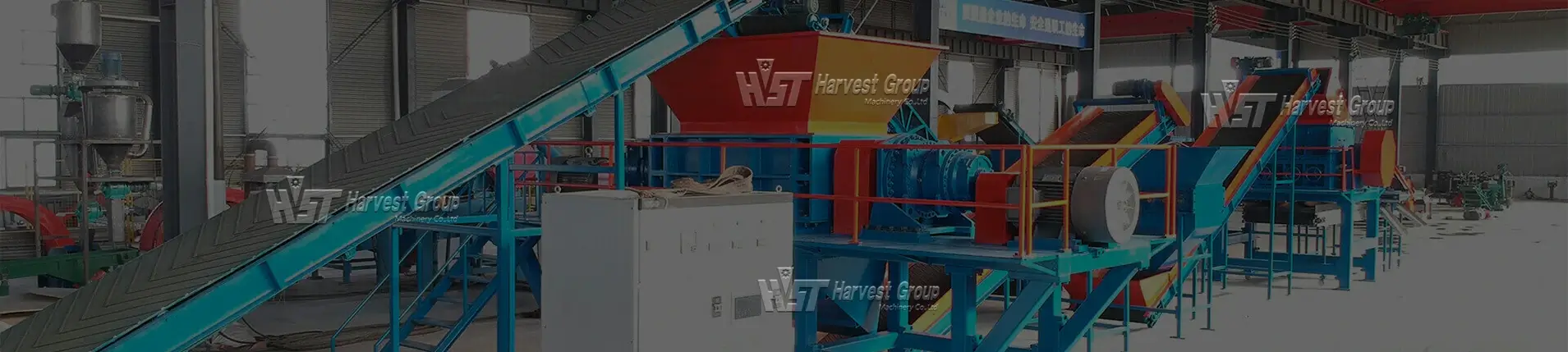
A modern tire recycling plant is more than a collection of shredders, rasps, granulators, separators, and grinding machines. These machines must be connected by an efficient material handling system that keeps tires and processed rubber moving continuously from one stage to the next. This is where conveyor systems become essential. They transport whole tires into shredders, move tire chips between size-reduction machines, carry rubber and steel through separation stages, and transfer rubber granules or powder toward screening, storage, or packaging.
The right conveyor can reduce manual handling, stabilize machine feeding, prevent production bottlenecks, and improve the overall efficiency of a tire recycling plant. However, different stages of tire recycling require different conveying methods because whole tires, tire chips, steel wire, rubber granules, textile fiber, and rubber powder behave very differently. This guide explains seven useful conveyor systems used with tire recycling machines and shows where each type fits into a complete recycling line.
Tire recycling usually involves several processing stages. Whole waste tires may first enter a primary shredder, after which the tire chips move to a rasper or secondary size-reduction machine. Steel wire is then separated, followed by granulation, fiber removal, screening, fine grinding, and final product collection. Conveyors connect these machines into a continuous processing system, allowing materials to move efficiently from one stage to the next without excessive manual handling.
A properly designed conveyor system helps maintain stable feeding for shredders, rasps, granulators, and grinding machines while transferring tire chips, separated steel wire, textile fiber, rubber granules, and rubber powder between processing stages. It can also reduce manual lifting, prevent material accumulation around equipment, improve production consistency, and support a more automated tire recycling plant.
Belt conveyors are among the most widely used conveying systems in tire recycling plants because they can transport a broad range of materials, including whole tires, tire pieces, rubber chips, rubber mulch, and rubber granules. At the beginning of a recycling line, a belt conveyor is commonly used to feed waste tires into a tire shredder machine. After shredding, additional belt conveyors can move the resulting tire chips toward secondary shredding, rasping, steel separation, or screening equipment. Belt conveyors are particularly useful when material must be transported over a relatively long horizontal or inclined distance, and inclined systems can use cleats or raised belt sections to help prevent tires or rubber pieces from sliding backward. The conveyor should be selected according to tire size, material weight, required throughput, conveying distance, and the processing capacity of the connected machine.
Chain conveyors are suitable for demanding feeding applications where materials are heavy, bulky, or exposed to high impact loads. They use chains and attached carrying elements to move tires along a fixed path and are particularly useful for transporting whole tires and large tire sections toward primary shredders. Their rugged construction makes them suitable for heavy-duty recycling lines processing truck tires, agricultural tires, or other large tire materials. Compared with light-duty conveying systems, chain conveyors can better tolerate heavy loads and repeated impact, but the feeding rate should still be matched with the shredder capacity to avoid either overloading the machine or reducing overall line output.
Steel is one of the main recoverable materials in waste tires. After tires are shredded and processed by a rasper, more steel wire becomes exposed and must be removed before the rubber continues to finer granulation or grinding stages. Magnetic conveying and separation systems use magnetic force to attract ferrous steel from the rubber stream, allowing the separated steel to be discharged independently while the rubber continues to downstream equipment. This stage is important because excessive steel contamination can affect rubber product quality and increase wear on downstream machines. A steel wire separator is therefore commonly integrated after shredding or rasping stages, helping improve the purity of both the recovered rubber and steel fractions.
Screw conveyors use a rotating helical screw inside a trough or enclosed housing to move bulk material forward. They are more suitable for smaller and relatively uniform materials than for whole tires or large tire chips and can be used for rubber granules, crumb rubber, rubber powder, and other fine processed materials. Their enclosed structure helps reduce material spillage and keeps the transfer path compact. They are especially useful after granulation or fine grinding stages, where materials are much smaller and more uniform than the tire chips produced by a primary shredder. When connected with a rubber granulator, the screw conveyor can transport processed granules toward screening, secondary separation, storage, or packaging equipment.
A shaftless screw conveyor works similarly to a conventional screw conveyor but does not use a central shaft. This structure provides more open space inside the conveyor and can reduce the tendency of irregular materials to wrap around the center shaft. It can be useful in tire recycling applications where the material contains textile fiber, irregular rubber pieces, or mixtures that do not flow as smoothly as clean rubber granules. Shaftless screw conveyors can therefore be considered for difficult bulk materials where clogging, bridging, or wrapping may be a concern. The choice between a standard screw conveyor and a shaftless design should depend on material characteristics, moisture content, particle size, fiber content, and the required conveying distance.
Pneumatic conveyors use airflow generated by a blower or fan to move lightweight materials through enclosed pipes or ducts. Unlike belt or chain conveyors, they are mainly used for fine or light materials rather than whole tires or large tire chips. In a tire recycling plant, pneumatic conveying can be useful for rubber powder, fine rubber particles, and textile fiber, especially when materials need to move between machines at different elevations or across a complex plant layout. These systems are particularly useful after fine grinding, fiber separation, or dust collection processes, where rubber powder can be transferred toward storage or packaging systems and lightweight textile fibers can be conveyed away from the main rubber stream.
Vibratory conveyors use controlled vibration to move material along a trough or conveying surface. In tire recycling, their value is not limited to transportation because they can also spread, distribute, and regulate material before screening or separation. After granulation, rubber particles often need to be fed evenly into screening equipment so that different particle sizes can be separated efficiently. Vibratory conveyors help create a more consistent feed layer and prevent excessive material from entering one section of the screen at the same time. They are commonly used with rubber granules, crumb rubber, and other smaller materials and can work together with a vibrating screen for tire recycling to improve particle classification and downstream material handling.
Different conveyors are used at different stages because the material changes significantly as tires move through the recycling process. Whole tires are bulky and irregular, tire chips are smaller but may contain exposed steel, and later-stage rubber granules, powder, and textile fiber require completely different material handling methods.
At the beginning of the line, materials are still whole tires. Belt conveyors and heavy-duty chain conveyors are commonly used because they can handle bulky and irregular tire shapes while providing controlled feeding into the primary shredder.
After primary shredding, whole tires become large tire chips. Belt conveyors are usually used to move these chips toward the secondary size-reduction stage. A tyre rasper machine further reduces the rubber size and releases additional steel wire from the tire structure, so the conveyor before the rasper must provide a consistent material flow to prevent either overloading or underfeeding the machine.
After rasping, magnetic separation equipment removes exposed steel wire from the rubber stream. Conveyors move the mixed material through the magnetic separation area and then carry the cleaned rubber toward the next processing stage, helping keep the steel and rubber fractions separated.
Rubber that has passed through steel separation can be processed into smaller granules. Belt conveyors, screw conveyors, or vibratory conveyors may be used depending on particle size and the layout of the plant. At this stage, maintaining an even feed becomes increasingly important because downstream granulators and screens operate more efficiently when material enters at a stable rate.
As particle size becomes smaller, conventional heavy-duty tire conveyors become less practical. Screw conveyors and pneumatic systems are more suitable for moving fine rubber, rubber powder, textile fiber, and other lightweight by-products toward storage, separation, or packaging areas.
The performance of a conveyor should never be considered separately from the machine it feeds. A tire recycling line works efficiently only when every conveyor and processing machine is properly matched.
The primary shredder normally requires controlled feeding of whole tires. A belt or chain conveyor keeps tires moving toward the shredder at a rate that matches the machine’s cutting capacity, preventing excessive tire accumulation at the feed opening while keeping the shredder continuously supplied.
After primary shredding, the rasper further reduces tire chips and releases steel wire. A belt conveyor transfers material into the rasper, while magnetic separation equipment removes the exposed steel before the rubber continues toward granulation or other downstream processing.
After most steel has been removed, rubber can be processed into smaller granules. Conveyors then transfer the granules toward screening equipment, where particles are classified according to size and oversized material can be returned for further processing if required.
When the required final product is fine rubber powder, additional grinding stages may be required. Screw or pneumatic conveying systems are more suitable after this stage because the material is smaller, lighter, and easier to transport through compact or enclosed systems.
The best conveyor depends mainly on the type and size of the material being transported. The following table provides a practical overview of common applications.
| Tire Recycling Stage | Main Material | Typical Equipment | Recommended Conveyor | Main Purpose |
| Whole Tire Feeding | Passenger, truck or large tires | Primary Tire Shredder | Belt / Chain Conveyor | Controlled heavy-duty feeding |
| Primary Size Reduction | Large Tire Chips | Tire Shredder / Rasper | Belt Conveyor | Transfer between shredding stages |
| Steel Separation | Rubber + Exposed Steel Wire | Rasper / Magnetic Separator | Magnetic Conveyor | Remove ferrous steel contamination |
| Granulation | Small Rubber Chips | Rubber Granulator | Belt / Screw Conveyor | Stable transfer to granulation |
| Screening | Rubber Granules | Vibrating Screen | Vibratory Conveyor | Uniform feeding and size classification |
| Fine Grinding | Fine Rubber | Grinding / Cracking Equipment | Screw Conveyor | Transfer fine processed material |
| Powder & Fiber Handling | Rubber Powder / Textile Fiber | Fiber Separation / Powder System | Pneumatic / Screw Conveyor | Closed transfer to storage or packaging |
The first consideration is the material being transported. Whole tires require a completely different handling system from rubber powder. Large tires and tire blocks generally require belt or chain conveyors, while rubber granules, powder, and fibers may be better suited to screw, vibratory, or pneumatic systems.
A conveyor should not simply move as much material as possible; its capacity must match the machine receiving the material. If the conveyor feeds faster than the shredder, rasper, or granulator can process, material may accumulate around the inlet or overload the machine. If it feeds too slowly, expensive processing equipment may run below its designed capacity. A balanced line should therefore consider both conveyor capacity and the rated throughput of every connected tire recycling machine.
The material changes dramatically throughout the recycling process. A whole truck tire may be more than one meter in diameter, while the final rubber product may be only a few millimeters or even fine powder. The conveyor selected for each stage should therefore correspond to the maximum tire size, intermediate chip size, or final particle size handled at that point in the line.
Tire recycling equipment does not always operate on the same level. Some plants require material to be lifted from floor level to elevated shredders, screens, storage systems, or platforms. Horizontal belt conveyors are suitable for many transfer points, while inclined conveyors can save floor space by lifting material between different levels. Where plant space is extremely limited, specialized overhead or vertical conveying solutions may also be considered.
The conveyor should maintain a consistent material flow without creating accumulation points. Irregular tire chips, exposed steel wire, textile fibers, or oversized rubber pieces can behave differently inside a conveying system, so good line design should consider transfer height, conveyor angle, discharge position, feeding rate, and the physical characteristics of the material.
Waste tires are bulky, heavy, and difficult to move manually. Automated conveyors reduce the need for workers to roll, lift, or carry tires between different machines, particularly around shredder feeding and intermediate material transfer points.
Tire shredders, rasps, granulators, and screening machines operate more efficiently when they receive material at a stable rate. Proper conveyors help maintain this continuous feeding condition and reduce unnecessary machine idle time.
A recycling line may contain high-capacity machines, but the total line output will still be limited if material cannot move quickly enough between them. Correctly matched conveyors help reduce these bottlenecks and allow the entire system to operate closer to its designed capacity.
Controlled material transfer can reduce rubber spillage and help keep separated steel, fiber, rubber granules, and rubber powder moving through their correct process routes, improving material recovery and keeping the working area cleaner.
Automated conveying reduces the amount of manual work close to shredder inlets and other moving machinery. Conveyor systems should still include appropriate guarding, emergency-stop devices, safe access points, and maintenance procedures.
Belt conveyors are widely used to feed whole passenger and truck tires into tire shredders. For larger tires or heavy-duty applications, chain conveyors may also be used because of their higher resistance to impact and heavy loads.
Belt conveyors are commonly used for tire chips because they can efficiently transfer shredded material between primary shredders, rasps, magnetic separators, and downstream processing equipment.
After shredding and rasping expose the steel reinforcement inside the tire, magnetic separation equipment attracts and removes the ferrous steel from the rubber stream. The recovered steel and cleaned rubber are then conveyed separately.
Belt conveyors, screw conveyors, and vibratory conveyors can all be used for rubber granules. The best choice depends on particle size, conveying distance, required feeding accuracy, and the next machine in the recycling process.
Screw conveyors and pneumatic conveyors are generally more suitable for fine rubber powder than heavy-duty belt or chain conveyors. Pneumatic systems are particularly useful when fine material must travel through enclosed pipelines or between equipment located at different elevations.
The conveyor’s effective delivery rate should correspond to the processing capacity of the machine receiving the material. Conveyor speed, loading density, material size, and machine throughput should be considered together to avoid both overfeeding and underfeeding.
Conveyors may not perform the actual shredding, steel removal, granulation, or grinding of waste tires, but they connect these individual tire recycling machines into a continuous production system. Belt conveyors are suitable for whole tires and tire chips, chain conveyors provide heavy-duty feeding, magnetic conveyors help separate steel, screw and shaftless screw conveyors handle smaller bulk materials, pneumatic conveyors move rubber powder and lightweight fiber, and vibratory conveyors provide controlled feeding for screening and classification.
The best conveyor system is therefore not simply the strongest or fastest option. It is the one that matches the material, the connected tire recycling machine, the required production capacity, and the layout of the complete plant. When designing a new tire recycling line, conveyors should be planned together with shredders, rasps, granulators, separators, screens, and grinding equipment rather than added as an afterthought. This integrated approach helps create a more stable, automated, and efficient tire recycling process.