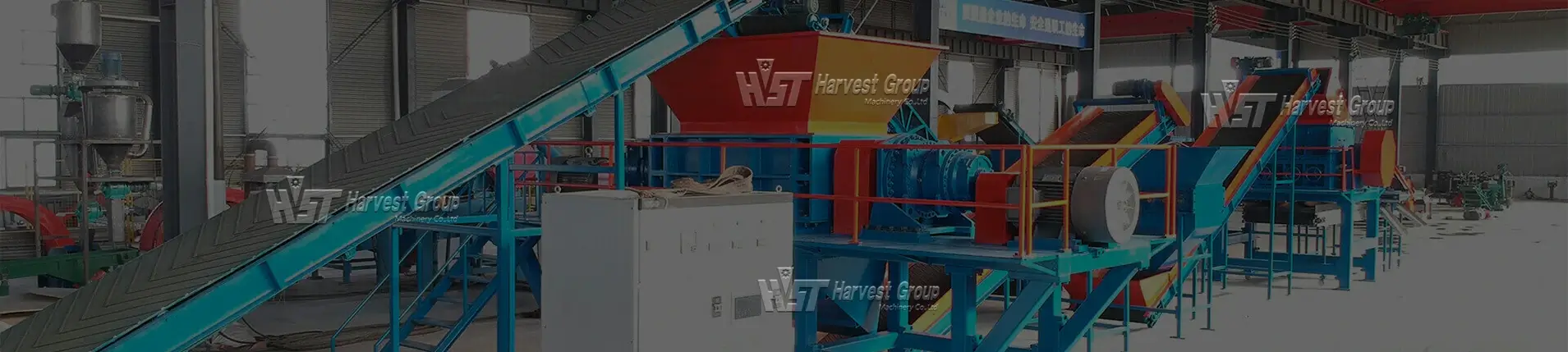
Building a waste tire recycling project requires a reasonable equipment configuration, which is the core factor that determines production efficiency, finished product quality, operating cost, and return on investment. A waste tire recycling line is not a single shredding machine, but a systematic industrial production line integrating pre-treatment, crushing, steel wire separation, fiber separation, screening, conveying, dust collection, and electrical control.
Different production goals, finished product specifications, capacity requirements, and raw material types require completely different equipment combinations. A simple production line that only produces TDF tire fuel chips or engineering filling rubber materials is very different from a deep-processing production line designed to produce high-purity rubber granules or fine rubber powder. Before selecting a project solution, buyers should compare the complete system structure of tire recycling equipment instead of judging only by a single machine price.
This guide provides overseas buyers, foreign trade professionals, and plant investors with a full-dimensional waste tire recycling machine configuration plan. It explains the production line definition, key selection factors, graded configuration solutions, equipment matching for different finished products, small and large system comparison, common mistakes, and standard selection process, helping users accurately match the right production line for their own project.
A waste tire recycling machine line is a professional industrial processing system that can process waste passenger car tires, truck tires, bus tires, agricultural tires, giant OTR engineering tires, and other waste rubber materials into high-value recycled rubber raw materials. According to different processing depths, the finished products can be divided into tire shreds, rubber chips, rubber mulch, rubber granules, fine rubber powder, and other products. Different finished products require completely different processing technologies, equipment configurations, and market applications.
A scientific equipment configuration directly determines the capacity, product purity, energy consumption, environmental compliance, and market value of the whole production line. It is the foundation for legal and profitable operation of an overseas tire recycling plant.
Different finished product sizes and applications require different equipment configuration levels and processing procedures. This is the first basis for production line selection.
| Finished Product Type | Regular Output Size | Main Application | Required Processing Level |
|---|---|---|---|
| Tire Shreds | 50–150 mm | TDF fuel, landfill engineering, material volume reduction | Primary shredding |
| Rubber Chips | 20–50 mm | Secondary deep processing, civil engineering, rough rubber raw material | Shredding + secondary fine crushing |
| Rubber Mulch | 10–30 mm | Playground surfaces, landscaping, sports surface installation | Shredding + steel removal + precise screening |
| Fine Rubber Granules | 1–6 mm | Rubber tiles, anti-slip mats, modified asphalt, molded rubber products | Crushing and granulation + steel and fiber double separation + screening |
| Fine Rubber Powder | 20–80 mesh or finer | Recycled rubber modification, high-end rubber products, fine industrial applications | Fine grinding after granulation + grading and screening |
Equipment selection should not only be based on price or motor power. It must be matched with the actual working conditions of the project to avoid configuration redundancy, insufficient capacity, substandard finished products, and other problems.
Passenger car tires are small in size, have lower steel wire content, and are less difficult to process. Standard equipment can meet production requirements. Truck and bus tires have thicker sidewalls and denser steel wires, requiring high-torque and highly wear-resistant crushing equipment. Giant OTR engineering tires are large in size and heavy in structure, so they must be matched with front-end tire cutting equipment or heavy-duty industrial shredders.
If the raw material is mixed tires, the equipment should be selected according to the most difficult heavy tire standard. This can effectively avoid machine blockage, overload, and abnormal blade wear.
The finer the finished product, the more processing steps and supporting equipment are required. If only large-size tire shreds are produced, primary shredding equipment is enough. To produce millimeter-level rubber granules or high-mesh rubber powder, fine crushing, multi-stage impurity removal, grinding, and screening systems must be added to refine and purify the material step by step.
Capacity directly determines the equipment model, motor power, automation level, and total investment. A small trial production line may only process several hundred kilograms per hour, while a large industrial production line can reach 8–10 tons per hour. Investors should reasonably plan capacity according to local tire supply, finished product sales market, factory power supply, site area, and labor cost.
Rubber mulch and fine rubber granules have very high requirements for steel wire and fiber impurity content. Residual impurities will directly reduce product selling price, cause complaints from downstream customers, and increase equipment wear. High-end production lines must be equipped with multi-stage magnetic separation and air fiber separation equipment to ensure high purity of finished products.
Some start-up projects are suitable for building a basic shredding production line first, allowing low-cost commissioning and quick payback. Long-term large-scale operation projects can be directly equipped with a complete automatic production line. The initial layout should reserve enough space and interfaces for future equipment expansion and upgrading.
The basic configuration focuses on material volume reduction and rough processing. It is suitable for producing tire shreds and rubber chips, or for preparing raw materials for pyrolysis and further deep processing. It has high cost performance, simple operation and maintenance, and a low investment threshold.
| Equipment Name | Core Function | Suitable Finished Product |
|---|---|---|
| Tire Cutter / Tire Debeader | Cuts or removes tire bead steel wire, reduces the load on the shredder, and is suitable for pre-treatment of large truck tires and engineering tires | Pre-treatment of large tires |
| Primary Tire Shredder | Shreds whole tires into large-size rubber chips | 50–150 mm tire shreds |
| Automatic Conveyor System | Automatically feeds and transfers materials between machines to achieve continuous production | Continuous feeding and discharge of the whole line |
| Basic Magnetic Separator | Adsorbs and removes exposed steel wire on the rubber surface | Low-impurity rubber chips |
| Vibrating Screen | Classifies materials, returns oversized materials for reshredding, and ensures uniform finished product size | Uniform rubber chips |
This configuration is simple to operate and maintain, low in cost, and suitable for start-up projects. However, it cannot produce high-purity rubber granules or fine rubber powder, and is only suitable for primary processing scenarios.
For rough-processed finished products, the configuration can be divided into three levels according to size uniformity and cleanliness requirements, matching different budgets and quality standards.
| Configuration Level | Core Equipment Combination | Output Product | Suitable Customer |
|---|---|---|---|
| Simple Shredding Line | Conveying equipment + tire shredder | Large irregular tire shreds | Projects with limited budget, only requiring material volume reduction or rough processing |
| Shredding and Screening Line | Conveying equipment + shredder + vibrating screen + return conveyor system | Uniform rubber chips | Processing projects with unified finished product size requirements |
| Shredding and Impurity Removal Line | Shredder + magnetic separator + screening machine + complete conveying equipment | Low-impurity clean rubber chips | Projects that provide raw materials for downstream deep processing |
Rubber mulch is mostly used for playgrounds and landscape decoration. It has strict requirements for size uniformity and steel wire residue, so it must complete fine crushing, precise impurity removal, and graded screening. A professional rubber mulch production line should be designed around stable particle size, safe steel removal, and continuous screening efficiency.
| Processing Step | Supporting Equipment | Process Function |
|---|---|---|
| Raw Material Pre-treatment | Tire cutter / tire debeader | Pre-treats large tires, removes hard bead steel wire, and protects the main equipment |
| Primary Shredding | Double-shaft tire shredder | Crushes whole tires into rough rubber material and completes initial volume reduction |
| Secondary Fine Processing | Fine crusher / rasper | Refines rough material into standard rubber mulch size |
| Steel Wire Removal | High-strength magnetic separator | Thoroughly separates steel wire impurities from the material and ensures safe use |
| Precise Screening | Multi-layer vibrating screen | Screens standard finished products and returns oversized materials for reprocessing |
| Optional Fine Impurity Removal | Air fiber separator | Removes light textile fibers and improves product texture and purity |
Rubber granules are currently one of the recycled products with the largest market demand and relatively high added value. They are widely used in rubber products, road modification, and other fields. The production line must achieve thorough steel wire and fiber separation as well as fine granulation.
| Core Equipment | Main Function | Key Selection Points |
|---|---|---|
| Tire Shredder | Primary crushing of whole tires, greatly reducing material volume | High torque, alloy steel blades, large-capacity crushing chamber, stable feeding structure |
| Rubber Rasper | Separates rubber and steel wire and refines material size | High rotor strength, wear-resistant blades, good steel wire liberation effect |
| Fine Rubber Crusher | Deep-processes material and outputs standard rubber granules | Stable rollers, circulating cooling, uniform and adjustable output particle size |
| High-strength Magnetic Separator | Removes residual steel wire fragments in multiple stages | High magnetic field strength, widened belt, suitable for continuous line operation |
| Fiber Separator | Removes textile fiber impurities from rubber granules | Large air volume, reasonable separation chamber design, high fiber removal rate |
| Multi-layer Vibrating Screen | Particle grading, size classification, and waste material return | Multi-layer screen mesh, accurate screening, stable return system |
| Environmental Dust Collection System | Collects production dust and purifies the workshop environment | Large air volume, sufficient filter area, dust collection efficiency ≥99.5% |
Rubber powder is a high-end deep-processing product. It is strictly not allowed to be directly produced from whole tires. Purified clean rubber granules must be used as raw material and then formed through fine grinding. This process has very high requirements for equipment precision, temperature control, and dust collection systems.
| Finished Product Type | Feeding Material | Core Supporting Equipment | Production Notes |
|---|---|---|---|
| Coarse Rubber Powder | Clean rubber granules | Rubber grinding mill, screening equipment, pulse dust collector | Suitable for ordinary recycled rubber products, with high production efficiency |
| Fine Rubber Powder | Low-fiber high-purity rubber granules | Precision grinding mill, circulating cooling system, powder classifier | Strictly controls grinding temperature, avoids rubber powder aging, and ensures stable and uniform feeding |
| Multi-mesh Mixed Rubber Powder | Graded and screened rubber granules | Integrated grinding and multi-layer screening unit | One production line can produce multiple specifications of rubber powder, suitable for diversified markets |
The finer the finished powder mesh, the lower the unit capacity. During selection, the powder fineness and production efficiency must be balanced to avoid blindly pursuing high fineness, which may lead to insufficient capacity and excessive energy consumption.
Small and large systems are suitable for different business models, capacity requirements, and investment budgets. Customers can choose according to their own tire supply, sales channels, and site conditions.
| Comparison Item | Small Tire Recycling Line | Large Tire Recycling Line |
|---|---|---|
| Investment Cost | Low investment, fast payback, low start-up threshold | High equipment and infrastructure investment, suitable for long-term large-scale operation |
| Production Capacity | Suitable for small and medium tire supply, on-demand production | Supports 24-hour continuous industrial mass production |
| Automation Level | Mainly semi-automatic, with some manual feeding and sorting assistance | Fully automatic conveying, separation, temperature control, and electrical control, with low dependence on labor |
| Site Requirement | Small footprint, can be installed in ordinary small workshops | Requires a large factory building, with space reserved for raw material storage, finished product storage, and maintenance |
| Finished Product Range | Tire shreds, rubber chips, ordinary rubber granules | Can produce rubber mulch, high-precision granules, and multi-mesh fine rubber powder |
| Expandability | Can be upgraded step by step with additional equipment | Planned as a whole from the beginning, suitable for long-term stable production |
For new market testing and unstable tire supply, a small production line is recommended. For stable tire supply, clear finished product sales channels, and long-term profit planning, a large fully automatic production line should be preferred.
Equipment procurement should not only compare prices. Buyers need to fully check equipment performance and suitability to avoid production failures, substandard quality, and compliance risks.
| Check Item | Core Impact | Key Points to Confirm |
|---|---|---|
| Raw Tire Specification | Determines shredder model and pre-treatment equipment configuration | Confirm whether the main raw material is passenger tires, truck tires, engineering tires, or mixed tires |
| Finished Product Standard | Determines the number of crushing, screening, and grinding steps | Clarify whether the target product is tire shreds, rubber mulch, granules, or fine rubber powder |
| Capacity Target | Determines equipment model, motor power, and conveyor system specifications | Clarify hourly capacity and daily production hours |
| Steel Wire Removal Standard | Directly affects finished product selling price and downstream application | Confirm magnetic separation stages and steel wire removal rate parameters |
| Fiber Impurity Control | Core quality indicator for high-end granules and rubber powder | Check air separation system precision and fiber removal rate |
| Factory Power Supply Condition | Ensures stable equipment operation and avoids tripping and shutdown | Check voltage, frequency, transformer capacity, and cable specifications |
| Operation and Maintenance Plan | Reduces downtime loss and spare parts cost | Confirm blade replacement, bearing lubrication, and screen cleaning plans |
| Production Goal | Complete Recommended Configuration | Best Application Scenario |
|---|---|---|
| Rough Tire Volume Reduction | Conveying equipment + tire shredder | Low-cost start-up projects and waste tire volume reduction |
| Standard Rubber Chips / TDF Fuel Material | Shredder + vibrating screen + return system + magnetic separator | Fuel processing, rough raw material supply, and pre-treatment for secondary deep processing |
| Rubber Mulch | Shredder + rasper + magnetic separator + vibrating screen + fiber separator | Rubber raw material production for playgrounds, gardens, and landscape decoration |
| High-purity Rubber Granules | Complete crushing and separation equipment + multi-stage screening + dust collection system | Raw material for rubber tiles, modified asphalt, and molded rubber products |
| Fine Rubber Powder | Granule production line + precision grinding mill + temperature control system + grading and dust collection equipment | High-end recycled rubber and fine chemical rubber deep-processing projects |
First, do not select equipment only based on theoretical capacity. In actual production, tire material, feeding speed, blade wear, and screen specifications all affect real capacity. A conservative configuration is more suitable for continuous industrial production.
Second, do not ignore impurity separation. Excessive steel wire and fiber residue will directly cause finished product depreciation, customer returns, and abnormal equipment wear. Deep-processing projects must be equipped with a complete multi-stage impurity removal system.
Third, do not ignore factory layout planning. The production line needs reserved space for raw material stacking, finished product storage, forklift movement, equipment maintenance, and electrical cabinet placement. Poor early planning will increase later modification costs.
Confirm the finished product type and market price, and determine the core production goal.
Calculate the local waste tire supply type and daily supply volume, and determine the upper capacity limit.
Determine the automation level according to workshop area, power supply conditions, and labor cost.
Match crushing, separation, screening, and grinding configurations according to finished product purity and fineness requirements.
Finalize the basic, standard, or high-end fully automatic production line solution according to budget and expansion plan.
As a core waste tire shredder machine, the double-shaft tire shredder is the primary equipment of the production line. It is responsible for cutting complete waste tires into 50–100 mm rubber chips and is suitable for all radial tires, bias tires, and heavy truck tires. The equipment adopts a low-speed, high-torque design to prevent jamming and blockage. The blades are made of high-strength alloy steel, wear-resistant and impact-resistant, and support long-term continuous operation. The power can be selected from 37KW×2 and 55KW×2 dual motors. The capacity covers 1.5–8 tons per hour and supports customization.
The steel wire separator adopts a dual process of mechanical extrusion and screening to specifically remove embedded steel wire from rubber chips. The steel wire removal rate can reach up to 99%, thoroughly solving the problem of steel wire impurities affecting finished product quality and laying a foundation for subsequent fine processing.
The rubber crusher is used for secondary fine processing of rubber chips without steel wire. It can produce uniform 3–10 mm rubber granules and can be matched with adjustable screen mesh for flexible particle size control. It is equipped with imported bearings and high-precision blades, featuring low noise, low failure rate, and suitability for 24-hour continuous production in overseas factories.
The fiber separator removes nylon, polyester fiber, and other impurities through air separation and mechanical screening, improving the fineness of finished products. The magnetic separator secondarily adsorbs fine steel wire fragments. The double purification process ensures that the finished product meets international export standards.
The rubber grinding mill is a high-end fine-processing machine that can grind rubber granules into 20–120 mesh fine rubber powder. It is matched with a circulating cooling system to prevent high-temperature aging of rubber powder and is suitable for high-value rubber deep-processing projects.
Belt and screw conveying equipment work together to achieve automatic feeding, transfer, and discharge throughout the whole process. This replaces manual operation and greatly reduces labor cost. The conveying speed can be intelligently adjusted to precisely match the operating rhythm of the main machines.
The pulse bag dust collection system has a dust collection efficiency of up to 99.5%, achieving dust-free production. It meets EU CE and ISO international environmental protection standards and helps overseas users avoid environmental inspection risks.
The integrated intelligent control cabinet supports one-button start and stop, overload protection, fault alarm, and automatic shutdown. It has a multilingual operation interface and can monitor capacity, energy consumption, and equipment operating status in real time, achieving intelligent production management.
High-power equipment is equipped with a circulating water cooling device to prevent overheating damage. Silent covers and shock-absorbing bases are used to ensure that noise meets international industrial park standards and supports green production.
Capacity: 1–2 tons per hour.
Configuration combination: small double-shaft shredder + simple steel wire separator + fine crusher + basic dust collection + auxiliary conveying equipment. It is suitable for start-up projects and small processing plants, with low budget, simple operation and maintenance, and the ability to meet basic rubber granule production needs.
Capacity: 3–5 tons per hour.
This is the mainstream popular configuration for overseas markets. It includes a full set of main machines, automatic conveying, standard dust collection, and intelligent electrical control system. The whole process is automated, with high product purity and stable operation, suitable for most commercial rubber recycling plants.
Capacity: 6–10 tons per hour.
This configuration includes a heavy-duty shredder, multi-stage purification and impurity removal, high-precision grinding, full intelligent operation and maintenance system, and remote monitoring. It supports 24-hour continuous mass production and is suitable for large environmental protection industrial parks and high-end rubber powder deep-processing enterprises.
The whole line is equipped with an automatic lubrication system as standard, reducing manual maintenance frequency. The blades adopt a quick-disassembly design, making inspection and replacement convenient and efficient. The whole machine has a 12-month warranty and lifetime technical support. Overseas on-site installation, equipment commissioning, operator training, and other one-stop services are also provided to solve operation and maintenance problems for overseas customers.
The core configuration logic of a waste tire recycling machine is to match a balanced systematic equipment combination according to finished product demand, rather than simply comparing equipment price and single-machine power. The processing technologies for tire shreds, rubber mulch, rubber granules, and fine rubber powder are upgraded step by step, and the equipment configuration, process complexity, and purification standards also increase accordingly.
A scientific and reasonable production line configuration can completely avoid capacity bottlenecks, excessive impurities, energy waste, and environmental non-compliance. It can effectively improve production efficiency, reduce operation and maintenance costs, and maximize the economic benefits of waste tire recycling projects. We can customize a dedicated production line configuration solution according to the customer’s raw material type, capacity requirement, finished product standard, and factory conditions, providing global one-stop equipment procurement, installation, and after-sales integrated service.