Choosing between small and large tire recycling equipment is one of the most important decisions when starting or expanding a waste tire recycling business. Many investors make the mistake of believing that bigger equipment is always better or that cheaper equipment always provides better value. However, improper equipment selection may result in unused production capacity, higher operating costs, and lower-value recycled products.
There is no absolute advantage between small and large tire recycling equipment. The best solution is the one that matches your business conditions, waste tire supply, investment budget, factory space, and final product requirements.
This guide provides a detailed comparison of small and large tire recycling equipment, including configuration, advantages, limitations, cost differences, and suitable applications, helping you choose the right tire recycling system for your project.
The main differences between small and large tire recycling equipment are concentrated in four key areas: processing capacity, automation level, equipment configuration, and investment scale.
Small tire recycling equipment focuses on basic and lightweight processing. It is mainly designed for simple tire crushing and producing basic rubber materials.
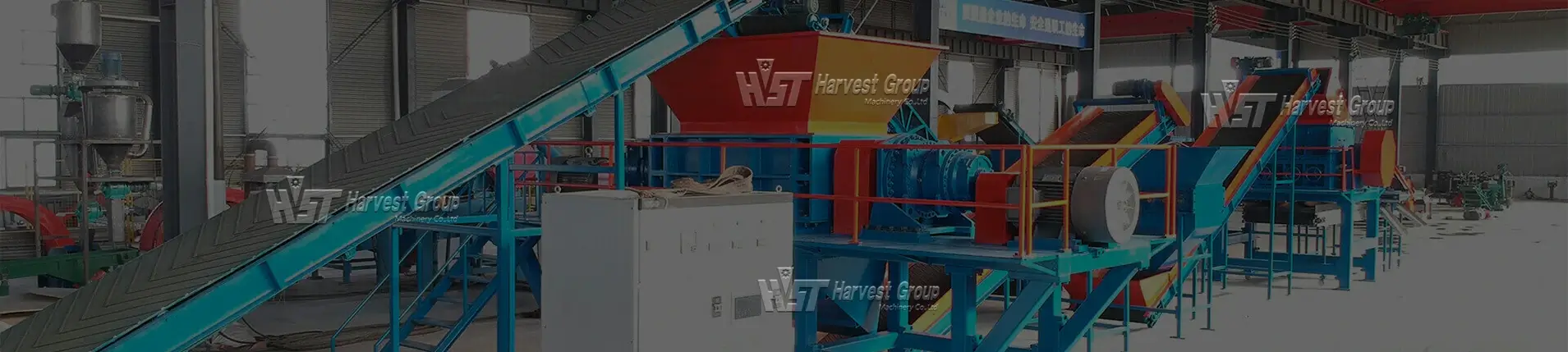
Large tire recycling equipment is a complete industrial recycling system covering the entire process, including shredding, crushing, steel separation, fiber removal, screening, and rubber grinding. It can produce higher-value recycled products such as rubber mulch, rubber granules, rubber powder, and recovered steel wire.
| Comparison | Small Tire Recycling Equipment | Large Tire Recycling Equipment |
|---|---|---|
| Production Capacity | Hundreds of kilograms per hour | Several tons per hour |
| Investment Cost | Lower initial investment and lower entry barrier | Higher investment with industrial-scale configuration |
| Factory Requirement | Small working area, suitable for ordinary workshops | Requires large industrial factory space and supporting areas |
| Automation Level | Basic semi-automatic operation with more manual assistance | Fully automated continuous production with less manual intervention |
| Equipment Configuration | Single machines or simple equipment combinations | Complete integrated tire recycling production line |
| Suitable Tire Types | Small quantities of passenger car waste tires | Passenger tires, truck tires, and OTR tires |
| Final Products | Tire chips and basic rubber materials | Rubber mulch, rubber granules, rubber powder, and recovered steel |
Small tire recycling equipment is designed for companies that want to enter the tire recycling industry with lower investment and small-scale production requirements.
It is commonly used by startup businesses, local tire collection centers, and traditional companies looking to expand into waste tire recycling.
Small tire recycling systems are suitable for situations where local waste tire availability is limited, supply is unstable, the market is still being tested, or the investment budget is restricted.
By selecting a properly sized system, businesses can avoid problems such as unused production capacity and unnecessary capital investment.
A small tire recycling system focuses on simple and practical recycling processing. The standard equipment configuration usually includes:
This equipment configuration can quickly process waste tires into standard rubber chips and meet basic recycling material requirements.
For customers who only need basic tire processing, a waste tire shredder machine can provide an efficient first-stage recycling solution.
A small tire recycling system also supports modular expansion. Additional equipment such as rubber crushers, fiber separators, and grinding systems can be added later according to market demand and production growth.
The biggest advantage of small tire recycling equipment is the low initial investment requirement.
Businesses do not need to invest in a complete industrial recycling plant at the beginning. The lower equipment purchase and installation cost makes it a lower-risk option for investors who want to test the tire recycling market.
Because a small recycling system contains fewer machines and has a simpler layout, installation and commissioning are usually faster.
It does not require a large technical team. Ordinary workers can operate the equipment after basic training, while daily maintenance is easier and operating costs are lower.
Many small cities and rural areas have limited waste tire resources or scattered collection channels.
Small tire recycling equipment can better match local raw material availability and prevent problems caused by oversized equipment, such as low utilization rates and wasted investment.
Many small tire recycling systems use a modular design.
As waste tire supply increases and business volume expands, companies can gradually add additional equipment and upgrade the recycling process without replacing the entire system.
This provides greater investment flexibility and allows businesses to develop step by step.
Although small tire recycling equipment has many advantages, it also has several limitations due to its smaller configuration and production capacity.
First, the hourly production capacity is relatively limited, making it unsuitable for large industrial orders.
Second, the automation level is lower, resulting in higher labor costs per ton of processed material.
Third, small systems usually lack advanced separation and grinding equipment. They cannot completely remove steel wire and textile fiber impurities, meaning they are mainly suitable for producing basic rubber materials rather than high-value rubber granules or fine rubber powder.
Finally, small tire recycling equipment is not ideal for companies planning long-term large-scale industrial production. As the business grows, equipment upgrades may eventually become necessary.
Large tire recycling equipment is designed for industrial-scale and commercial waste tire recycling projects. It is mainly used by professional recycling companies, municipal solid waste processing organizations, and large-scale investors.
Large tire recycling systems are suitable for businesses with stable waste tire supply channels, sufficient raw material inventory, continuous production requirements, and the goal of producing higher-value recycled products.
These systems are designed for companies that need 24-hour continuous operation, large-volume processing capacity, and the ability to handle large commercial orders.
A large tire recycling production line covers the complete waste tire deep-processing process. A complete system usually includes:
Through cooperation between multiple machines, waste tires can be processed into various high-value recycled products, including:
For customers requiring a complete industrial solution, a customized tire recycling plant can be designed according to production capacity, tire types, and final product requirements.
Large tire recycling equipment supports continuous operation and can process several tons of waste tires per hour.
It can quickly handle large amounts of waste tire inventory, making it suitable for large-scale production and commercial recycling projects requiring stable output.
Through multiple separation and screening processes, large tire recycling systems provide much better steel removal efficiency, fiber separation performance, and particle size control compared with basic recycling equipment.
The final recycled materials have more uniform particle sizes and fewer impurities, making high-value products such as rubber granules and rubber powder suitable for wider applications and higher market prices.
Large tire recycling lines can integrate automatic feeding, conveying, separation, and control systems.
The entire production process requires less manual operation, significantly reducing labor costs per ton of processed material while minimizing human operation errors and maintaining stable product quality.
Although large tire recycling equipment requires a higher initial investment, it provides higher production efficiency, lower processing costs per ton, and higher-value recycled products.
For companies planning long-term development in the tire recycling industry, large-scale equipment usually provides better profit potential and stronger market competitiveness.
Large tire recycling systems also have certain requirements and limitations.
First, the initial investment for equipment purchase, installation, commissioning, and factory preparation is much higher, requiring stronger financial capability.
Second, large recycling systems require larger industrial facilities with sufficient space for equipment installation, raw material storage, finished product storage, and maintenance operations.
Finally, professional technicians are usually required for equipment operation and maintenance. If local waste tire supply is unstable, the equipment utilization rate may be low and the investment recovery period may become longer.
Equipment selection should not be based only on the purchase price. Long-term operating costs, investment recovery period, and return on investment should also be considered.
A lower-priced machine does not always provide the best value. The following table compares the overall costs of small and large tire recycling systems.
| Cost Factor | Small Tire Recycling System | Large Tire Recycling System |
|---|---|---|
| Equipment Investment | Low | High |
| Installation and Commissioning Cost | Low | High |
| Labor Cost per Ton | Higher | Lower |
| Daily Maintenance Difficulty and Cost | Simple and low cost | Professional maintenance with moderate cost |
| Production Efficiency | Limited, suitable for small-batch processing | High efficiency, suitable for mass production |
| Future Expansion Potential | Average, limited upgrade capability | Excellent, supports comprehensive expansion |
In actual operation, small equipment has lower purchasing costs but higher labor and processing costs per ton.
Large tire recycling systems require higher initial investment but achieve lower operating costs through automation, higher efficiency, and large-scale production, providing better long-term ROI (Return on Investment).
The best equipment choice depends on your specific business conditions, raw material supply, investment plan, and final products.
A small tire recycling system is the better choice if you meet the following conditions:
A large industrial recycling system is recommended if:
Raw material supply is the most important foundation for equipment selection.
Before starting production, businesses should accurately estimate the monthly and annual amount of waste tires available for recycling.
Purchasing oversized equipment without sufficient raw materials may result in low utilization rates and wasted investment.
When tire supply is limited and scattered, small equipment is usually more suitable. When supply is stable and sufficient, large equipment can fully demonstrate its advantages in mass production.
Different recycled products require completely different equipment configurations, which directly affect project profitability.
| Final Product | Required Equipment Configuration |
|---|---|
| Tire Chips | Basic tire shredding system |
| Rubber Mulch | Shredder + crushing equipment + screening system |
| Rubber Granules | Shredder + granulator + separation equipment |
| Fine Rubber Powder | Complete recycling line + professional grinding system |
A complete rubber mulch production line requires additional crushing and screening processes compared with simple tire shredding.
Large tire recycling plants have strict factory requirements.
The facility needs enough space for:
Small tire recycling equipment has stronger site adaptability and can operate in ordinary workshops.
Before purchasing equipment, the factory size and layout should be carefully evaluated to avoid production problems caused by insufficient space.
A good equipment selection should consider both current requirements and future business growth.
It is recommended to choose modular and upgradeable equipment solutions.
Many successful recycling companies start with smaller systems and gradually expand production capacity, improve automation levels, and add more product categories as their business develops.
There is no absolute answer to whether small or large tire recycling equipment is better. The right choice depends on whether the equipment matches your actual project requirements.
Small tire recycling equipment has advantages such as low investment, simple operation, flexible installation, and lower business risk. It is an ideal choice for beginners, small-scale recycling projects, and companies that want to test the market.
Large tire recycling equipment provides higher production capacity, better product quality, stronger automation, and higher long-term return potential. It is more suitable for industrial-scale, commercial, and long-term tire recycling projects.
The key principle of equipment selection is not choosing the largest or cheapest machine, but selecting a system that matches your waste tire supply, investment budget, final product requirements, and future development plans.
By designing a suitable recycling solution based on actual operating conditions, businesses can reduce investment risks and maximize the economic benefits of their tire recycling projects.
If you need a professional solution, an experienced tire recycling equipment manufacturer can provide a customized recycling system according to your tire processing capacity, final product standards, factory conditions, and production goals.
Yes. Small tire recycling equipment is very suitable for beginners entering the tire recycling industry.
It has a lower investment threshold, smaller space requirements, simple operation, and easier maintenance. New investors can quickly start small-scale production and test the local market with lower risk.
The main limitation is that the profit per ton may be lower compared with large-scale industrial production because of lower capacity and higher labor costs.
Yes. Most modern small tire recycling systems use a modular design, allowing future expansion according to business growth.
Additional equipment such as crushers, separators, grinding machines, screening systems, and automatic control systems can be added gradually.
Businesses can upgrade from a basic recycling system to a semi-automatic or fully automatic production line without replacing the entire equipment system.
The main difference is product purity and processing accuracy.
Small tire recycling equipment usually focuses on basic shredding. The recycled material may still contain steel wire and fiber impurities, making it more suitable for basic rubber materials.
Large tire recycling systems use multiple separation stages and precision screening technology to produce cleaner rubber materials with more uniform particle sizes.
High-quality rubber granules and rubber powder produced by large recycling plants usually have wider application areas and higher market value.
The key is selecting equipment based on actual requirements instead of blindly following trends.
Investors should not choose oversized equipment simply because they believe larger systems are always better, and they should not select low-quality equipment only because of a lower purchase price.
A successful equipment selection should consider:
Choosing an upgradeable and reliable tire recycling equipment solution can help reduce investment risks and improve long-term operating performance.
Different tire recycling projects require different equipment configurations. According to your production goals, the following solutions may also be suitable:
Selecting the right tire recycling equipment is a long-term business decision.
A small tire recycling system can provide a practical starting point for companies with limited raw materials and investment budgets. A large tire recycling system can provide higher efficiency and stronger profitability for businesses with stable tire supply and large-scale production goals.
Before purchasing equipment, carefully evaluate your raw material availability, factory conditions, production targets, and future expansion plans.
With the right equipment configuration and professional technical support, waste tires can be efficiently converted into valuable recycled materials and create sustainable business opportunities.