
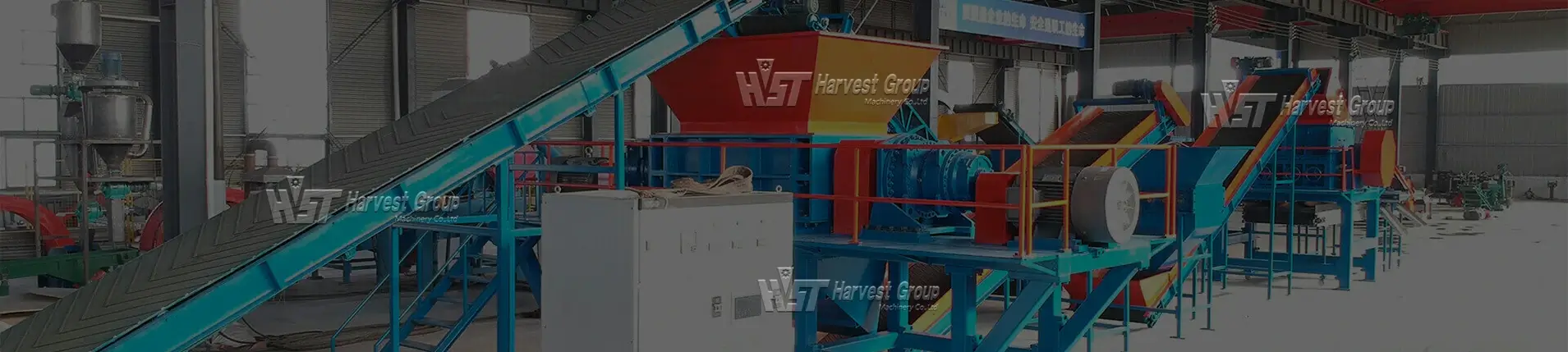
Waste tires do not have to end their useful life as low-value fuel or stockpiled rubber chips. Once the steel and textile reinforcement have been removed, the remaining rubber can be processed into clean granules and used to manufacture gym tiles, playground safety tiles, outdoor pavers, industrial mats and other molded flooring products.
For a tire recycling company, rubber tile production represents a move further down the value chain. Instead of selling all crumb rubber as an industrial raw material, part of the output can be converted into finished products with different thicknesses, colors, surface patterns and applications.
The process still begins with the tire recycling line. A molding press cannot turn whole tires or rough tire shreds directly into flooring. Stable tile production depends on consistent shredding, effective steel removal, fiber separation, granulation and particle classification before the rubber reaches the mixing and molding section.
Why Tire Recyclers Add Rubber Tile Production
Moving from Raw Material to Finished Products
Crumb rubber is generally sold according to weight, particle size and purity. Its price is influenced by local supply, transport distance and the number of nearby buyers. A plant that relies entirely on crumb rubber sales may have limited control over the value of its final output.
Rubber floor tiles are priced differently. Their value is influenced by product thickness, density, interlocking design, surface texture, color, intended application and finished-product performance. This creates more room for product differentiation than selling one standard rubber granule fraction.
Finished-product manufacturing also adds new expenses. Polyurethane binder, molds, presses, curing energy, labor, testing, packaging and sales costs must all be included before comparing rubber tile production with ordinary crumb rubber sales.
Using an Existing Crumb Rubber Operation
A recycler that already produces clean rubber granules has completed most of the upstream work. The tire shredding, steel separation, granulation, fiber removal and screening sections can continue operating as before. The main expansion is the addition of dosing, mixing, pressing, curing and packaging equipment.
This does not make the downstream investment insignificant, but it normally requires less additional infrastructure than building a complete factory that starts with whole waste tires.
Creating More Than One Sales Outlet
A tire recycling plant does not need to convert its entire granule output into floor tiles. Standard granules can still be sold to existing customers, while selected particle fractions are directed to the molding section. Recovered steel remains another potential by-product.
This flexible arrangement can reduce dependence on a single market, provided that the company has realistic sales channels for both the granules and the finished flooring products.
How Waste Tires Become Rubber Floor Tiles
The manufacturing route can be divided into two connected sections. The first section converts waste tires into tile-grade rubber granules. The second section mixes and molds those granules into finished flooring.
| Process Stage | Material Condition | Main Objective |
| Tire collection and sorting | Whole passenger, truck or industrial tires | Control feed size, tire type and contamination |
| Pre-treatment | Whole or partially cut tires | Prepare large or steel-heavy tires for stable feeding |
| Primary shredding | Rough tire shreds containing steel and fiber | Reduce tire volume and prepare material for further processing |
| Steel liberation | Smaller rubber pieces with exposed steel | Separate rubber from embedded reinforcement |
| Magnetic separation | Rubber with most steel removed | Recover tire steel and protect downstream equipment |
| Granulation | Small rubber particles with textile fiber | Produce the required particle-size range |
| Fiber removal and screening | Clean, classified rubber granules | Control steel, fiber, dust and oversized particles |
| Binder mixing | Rubber granules mixed with binder and optional additives | Prepare a consistent molding mixture |
| Molding and curing | Pressed tile in the mold | Develop the required shape, density and strength |
| Finishing and inspection | Completed rubber floor tile | Check dimensions, appearance and product quality |
Collecting and Sorting Waste Tires
The raw tire mix affects the design and actual capacity of the recycling system. Passenger tires, truck tires, agricultural tires and OTR tires differ in diameter, rubber thickness, bead structure, steel content and textile content.
A plant processing mainly passenger tires may use a different front-end configuration from a plant handling a large percentage of truck tires. Before equipment selection, the investor should confirm the maximum tire dimensions, truck-tire ratio, expected hourly input and level of contamination.
Mud, oil, water and foreign materials can affect machine wear and the quality of the final granules. Consistent feed preparation makes it easier to control both throughput and downstream tile formulation.
Pre-Treating Large or Steel-Heavy Tires
Some passenger tires can enter a properly selected shredder without pre-cutting. Larger truck, agricultural and OTR tires may require bead removal, sidewall cutting or sectioning before primary shredding.
Pre-treatment can improve feeding stability and reduce sudden load changes, but it should be selected according to the actual tire mix. Adding every available pre-treatment machine to a project does not automatically improve the process.
Primary Tire Shredding
A dual-shaft waste tire shredder machine reduces whole or pre-cut tires into rough shreds. At this stage, the rubber still contains steel wire and textile reinforcement, so it cannot yet be used in tile manufacturing.
A screening and return system may be added when a more controlled rough-chip size is required. Oversized pieces are returned to the shredder instead of being manually removed from the production area.
The purpose of primary shredding is stable size reduction. It is not intended to produce clean, finished 1–4 mm rubber granules in a single pass.
Steel Liberation and Magnetic Separation
The rough tire shreds enter a secondary reduction stage, commonly using a rasper or steel-separation machine. This equipment cuts and tears the material until the reinforcing steel is released from the rubber.
Magnetic separators then collect the liberated steel. In a complete line, magnetic separation may be arranged at several points rather than relying on one magnet at the end of the process.
Effective steel removal protects the rubber granulator and reduces the risk of sharp metal contamination in the finished flooring product. Recovered steel may also be sold as a secondary output, depending on its cleanliness and the local scrap-metal market.
Rubber Granulation and Screening
After most of the steel has been removed, the rubber pieces are processed by a granulator. Screens classify the particles, and oversized material is returned for further cutting.
Many molded tile products use granules within a few millimeters. A range around 1–4 mm is common for some tile base layers, but it is not a universal requirement. Tile thickness, target density, mold design, binder formulation and surface appearance all influence the preferred particle distribution.
Producing the finest possible rubber is not always the best choice. Excessively fine material can increase dust and binder consumption, while particles that are too coarse may affect surface quality and edge strength.
Fiber Separation and Dust Control
Textile fiber becomes easier to remove as the rubber is reduced to smaller particles. Air separation, fiber separators and vibrating screens are commonly used to separate the light material from the heavier rubber granules.
Dust extraction is also important around the granulator, screening equipment and transfer points. The objective is not simply to make the granules look clean. Stable steel, fiber and dust levels make the downstream tile recipe easier to control from one production batch to the next.
Mixing Rubber Granules with Binder
Qualified rubber granules are weighed and mixed with polyurethane binder. Depending on the product, the recipe may also contain pigment, colored EPDM granules or other application-specific additives.
Binder dosage should be determined through product trials. Insufficient binder may lead to loose edges, particle shedding or weak bonding. Excess binder raises the material cost and can change tile hardness, curing time and surface appearance.
The mixing section may be operated manually in a small workshop or equipped with automatic weighing and recipe control in a larger factory.
Molding and Curing the Tile
The mixed material is distributed into a mold and compressed by a hydraulic press. Some systems use heated molds, while others use cold pressing followed by controlled curing. The correct method depends on the binder, product thickness and equipment design.
The mold determines more than the outside dimensions. It may also form the surface texture, drainage channels, interlocking edges and product logo. Mold accuracy is particularly important for puzzle-style tiles because small dimensional variations can create visible gaps during installation.
Demolding, Trimming and Inspection
After curing, the tiles are removed from the mold, cooled and inspected. Typical checks include thickness, weight, length, width, squareness, surface appearance and edge condition.
Interlocking products should also be checked for fitting accuracy. Playground, commercial and other performance-based flooring products may require additional testing according to their intended market and installation conditions.
Equipment Needed for Rubber Tile Manufacturing
A complete waste-tire-to-flooring project combines upstream tire recycling equipment with a downstream tile molding section. The exact configuration depends on the tire type, granule specification, tile design and hourly capacity.
| Production Section | Main Equipment | Function |
| Tire pre-treatment | Debeader, sidewall cutter or tire sectioning machine | Prepares large or steel-heavy tires for stable feeding |
| Primary shredding | Dual-shaft tire shredder | Reduces whole tires into rough shreds |
| Size control | Screen, classifier and return conveyor | Returns oversized material for further shredding |
| Steel liberation | Rasper or steel-separation machine | Separates rubber from embedded tire steel |
| Steel recovery | Magnetic separators | Removes and collects liberated steel |
| Rubber granulation | Rubber granulator | Produces controlled rubber particle sizes |
| Fiber separation | Air separator and fiber separator | Removes textile reinforcement from the rubber |
| Particle classification | Vibrating screen and return system | Separates qualified granules from oversized particles |
| Dust control | Central dust collection system | Collects dust and light material at processing points |
| Material dosing | Granule and binder weighing system | Controls the tile formulation |
| Mixing | Rubber granule mixer | Blends rubber, binder and optional color material |
| Tile forming | Hydraulic compression press | Compacts the mixture into the required shape |
| Product design | Tile molds | Determines thickness, texture and interlocking pattern |
| Curing | Heated mold, curing rack or curing chamber | Allows the binder to develop the required strength |
| Finishing | Demolding, trimming and inspection tools | Prepares the tiles for packaging |
| Packaging | Stacking, wrapping and palletizing equipment | Prepares finished products for storage and delivery |
What Granule Quality Is Needed for Rubber Floor Tiles?
The flooring press can only produce consistent products when the incoming rubber granules remain stable. Particle size is important, but it is only one part of the specification.
| Quality Factor | Why It Matters | How It Is Controlled |
| Particle-size distribution | Affects density, surface texture, tile weight and binder demand | Granulation, screening and oversized-material return |
| Remaining steel | May damage equipment or create sharp contamination | Steel liberation and multi-stage magnetic separation |
| Textile fiber | Can affect appearance, mixing and edge strength | Air separation and dedicated fiber removal |
| Dust content | May change binder consumption and curing behavior | Screening, air classification and dust collection |
| Moisture | Can interfere with mixing and binder performance | Dry storage and controlled material handling |
| Oil, mud and foreign material | May affect odor, bonding and finished-product quality | Feed inspection and additional cleaning where necessary |
| Batch consistency | Reduces recipe adjustments and product variation | Stable tire feed, equipment settings and quality inspection |
Why Consistent Granules Reduce Production Cost
Lower-priced granules do not always produce lower-cost tiles. If the particle distribution changes from batch to batch, operators may need to adjust binder dosage, molding time or press settings. High fiber or dust content can also increase rejects and surface defects.
For this reason, an equipment quotation should not be evaluated only by the number of tonnes processed per hour. The cost per tonne of qualified rubber granules is often a more useful measure.
Products Made from Recycled Tire Granules
Standard Gym Tiles
Standard square or rectangular rubber tiles are widely used in commercial gyms, weight rooms, training centers and industrial work areas. They are usually made with black recycled rubber granules, although colored particles may be added for appearance.
These products require stable thickness, density and surface finish. Their molds are generally simpler than interlocking or highly textured designs.
Interlocking Rubber Tiles
Interlocking tiles use puzzle-shaped edges that allow individual pieces to connect. Their modular structure makes transport, installation and replacement easier.
Some interlocking systems can be installed without full-surface adhesive, although the final installation method still depends on the subfloor, project size, edge restraint and manufacturer instructions.
EPDM Playground Tiles
Colored playground tiles often use recycled tire rubber in the lower layer and EPDM granules in the visible surface layer. The recycled base controls much of the product thickness, while the EPDM layer provides color and a different surface appearance.
These products normally require attention to layer bonding, drainage, outdoor exposure and impact performance. Finished-product testing is more important than the recycled content alone.
Outdoor Rubber Pavers
Rubber pavers can be used around parks, patios, swimming pools, walkways, dog runs and equestrian areas. Their design may include a textured surface or drainage structure.
Outdoor products need to account for wet conditions, temperature changes, sunlight and the stability of the supporting surface.
Industrial and Agricultural Mats
Heavy-duty molded mats are used in workshops, warehouses, standing workstations, stables and livestock facilities. These products are generally thicker and heavier than ordinary gym tiles.
Larger products require suitable mold dimensions, press capacity and material-handling arrangements. Their value often comes from load resistance, surface grip and durability rather than decorative appearance.
Rubber Flooring Rolls
Rubber rolls can also use recycled tire granules, but they normally require a different forming process. Continuous pressing, calendering, long-sheet curing, cutting and rewinding may be involved.
A tile press should therefore not be treated as a complete rubber roll production line.
| Product Type | Production Focus | Typical Market |
| Standard rubber tile | Thickness, density and wear resistance | Gyms, schools and training areas |
| Interlocking tile | Edge accuracy and dimensional stability | Gyms, garages and modular installations |
| Playground safety tile | Cushioning, drainage and product testing | Parks, schools and daycare facilities |
| Outdoor rubber paver | Weather resistance, drainage and surface grip | Walkways, patios and pool surroundings |
| Industrial mat | Load resistance, thickness and anti-fatigue performance | Factories, warehouses and workshops |
| Livestock mat | Heavy-duty construction and non-slip surface | Stables and agricultural facilities |
| Rubber flooring roll | Continuous forming and width consistency | Large gym and commercial floor areas |
Rubber Floor Tiles and Poured-in-Place Flooring Are Different Products
Rubber tiles and poured-in-place surfacing may use similar recycled granules, but their production and sales models are not the same.
| Comparison | Rubber Floor Tiles | Poured-in-Place Surfacing |
| Production location | Manufactured and cured in a factory | Mixed and installed at the project site |
| Product form | Individual modular pieces | Continuous seamless surface |
| Main equipment | Mixer, press, molds and curing system | Site mixing and installation equipment |
| Installation | Interlocking, loose-laid or bonded | Installed by a site surfacing team |
| Repair | Individual pieces may be replaced | Damaged areas are normally repaired on site |
| Sales model | Suitable for distributors, retailers and projects | Usually sold together with installation service |
Three Investment Models for a Rubber Tile Project
Buying Rubber Granules and Manufacturing Tiles
This model starts with finished rubber granules. The company invests in storage, dosing, mixing, pressing, molds, curing and packaging without building an upstream tire processing line.
The initial equipment requirement is lower, making this model suitable for testing the local flooring market. The main limitation is dependence on external suppliers for granule quality, price and delivery.
Processing Whole Tires and Manufacturing Tiles
An integrated tire recycling plant controls the process from end-of-life tires to finished rubber flooring. It requires more equipment and factory space but gives the operator direct control over particle size, steel content, fiber content and available granule fractions.
The project may also generate revenue from recovered steel and excess granules that are not consumed by the tile section.
Adding Tile Production to an Existing Recycling Facility
This model uses the existing tire processing system and adds only the downstream manufacturing section. It is often the most practical option for a recycler that already has clean crumb rubber but wants to develop a finished-product market.
| Project Model | Main Advantage | Main Limitation | Suitable Situation |
| Buy rubber granules | Lower initial equipment requirement | Dependence on outside suppliers | Market testing and smaller tile workshops |
| Integrated waste-tire-to-tile plant | Full control over feedstock and granule quality | Higher investment and more complex operation | Medium and large continuous production |
| Upgrade an existing recycling plant | Uses existing shredding and granulation equipment | Requires a new product market and molding section | Established crumb rubber producers |
How Much Does It Cost to Start a Rubber Tile Business?
There is no standard investment figure for every rubber tile project. A workshop buying granules has a very different cost structure from an integrated factory processing truck tires or OTR tires.
Upstream Tire Processing Cost
Projects starting with whole tires must budget for pre-treatment, shredding, screening, steel separation, granulation, fiber removal, dust collection, conveying and storage.
The main cost variables are the tire type, maximum feed size, hourly capacity, truck-tire proportion, target particle size, purity requirement and automation level.
Downstream Tile Manufacturing Cost
The flooring section includes material dosing, mixers, hydraulic presses, molds, curing equipment, demolding tools and packaging systems.
Molds are often underestimated during early planning. A company that wants to produce several thicknesses, interlocking patterns, surface textures and color combinations may need a large mold inventory.
Factory and Supporting Systems
The equipment purchase price does not include every project expense. Electrical distribution, foundations, ventilation, dust extraction, fire protection, forklifts, raw-material storage, finished-product storage and quality-control equipment must also be considered.
Working Capital
Before production begins, the company needs working capital for waste tires or purchased granules, polyurethane binder, EPDM material, pigments, packaging, labor, electricity, spare parts and customer payment periods.
| Cost Category | Main Items | Commonly Overlooked Expense |
| Raw material preparation | Waste tires, collection, transport and sorting | Contaminated tires and inconsistent feed quality |
| Rubber granule production | Electricity, labor, knives, screens and maintenance | Downtime and rejected granule fractions |
| Tile formulation | Rubber granules, binder, pigment and EPDM | Binder price and recipe changes |
| Molding | Press operation, molds and curing energy | Mold quantity, cleaning and changeover time |
| Factory operation | Labor, electricity, ventilation and material handling | Fire protection and dust-control maintenance |
| Finished product | Inspection, packaging, pallets and storage | Heavy-product transport and warehouse space |
| Sales and administration | Marketing, sales staff, customer service and finance | Distributor margins and customer payment terms |
How Rubber Tile Manufacturing Cost Is Calculated
The manufacturing cost should include the rubber granules, polyurethane binder, pigments or EPDM material, electricity, labor, mold depreciation, equipment maintenance, rejected products, packaging and factory overhead.
For an integrated plant, the internal cost of producing the rubber granules should be calculated first. That cost includes the delivered tire cost, shredding and granulation energy, labor, blade and screen wear, maintenance and dust control. Revenue from recovered steel may then be deducted when estimating the net granule cost.
Calculating the Cost per Square Foot
The cost per square foot is found by dividing the total manufacturing cost for a production period by the total saleable flooring area produced during the same period.
Only qualified finished tiles should be included in the saleable area. Rejected tiles, start-up material, color-change waste and damaged products still create expenses even though they do not generate revenue.
Tile thickness and density have a direct effect on this calculation. A thicker tile consumes more granules and binder per square foot than a thinner product with the same length and width.
Where Does the Profit Come From?
Finished Rubber Tile Sales
The main revenue comes from selling gym tiles, playground tiles, outdoor pavers, industrial mats and other finished flooring products. Special thicknesses, colors, surface designs and interlocking structures may support higher selling prices, but they also add tooling and production costs.
Sales of Excess Rubber Granules
If the tire recycling section produces more granules than the tile presses can consume, the remaining qualified material can still be sold to other rubber product manufacturers or surfacing contractors.
Recovered Tire Steel
Separated tire steel provides another possible revenue stream. Its actual value depends on the local scrap price, the amount of rubber attached to the steel and the cost of transport.
Customized Products
Custom molds can produce logos, branded surfaces, drainage patterns and unusual dimensions. These products may generate better margins when customers accept the additional tooling and small-batch cost.
Estimating Monthly Operating Profit
Monthly saleable output should be based on the actual hourly production rate, daily working time, monthly operating days, equipment utilization and finished-product yield. Rated press capacity alone is not a reliable sales forecast.
Monthly gross margin is the finished-product sales revenue remaining after the direct production costs have been deducted. Operating profit is calculated after labor, rent, maintenance, administration, sales and financing expenses are also included.
| Financial Item | How to Estimate It | Important Adjustment |
| Monthly saleable output | Use actual hourly output, working time, equipment utilization and product yield | Exclude rejected and unsold products |
| Monthly sales revenue | Use the confirmed ex-factory price and saleable flooring area | Do not use the final installed retail price |
| Variable production cost | Add granules, binder, additives, energy, packaging and production labor | Include waste generated during start-up and product changes |
| Gross margin | Subtract variable production cost from sales revenue | Do not treat gross margin as final profit |
| Operating profit | Deduct rent, maintenance, sales, administration and financing expenses | Use realistic utilization and customer payment periods |
Selling through Distributors or Directly to Customers
Distributor Sales
Distributors can handle local inventory, promotion, delivery and customer service. This allows the manufacturer to focus on stable production and larger orders, although the ex-factory price is usually lower than the final market price.
Direct Sales
Direct customers may include commercial gyms, schools, playground contractors, industrial suppliers, warehouses, farms, flooring installers and construction companies.
Direct sales can provide greater control over product specifications and pricing, but the manufacturer must manage marketing, customer service, order processing and delivery.
| Sales Channel | Main Advantage | Main Challenge |
| Distributor | Moves larger standard orders and reduces local sales work | Lower ex-factory price and less brand control |
| Direct project sales | Closer customer relationship and easier customization | Longer sales process and project-management requirements |
| Direct standard-product sales | Greater pricing control | Requires inventory, customer service and delivery management |
| Combined channel | Uses distributors for volume and direct sales for special projects | Needs clear pricing and territory management |
How Long Do Recycled Rubber Floor Tiles Last?
There is no single lifespan that applies to every recycled rubber tile. A gym tile installed indoors faces very different conditions from a playground tile exposed to sunlight, rain and temperature changes.
Rubber Granule and Binder Quality
Clean, consistent rubber granules help the binder coat and connect the particles evenly. High fiber, dust or contamination levels may affect bonding and create variation between production batches.
The binder type and dosage also influence strength, flexibility and resistance to particle loss. A product made with an unsuitable formulation may fail earlier even when the rubber granules themselves are acceptable.
Tile Thickness, Density and Curing
Thickness and density should match the intended application. A product intended for heavy weights or impact loads normally requires a different construction from a light-duty commercial floor tile.
Curing conditions are equally important. Insufficient curing can lead to weak edges, deformation or layer separation, while excessive heat may affect productivity and product appearance.
Installation and Operating Environment
Subfloor preparation, drainage, traffic, impact load, sunlight, cleaning chemicals and routine maintenance all influence service life. Outdoor installations need particular attention to water drainage and thermal movement.
Manufacturers should avoid giving a fixed lifespan for every tile unless the claim is supported by product testing, field records and clear warranty conditions.
Playground Tiles Require Finished-Product Testing
Playground flooring is not simply a thicker version of ordinary gym flooring. The finished surface may need to meet impact, fall-height, drainage and accessibility requirements in the destination market.
Using recycled tire rubber does not automatically make a tile suitable for children’s play areas. Testing should be carried out on the complete tile system at the intended thickness and installation condition.
How to Choose a Tire Recycling Line for Rubber Tile Production
Begin with the Finished Tile
Equipment selection should begin with the product the factory intends to sell. Tile dimensions, thickness, surface layer, particle size, density and expected monthly demand should be confirmed before the shredder and granulator are finalized.
Match Granule Output with Tile Consumption
A high-capacity recycling line connected to a small molding section may create excess granule inventory. A large press section supplied by an undersized granule line may remain idle while waiting for material.
The capacity study should compare the hourly granule output, granule consumption per tile, molds per press cycle, curing time, working shifts and realistic sales volume.
Specify Purity Instead of Particle Size Alone
A request for 1–4 mm rubber granules is incomplete without information about remaining steel, fiber, dust, moisture and the expected passenger-to-truck-tire ratio.
The same nominal particle size can behave differently during molding when the raw tire mix and separation quality change.
Plan Maintenance, Dust Control and Fire Protection
The factory layout should provide access for blade replacement, screen cleaning, magnet inspection and fiber removal. Dust collection, electrical protection, emergency stops, equipment guarding and suitable fire-prevention measures should be considered during the original project design rather than added after installation.
| Information Required Before Equipment Selection | Why It Is Needed |
| Tire type and maximum dimensions | Determines front-end feeding and pre-treatment requirements |
| Passenger and truck tire ratio | Affects steel content, wear and actual capacity |
| Required granule size | Determines granulation and screening configuration |
| Steel, fiber and dust limits | Determines separation and quality-control requirements |
| Tile type and thickness | Determines granule consumption and molding equipment |
| Molds per press cycle | Helps estimate the actual tile output |
| Working hours and shifts | Used to compare upstream and downstream capacity |
| Local voltage and installation conditions | Determines electrical and supporting-system design |
| Destination market requirements | Influences product testing and formulation planning |
Common Mistakes in Rubber Tile Projects
| Common Mistake | Likely Result | Better Approach |
| Buying only a primary tire shredder | Rough shreds still contain steel and fiber | Plan the complete separation and granulation process |
| Ignoring binder cost | Finished-product cost is underestimated | Test the recipe and use actual binder quotations |
| Choosing a press only by tonnage | Actual output may be lower than expected | Evaluate mold quantity, cycle time and curing method |
| Launching too many tile designs | High mold investment and frequent production changes | Begin with one or two products supported by real demand |
| Using rated capacity to calculate profit | Unrealistic payback period | Use actual utilization, yield and sales assumptions |
| Making unsupported safety or lifespan claims | Commercial and compliance risk | Base claims on finished-product testing and field data |
Frequently Asked Questions
Can Whole Waste Tires Be Pressed Directly into Floor Tiles?
No. Whole tires must first be reduced into clean rubber granules. The normal process includes shredding, steel liberation, magnetic separation, granulation, fiber removal and screening.
Can One Tire Shredder Produce 1–4 mm Rubber Granules?
A primary tire shredder normally produces rough tire pieces rather than tile-grade granules. Additional steel separation, granulation and classification equipment is required.
Is It Better to Buy Rubber Granules or Produce Them In-House?
Buying granules reduces the initial investment and may be suitable for market testing. Producing granules in-house requires more equipment but gives the manufacturer greater control over particle size, purity and long-term material supply.
What Are the Main Costs in Rubber Tile Manufacturing?
The main costs usually include rubber granules, polyurethane binder, EPDM or pigments, electricity, labor, molds, equipment maintenance, rejected products, packaging and factory overhead.
How Is Rubber Flooring Cost per Square Foot Calculated?
The total manufacturing cost for a production period is divided by the total saleable flooring area produced during that period. Tile thickness, density and finished-product yield have a strong influence on the result.
Are Rubber Tiles Always More Profitable Than Crumb Rubber?
Not necessarily. Finished products may generate more revenue per tonne of rubber, but they also require additional manufacturing, testing, inventory, marketing and sales expenses.
Can Recycled Rubber Tiles Be Made in Different Colors?
Yes. Manufacturers may add pigments or colored particles, or produce a two-layer tile with a recycled rubber base and an EPDM surface layer.
Can Interlocking Rubber Tiles Be Installed without Adhesive?
Some interlocking products can be installed without full-surface adhesive. The final installation method depends on the tile design, subfloor, installation area and manufacturer instructions.
Conclusion
Producing rubber floor tiles from recycled tires requires more than a molding press. The project begins with a stable tire processing system capable of producing clean and consistent rubber granules. The downstream section then converts those granules into flooring through accurate dosing, mixing, molding and curing.
For an established tire recycler, tile production can create another market for crumb rubber and support a wider finished-product range. For a new investor, the first decision is whether to purchase granules or control the entire process from waste tires.
The most reliable projects begin with the target flooring product, confirmed market demand and a clear granule specification. The tire recycling capacity, molding capacity, mold plan and sales channels can then be matched around those requirements.
References
1. U.S. Environmental Protection Agency. Tire Crumb Questions and Answers . Information on scrap tire size reduction, steel and fabric removal, screening, and crumb rubber production.
2. U.S. Environmental Protection Agency. Federal Research on Recycled Tire Crumb Used on Playing Fields and Playgrounds . Research background concerning recycled tire crumb used in sports fields and playground surfaces.
3. U.S. Consumer Product Safety Commission. Public Playground Safety Handbook . Guidance concerning playground surfacing, fall protection, installation, inspection, and maintenance.
4. ASTM International. ASTM F1344 — Standard Specification for Rubber Floor Tile . Requirements for the compound and physical characteristics of rubber floor tiles.
5. ASTM International. ASTM F3041 — Standard Specification for Bonded Rubber Crumb Floor Coverings . Requirements for bonded rubber crumb flooring materials and their physical properties.
6. ASTM International. ASTM F1292 — Impact Attenuation of Playground Surfacing Materials . Performance requirements for the impact attenuation of surfaces installed around playground equipment.
7. ASTM International. ASTM F1951 — Accessibility of Playground Surface Systems . Accessibility requirements for surface systems installed under and around playground equipment.
8. U.S. Occupational Safety and Health Administration. 29 CFR 1910.212 — General Requirements for All Machines . General machine-guarding requirements for production equipment and hazardous operating areas.
9. U.S. Occupational Safety and Health Administration. 29 CFR 1910.147 — The Control of Hazardous Energy . Lockout and tagout requirements for machine servicing, cleaning, and maintenance.
Actual equipment cost and project profitability vary according to production capacity, local operating costs, product specifications, production yield, and market demand.