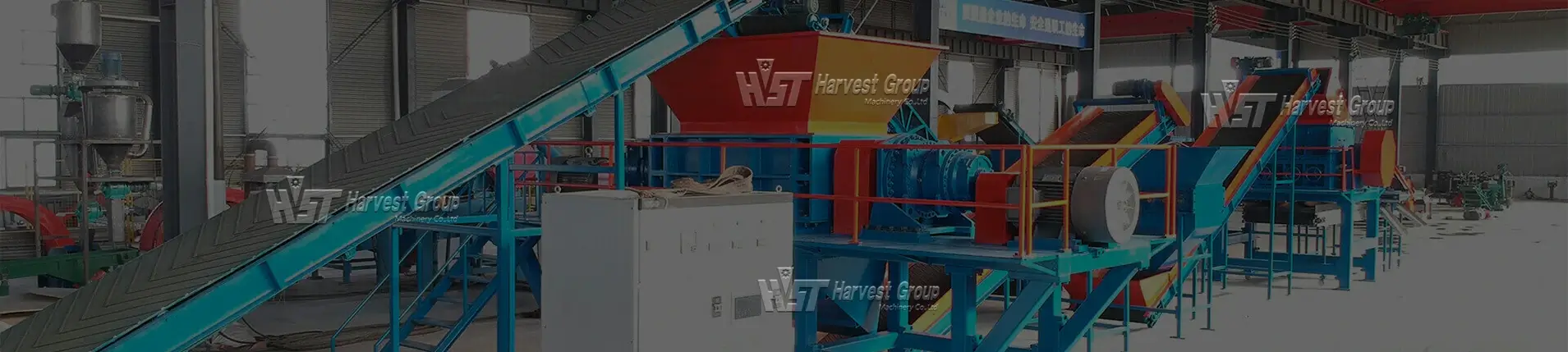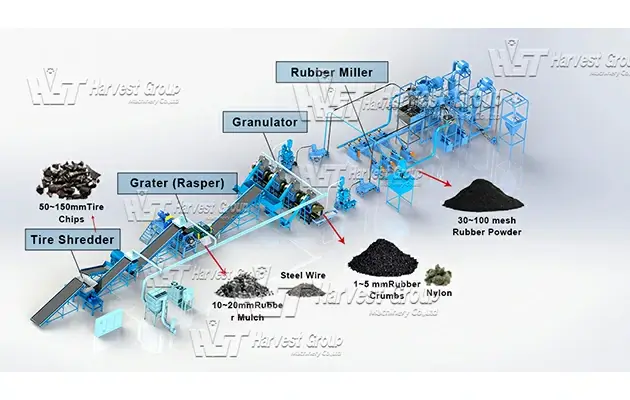
Tire recycling equipment includes a complete range of machines used to process waste tires into rubber chips, rubber mulch, crumb rubber, and fine rubber powder. A complete tire recycling machine system can include tire cutting equipment, tire shredding equipment, rasper machines, rubber granulators, tire grinding machines, magnetic separators, fiber separators, vibrating screens, conveyors, and dust collection systems.
HVST provides customized waste tire recycling equipment according to tire type, required capacity, output size, automation level, workshop layout, and final product application.
Learn More About Tire Recycling Plant →
Tire cutting machines are used for waste tire pre-processing before shredding. They help remove bead wire, cut tire sidewalls, and reduce whole tires into smaller sections for easier feeding.
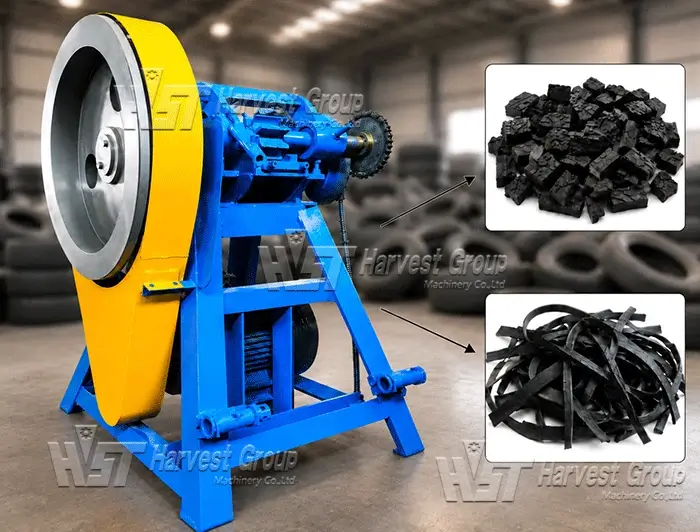
Cut and separate tire sidewalls from the tire crown before shredding.
Read More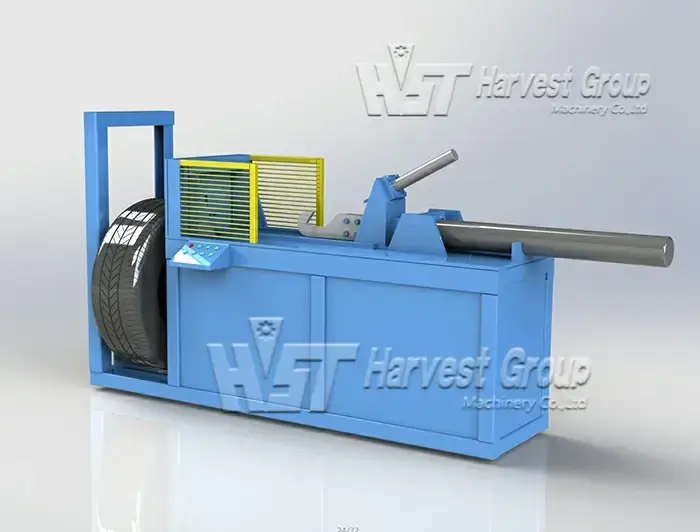
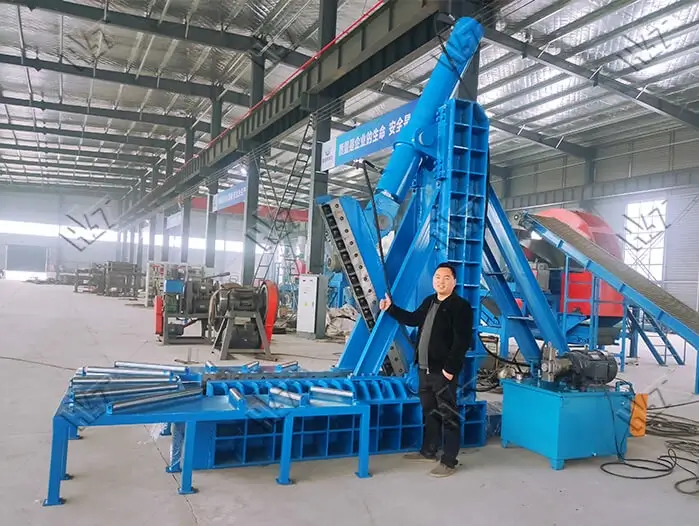
Heavy-duty tire cutter for OTR, mining, and large engineering tires.
Read More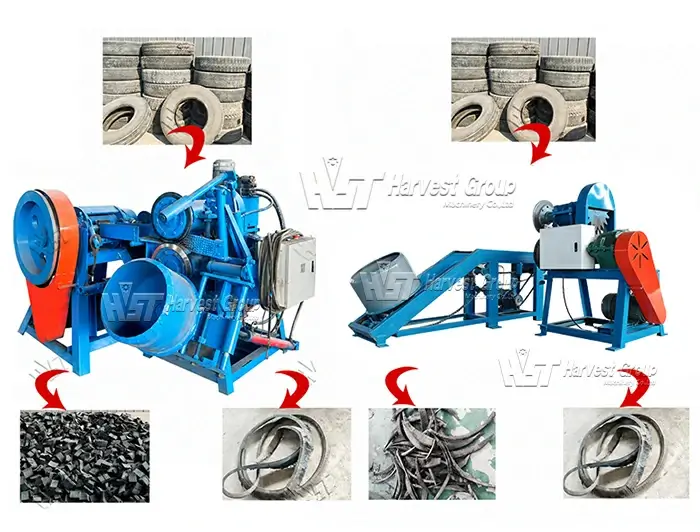
Includes tire ring cutter, strip cutter, block cutter, and rim separator.
Read More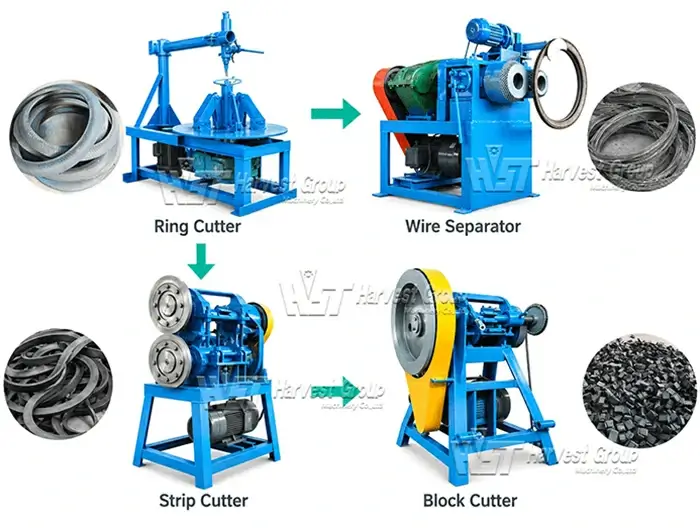
Includes tire ring cutter, strip cutter, block cutter, and rim separator.
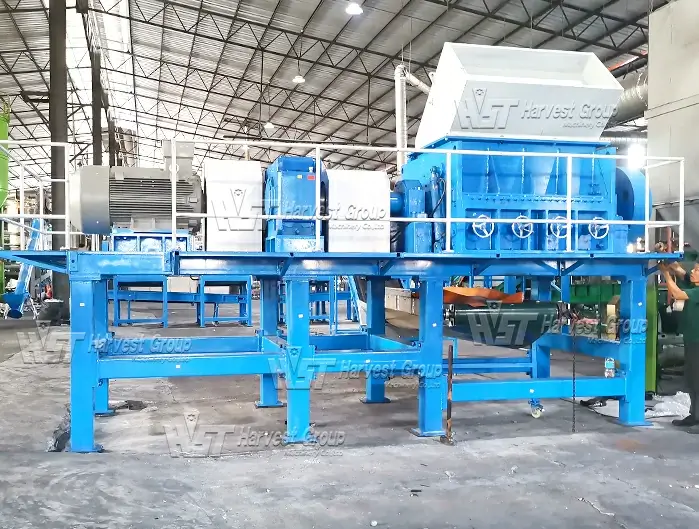
Read MoreTire shredding machines are used for primary size reduction, converting whole tires or pre-cut tires into 50–150 mm rubber chips.

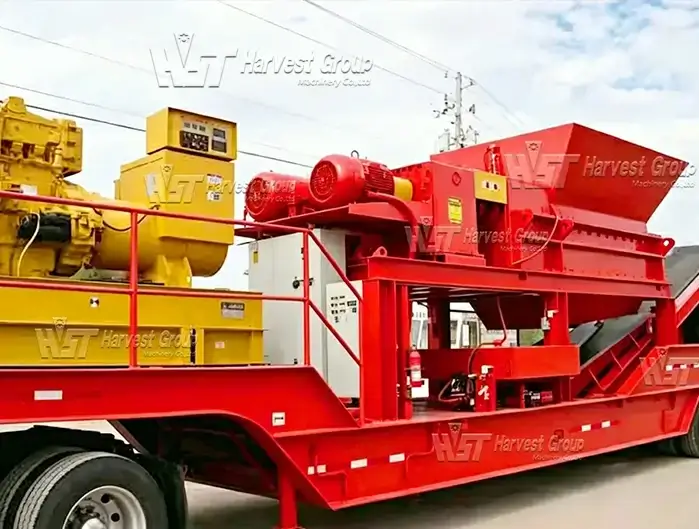
After shredding, rasper machines and rubber granulator machines reduce tire chips into rubber mulch and 1–5 mm crumb rubber while removing steel and fiber.
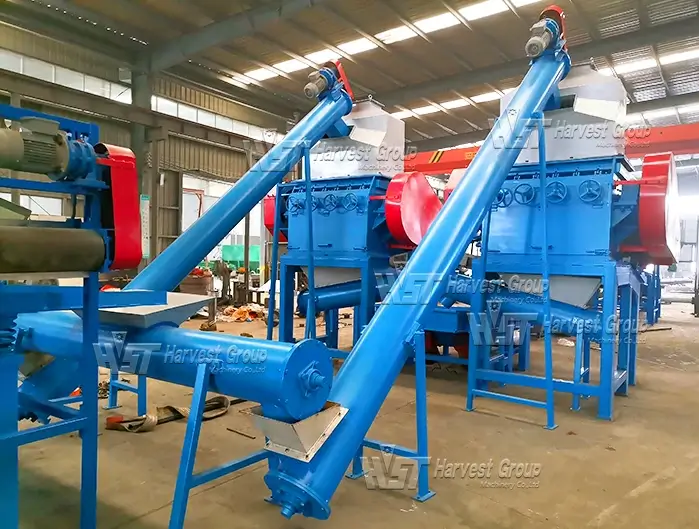
Output: 1–5 mm · High-purity crumb rubber for further processing.
Read MoreTire grinding machines and rubber cracking mills process crumb rubber into fine rubber powder, commonly used in asphalt, rubber products, and molded products.
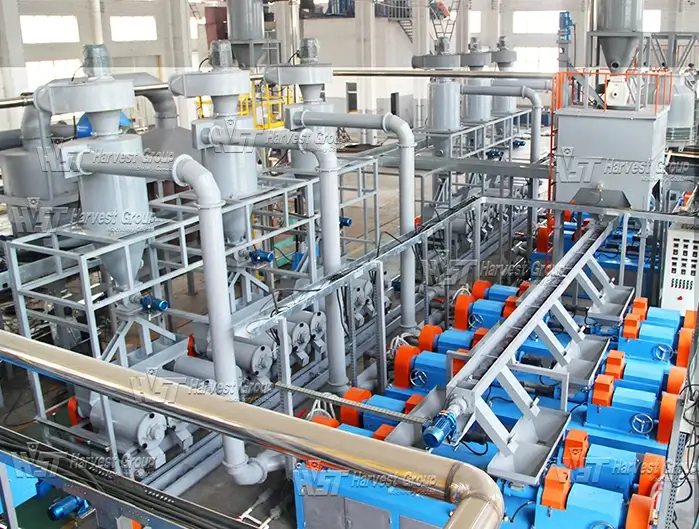
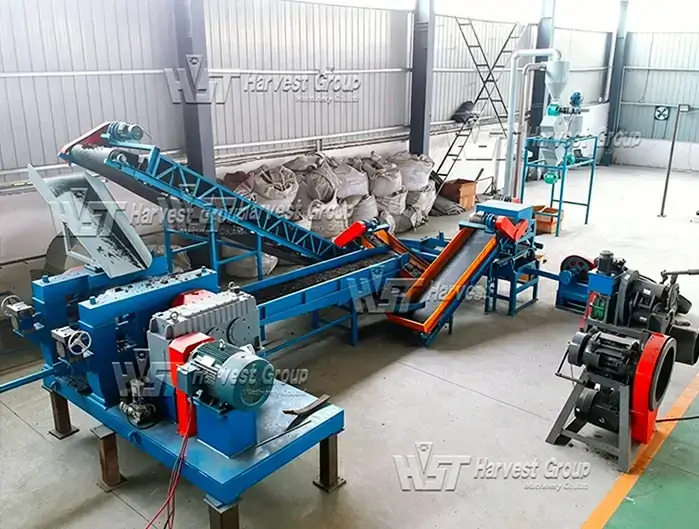
Roller mill equipment for rubber size reduction and powder preparation.
Read MoreSeparation equipment is used to remove steel wire, nylon fiber, and oversized particles from rubber materials, improving crumb rubber and rubber powder purity.
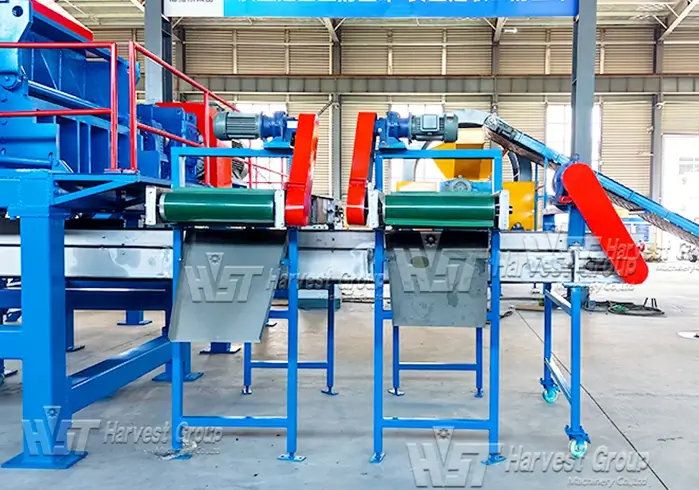
Separate steel wire from rubber granules after shredding and rasper processing.
Read More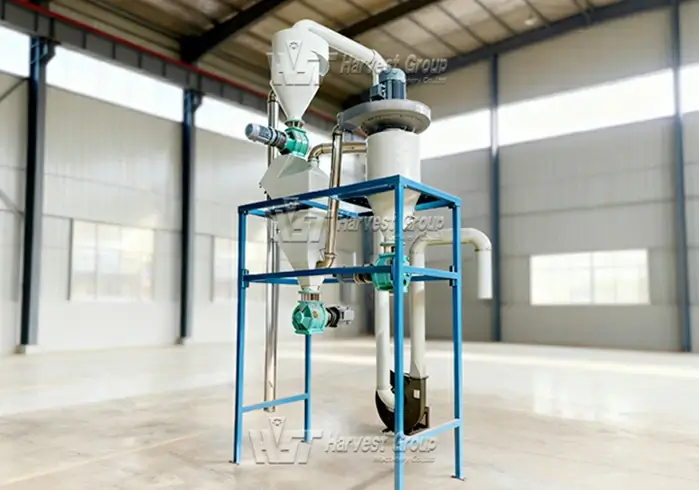
Separate nylon fiber from crumb rubber or rubber powder to improve final purity.
Read More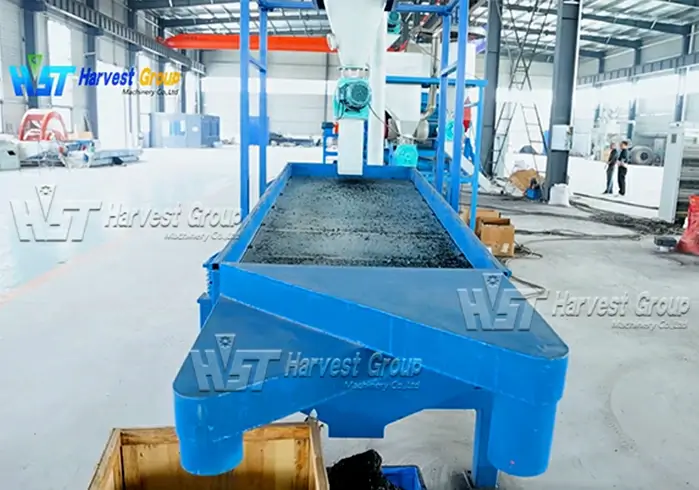
A complete tire recycling equipment system usually includes several machine modules for cutting, shredding, size reduction, steel separation, fiber removal, screening, and fine grinding. Different equipment types are selected according to the required final product, such as rubber chips, rubber mulch, crumb rubber, or fine rubber powder.
The table below shows the main machines used in a typical waste tire recycling machine line and their processing functions.
| Equipment Type | Function | Final Output |
| Tire Shredder | Primary shredding of whole tires or pre-cut tires | 50–150 mm rubber chips |
| Rasper Machine | Steel wire liberation and secondary size reduction | 10–30 mm rubber mulch |
| Rubber Granulator | Fine granulation of rubber chips or mulch-size material | 1–5 mm crumb rubber |
| Tire Grinding Machine | Fine powder grinding after crumb rubber production | 30–120 mesh rubber powder |
| Magnetic Separator | Steel wire removal from rubber granules or rubber chips | Cleaner recycled rubber material |
| Fiber Separator | Nylon fiber and light impurity removal | High-purity crumb rubber or rubber powder |
| Vibrating Screen | Particle size classification and oversized material return | Qualified rubber mulch, crumb rubber, or rubber powder |
For small projects, only tire cutting and shredding equipment may be required to produce rough rubber chips. For commercial recycling plants, additional rasper machines, granulators, magnetic separators, fiber separators, screens, conveyors, and control systems are usually needed to improve output quality and production efficiency.
The price of tire recycling equipment depends on the processing capacity, tire type, final output size, automation level, separation requirements, and workshop layout.
A basic system may include tire cutting and tire shredding equipment for producing rubber chips, while a complete tire recycling production line may also include rasper machines, rubber granulators, tire grinding machines, magnetic separators, fiber separators, vibrating screens, conveyors, dust collection systems, and electrical control cabinets.
To get an accurate quotation, please provide your raw tire type, required output size, hourly capacity, available workshop space, and final product application.
Get a Free Quote →Tire recycling equipment refers to a group of machines used to process waste tires into rubber chips, rubber mulch, crumb rubber, rubber granules, or fine rubber powder. A complete system may include tire cutters, tire shredders, rasper machines, rubber granulators, tire grinding machines, magnetic separators, fiber separators, vibrating screens, conveyors, and control systems.
A typical tire recycling production line may include tire debeader, tire cutter, tire shredder, rasper machine, rubber granulator, magnetic separator, fiber separator, vibrating screen, tire grinding machine, dust collector, conveyor system, and electrical control cabinet.
The cost depends on capacity, automation level, tire type, output size, and final product requirements. A simple tire shredding system costs less than a complete rubber crumb or rubber powder production line. A customized quotation is recommended for each project.
Tire recycling machines can produce 50–150 mm rubber chips, 10–30 mm rubber mulch, 1–5 mm crumb rubber, and 30–120 mesh rubber powder. The system can also recover steel wire and textile fiber from waste tires.
The right equipment depends on your raw tire type, required capacity, final output size, budget, workshop space, and target market. For example, TDF production requires a different configuration from rubber mulch, crumb rubber, or rubber powder production.
Looking for a complete tire recycling machine solution? We provide customized equipment based on capacity, tire type, and final product requirements.
A complete tire recycling production line is designed to convert waste tires into valuable products such as rubber mulch, crumb rubber (1–5 mm), and rubber powder (30–120 mesh).
The typical process includes tire cutting, shredding, granulating, grinding, and separation systems.
Production Process:
Whole Tire → Cutting → Shredding → Granulating → Grinding → Separation → Final Products
The tire shredding line is used to process whole tires into 50–150 mm rubber chips, suitable for TDF (tire-derived fuel) applications in cement plants and industrial boilers.
Learn More About Tire Shredding Line →
The rubber mulch production line converts scrap tires into high-quality rubber mulch used for playgrounds, landscaping, and garden applications.
This system includes shredding, rasper, and granulating equipment to produce clean and wire-free rubber mulch.
Explore Rubber Mulch Machine →
The crumb rubber production line produces 1–5 mm rubber granules widely used in sports surfaces, rubber tiles, and molded products.
The rubber powder production line processes crumb rubber into fine rubber powder (30–120 mesh), which is widely used in asphalt modification and industrial applications.
Explore more technical guides about tire recycling machines, equipment types, production processes, and complete waste tire recycling systems.