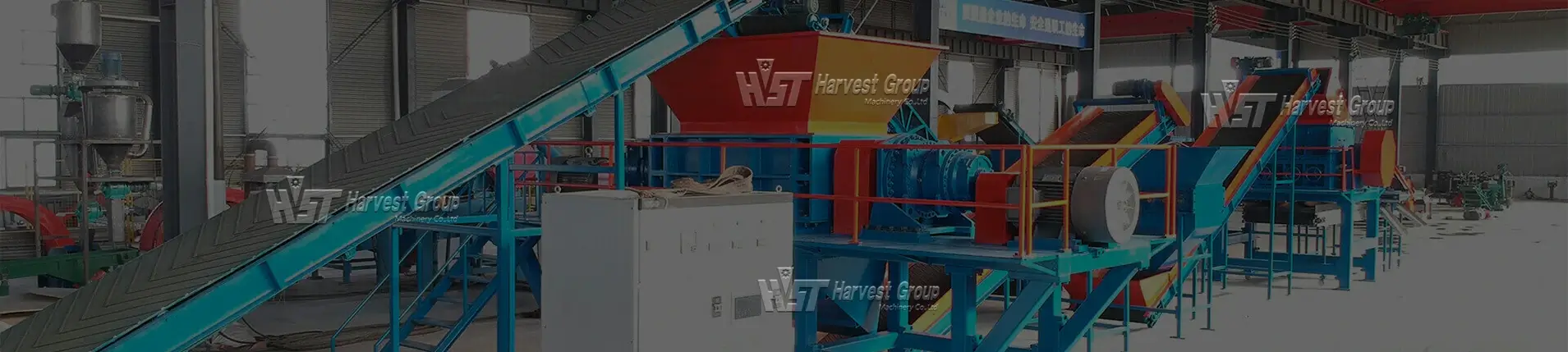
Globally, approximately 1.5 billion scrap tires are generated each year. These non-biodegradable, highly polluting waste materials have become a major challenge for environmental management. Tire recycling machines, also known as tire recycling machinery or waste tires recycling machines, use specialized processes to transform “waste” into high-value recycled materials, addressing environmental concerns while unlocking new business opportunities in the circular economy. This article provides a comprehensive analysis of the core value of tire recycling machines, covering everything from definitions and necessity to workflow, core equipment, and selection guidelines.
A tire recycling machine is an industrial system composed of multiple specialized pieces of equipment. Through controlled processes such as physical crushing, graded grinding, and precise separation, it breaks down scrap tires into reusable materials such as rubber granules, rubber powder, recovered steel wires, and fibers. It is not a single piece of equipment but a modular system where components work in tandem across different processing stages. Its core objective is to achieve “waste-to-resource conversion”—transforming hard-to-degrade tires into industrial raw materials with economic value.
Unlike ordinary shredding equipment, tire recycling machines are specifically designed for the composite structure of tires—rubber + steel cord + fibers—enabling efficient separation and graded processing of multiple materials. The purity of the final rubber product can reach over 99.7%, fully meeting industrial reuse requirements, making it a key piece of equipment in the circular economy.
The complex nature of scrap tires makes them impossible to process efficiently using traditional equipment. The necessity of specialized tire recycling machines is evident in three core challenges:
Tires are tightly bonded from rubber (70%-80%), steel cord (10%-30%), and nylon fibers (1%-5%). Due to the significant differences in the physical properties of these three materials, ordinary shredding equipment cannot achieve precise separation, resulting in low purity of recycled materials and limited applications.
Tire rubber possesses exceptional resistance to compression, tear, and elastic recovery. The blades of standard shredders wear out easily, resulting in low shredding efficiency and even safety hazards caused by tire rebound. In contrast, specialized tire recycling machinery utilizes a high-torque, low-speed design that can easily handle the physical properties of tires.
Untreated whole tires are bulky and have a high void ratio; a single truck can only transport about 200 standard passenger car tires, resulting in extremely high transportation costs. Professional waste tires recycling machines can compress tire volume by 70%–80%, significantly reducing storage and transportation costs and laying the foundation for the profitability of recycling projects. Furthermore, discarded tires are difficult to degrade in landfills (natural degradation takes 50–80 years) and cause severe pollution when incinerated (producing dioxins). Professional recycling machines resolve these environmental issues at the source through resource recovery, aligning with global green development policies.
Tire recycling is a process of “stepwise volume reduction + precise separation,” with each step corresponding to a specific equipment function.
Core Action: Conveying scrap tires from the storage area to the feed end of the processing line via a conveyor belt Core Objective: To ensure continuous feeding, laying the foundation for subsequent automated processing
Equipment Function: High-torque shredders are activated, using rotating blades to shred whole tires into 50–150 mm irregular rubber chunks Core Objective: Significantly reduce tire volume to prepare for subsequent fine processing
Equipment Function: The secondary grinder (rasper) refines the coarse material into 20–25 mm intermediate material, while simultaneously exposing the steel wires and fibers Core Objective: Improve subsequent separation efficiency and lay the foundation for precise purification
Magnetic Separation: Utilizes a magnetic separator to separate steel wire from rubber, achieving high recovery efficiency
Air Classification: Uses airflow differences to remove fibers Screening: Classifies rubber particles by size Core Objective: Obtain high-purity rubber products
Pelletizing Path: Producing rubber granules Powder Processing Path: Producing fine rubber powder Core Objective: Produce recycled products in various forms
Responsible for initial size reduction of whole tires.
Further refines materials and prepares for separation.
Processes rubber into uniform granules.
Produces fine rubber powder for industrial applications.
Ensures high purity output by removing steel and fiber contaminants.
Automated tire recycling machines use PLC control systems to coordinate equipment operation, enabling continuous production, reducing labor costs, and improving efficiency. This ensures stable output quality and safer operation.
Selecting a tire recycling machine depends on tire type, target output (chips, granules, or powder), automation level, and budget. Different configurations are suitable for different recycling needs.
Recycled materials can be used in rubber products, asphalt modification, TDF fuel, and construction materials, creating strong demand for tire recycling machinery.
The cost of a tire disposal machine or recycling system depends on equipment type, capacity, output size, and automation level.
Rubber granules, rubber powder, steel wire, and fiber.
No, multiple machines are required.
From coarse rubber chips to fine powder.
Costs vary depending on configuration.
Tire recycling machines are not merely industrial equipment for processing waste tires; they are the core engine driving the development of a circular economy. Through specialized processes, they transform difficult waste into valuable resources, addressing environmental challenges while creating economic value.