With the global vehicle fleet exceeding 1.5 billion units, end-of-life tires (ELTs) have become a major environmental challenge worldwide. According to statistics, 1.5 to 2.3 billion waste tires are generated annually, with over 4 billion tires accumulated without proper treatment. Due to their long degradation cycle—lasting hundreds of years—waste tires are often referred to as “non-degradable black pollution.”
Traditionally, landfilling and incineration were the primary disposal methods. However, landfills occupy large areas and risk groundwater contamination, while incineration releases toxic gases such as butadiene and styrene. Burning one ton of tires is equivalent to emitting one ton of CO₂.
Against this backdrop, tire shredding technology has emerged as a key solution, transforming waste tires into valuable resources and driving the growth of a circular economy worth billions of dollars.
The United States generates over 300 million waste tires annually.
China produces more than 300 million tires per year, but only a fraction is properly processed.
A typical passenger tire contains 77% rubber, 15% steel, and 8% textile fiber.
Globally, 75% of waste tires are landfilled or stockpiled.
Landfilled tires may float and damage landfill liners, contaminating groundwater.
Tire stockpiles trap methane, increasing explosion risks.
Tire fires are difficult to extinguish and may burn for months.
Accumulated tires create breeding grounds for mosquitoes and rodents.
Landfilling is banned in many regions due to inefficiency and environmental impact.
Open burning releases hazardous emissions and is prohibited globally.
Stockpiling wastes land and causes long-term environmental pollution.
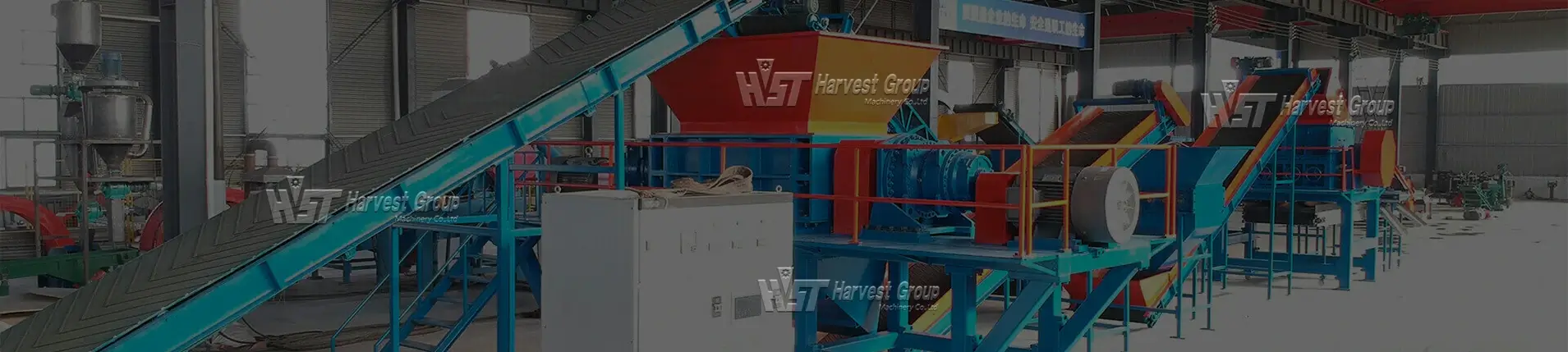
Tire shredding refers to the process of mechanically breaking whole tires into uniform pieces ranging from 0.5 mm to 6 inches. The main objectives include reducing volume by over 90%, separating rubber, steel, and fiber, and eliminating environmental and safety risks.
Tire shredders use high-torque motors and heavy-duty blades to cut through rubber and steel reinforcement. Primary shredding produces 50–100 mm rubber chips. Secondary shredding refines material and releases steel. Output sizes can range from coarse chips to 10–40 mesh rubber powder.
Without shredding, tires are too bulky and complex to process efficiently. Shredding improves material flow for separation, enables multiple downstream applications, and enhances overall recycling efficiency and profitability.
Automated systems classify tire types, and steel beads are removed to protect downstream equipment.
Whole tires are shredded into 50–150 mm rubber chips. Processing capacity varies depending on tire type.
Rasper machines reduce chip size to 12–50 mm, while magnetic systems remove steel with high efficiency.
Rubber is processed into 1–5 mm granules or 10–40 mesh powder using granulators and mills.
Air classifiers remove textile fibers, while dust collection systems ensure environmental compliance.
Reduces landfill usage, eliminates fire and pest risks, and lowers carbon emissions.
Transportation cost is significantly reduced. Revenue is generated from rubber, steel, and tire-derived fuel. Government subsidies may be available in many regions.
Resource recovery rate can reach high levels. Automation reduces labor requirements. A wide range of applications improves flexibility.
| Equipment Name | Function | Typical Specification |
|---|---|---|
| Tire Shredder (Primary) | Shreds whole tires into chips | HVST Shredders TS 1800 |
| Rasper (Secondary) | Refines chips and releases steel | Steel separation >99% |
| Granulator / Mill | Produces granules and powder | 1–5 mm / 10–40 mesh |
| Magnetic & Fiber Separator | Removes steel and fiber | High purity output |
| Mobile Shredder | On-site processing | Truck-mounted system |
Processing capacity varies based on requirements. Tire type includes passenger, truck, and OTR tires. Target products may be chips, granules, or powder. Environmental standards must be considered.
Rubberized asphalt improves durability and reduces noise. Rubber concrete enhances flexibility and impact resistance.
Tire-derived fuel is used in cement kilns and power plants. Recycled steel is reused in manufacturing.
Rubber granules are used in playgrounds and landscaping. Materials are also applied in filtration and emerging industrial uses.
Small plants can achieve return on investment within a few years. Medium-scale plants generate stable revenue.
Market research, regulatory compliance, and equipment investment are essential. Supply chain development ensures stable raw material input.
Initial investment may be high. Advanced separation technology improves product quality. Diversified product strategies reduce market risks.
Automation and intelligent systems are improving efficiency. Advanced separation technology increases product purity. Energy-saving equipment reduces operating costs.
Global demand for recycled rubber materials continues to grow. Infrastructure development supports increased use of rubberized asphalt.
Environmental regulations are becoming stricter. Circular economy policies are driving industry growth.
Tire shredding is not only the first step in waste tire processing but also the foundation of a sustainable recycling industry. By transforming waste tires into valuable materials, it reduces environmental impact while creating economic opportunities.
Each ton of recycled tires reduces carbon emissions and conserves natural resources. Tire shredding represents both environmental responsibility and a significant business opportunity.
5–30 tons per day, customizable
From 50 mm rubber chips to 40 mesh powder
Plant design, equipment selection, installation, and after-sales service
For more information, contact us for a tailored tire recycling solution.