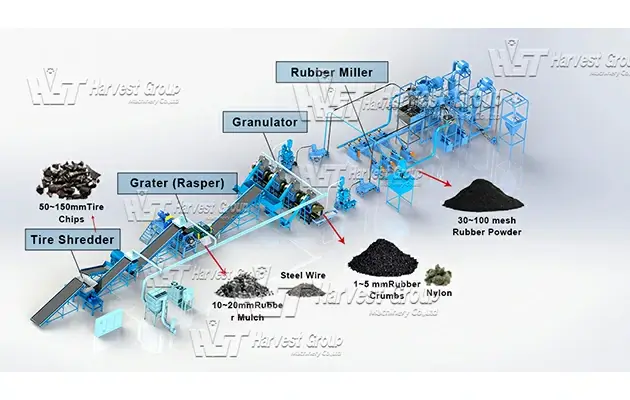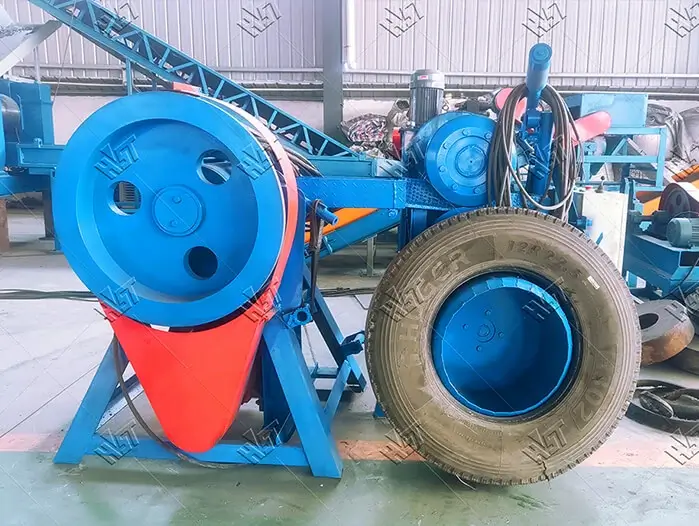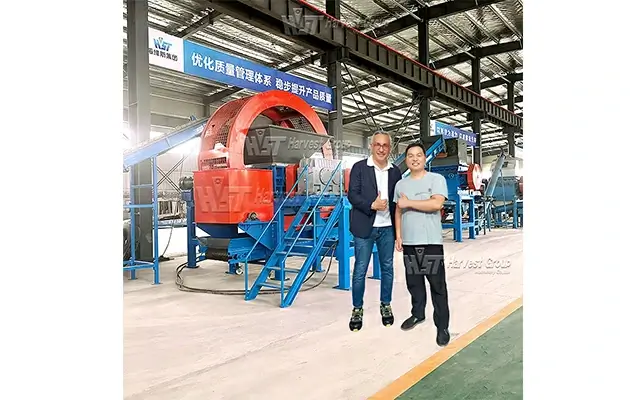
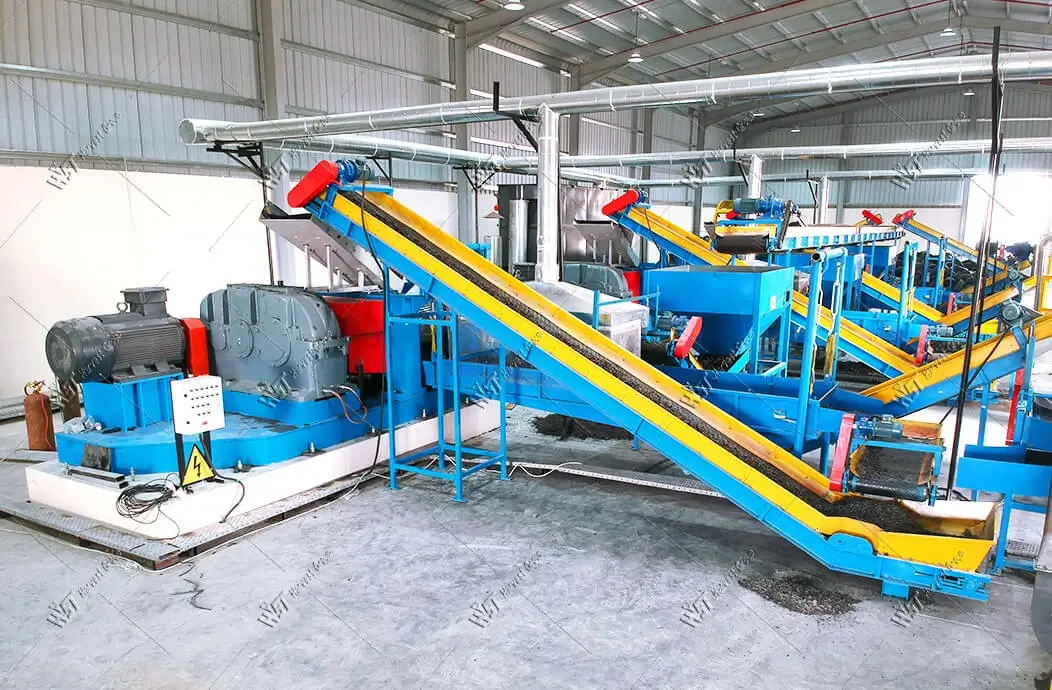

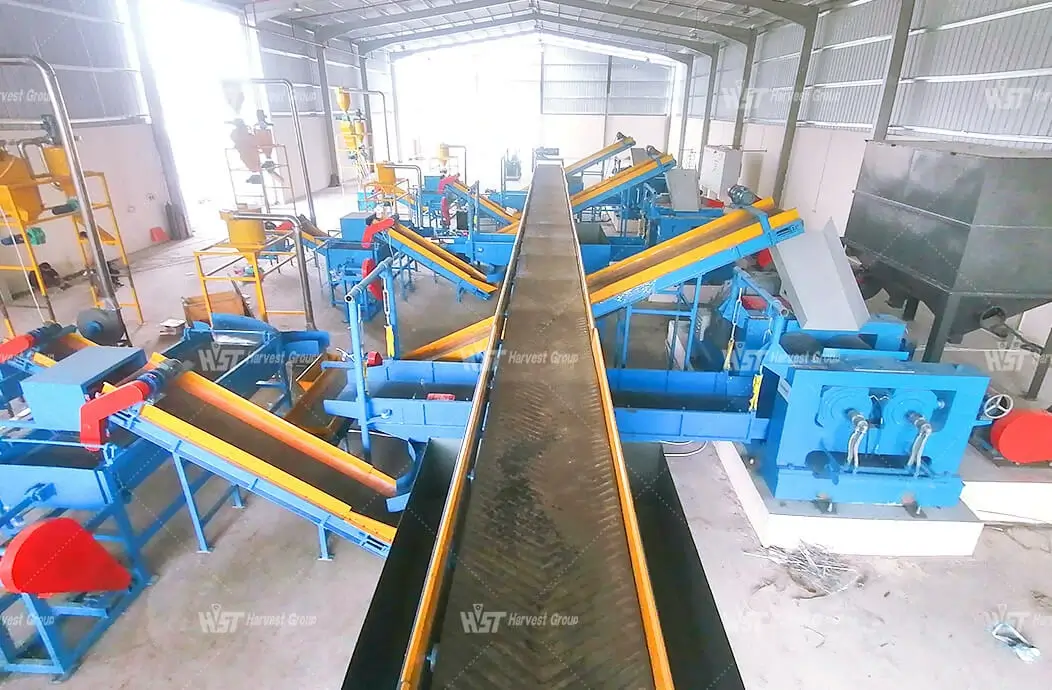
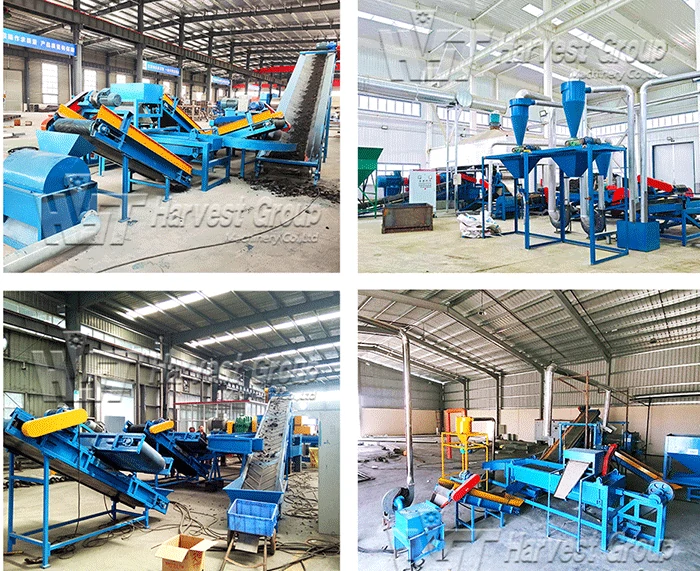
A tire crushing line is a complete system used to process waste tires into rubber granules or coarse powder (5–40 mesh). It integrates shredding, crushing, screening, and separation equipment to achieve efficient size reduction and high-purity output.
In a complete tire crushing line, the final grinding stage is responsible for converting pre-treated rubber blocks (30–100 mm) into smaller rubber particles or coarse powder (typically 5–40 mesh).
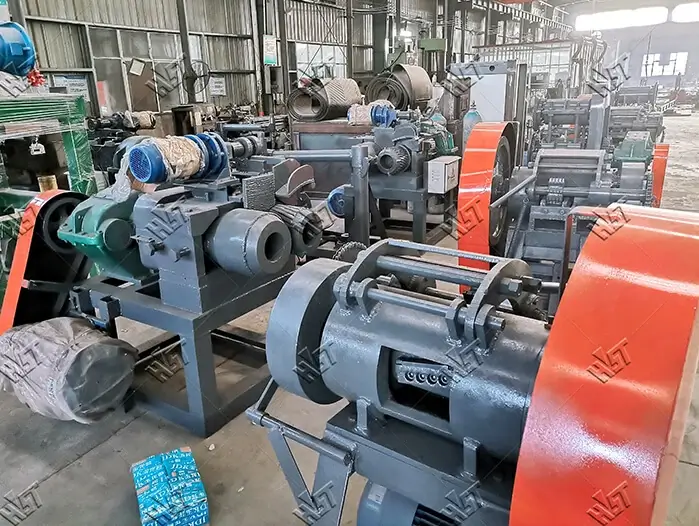
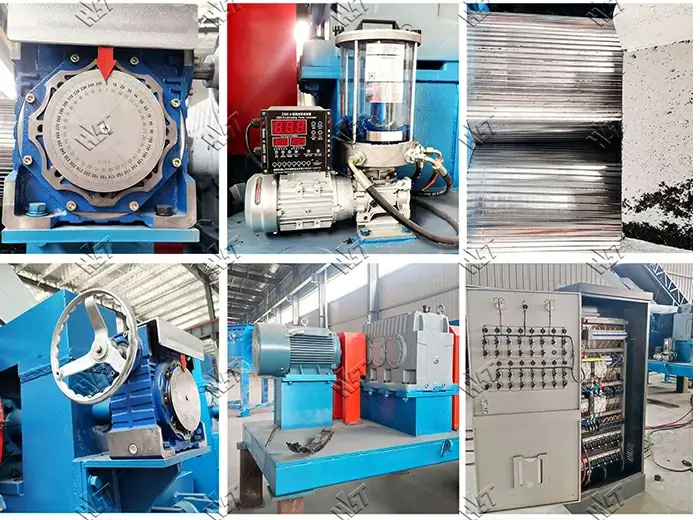
This stage is usually completed by a dual-roller grinding unit with adjustable roller gaps and stable cooling performance. It ensures consistent particle size while supporting efficient steel wire and fiber separation within the overall tire crushing process.
Different configurations can be selected based on capacity requirements and target output size, allowing flexible integration into various tire crushing machine systems.

Stable particle size control: The grinding stage ensures uniform output size, improving the quality of rubber granules and powder in the tire crushing line.
Efficient separation support: Proper grinding enhances the efficiency of downstream magnetic and fiber separation systems.
Flexible output adjustment: Adjustable roller gaps allow operators to achieve different output ranges such as coarse granules or fine rubber particles.
Continuous operation capability: Designed for long-term industrial use, supporting stable output in rubber crushing line applications.
Low maintenance design: Modular structure allows easy maintenance and reduced downtime across the tire crushing system.
Improved final product quality: Uniform grinding conditions help produce consistent rubber materials suitable for further processing or reuse.
A complete tire crushing line integrates multiple machines to process waste tires into 5–40 mesh rubber granules or coarse powder through a series of size reduction and separation stages.
A complete tire crushing line integrates multiple machines to process waste tires into 5–40 mesh rubber granules or coarse powder. The typical process includes:
Tire Cutting Machine (Tire Debeader) → Tire Cutter → Tire Shredder → Grinding Unit → Vibrating Screen → Magnetic Separator → Fiber Separator → 5–40 mesh rubber granules / coarse rubber powder
In this process, the grinding stage converts shredded rubber into uniform particles, ensuring stable output size and improved material purity across the entire tire crushing system.
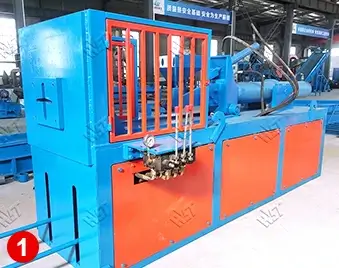
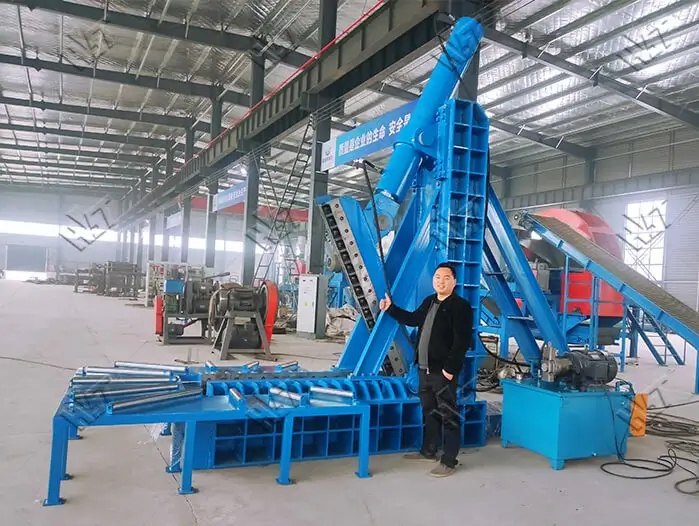
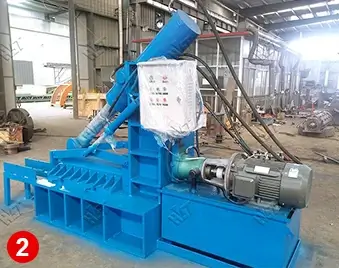
Tire Steel Wire Debeader
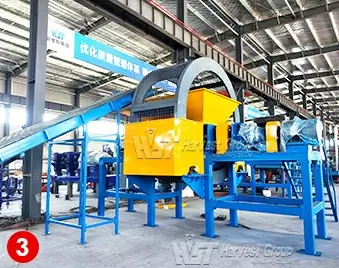
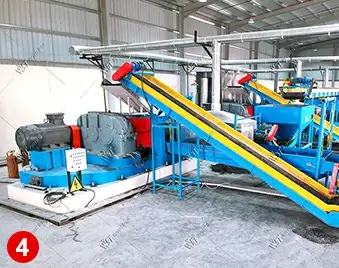
Grinding Unit (Final Size Reduction)
For smaller capacity projects, a semi-automatic tire crushing line can be used. The process includes:
Whole Tire → Tire Circle Cutter → Tire Strip Cutter → Tire Slice Cutter → Rubber Crushing Machine → Screening → Magnetic Separation → Fiber Separation → 5–40 mesh rubber powder
This configuration is suitable for cost-sensitive projects while still achieving efficient rubber size reduction.
A complete tire crushing line is designed to process waste tires into 5–40 mesh rubber powder through cutting, shredding, crushing, screening, and separation stages.
Our tire crushing line is engineered for stable rubber size reduction with effective steel wire separation and fiber removal. The table below shows typical solution-based configurations for reference only. Final setups can be customized according to material, capacity, and project requirements.
|
Model |
Drum diameter |
Drum length |
Front roll linear |
Roll speed ratio |
Max roller spacing |
Motor power |
Remarks |
|
XKP-350 |
350mm |
500mm |
26.2m/min |
1:2.5 |
8mm |
30kw |
Antifriction bearing |
|
XKP-400 |
400mm |
600mm |
34.5m/min |
1:2.5 |
8mm |
45kw |
Antifriction bearing |
|
XKP-450 |
450mm |
760mm |
38m/min |
1:2.5 |
8mm |
55kw |
Antifriction bearing |
|
XKP-560 |
560mm |
800mm |
38.6m/min |
1:2.5 |
8mm |
90kw |
Antifriction bearing |
|
XKP-610 |
610mm |
1000mm |
42.5m/.min |
1:2.5 |
8mm |
132kw |
Antifriction bearing |
|
XKP-680 |
680mm |
1000mm |
48.5m/min |
1:2.5 |
8mm |
250kw |
Antifriction bearing |
|
XKP-710 |
710mm |
1100mm |
48.5m/min |
1:2.5 |
8mm |
280kw |
Antifriction bearing |
|
XKP-810 |
810mm |
1100mm |
48.5m/min |
1:2.5 |
8mm |
315kw |
Antifriction bearing |

Waste Tire

Tire Cutting Machine

Rubber Blocks

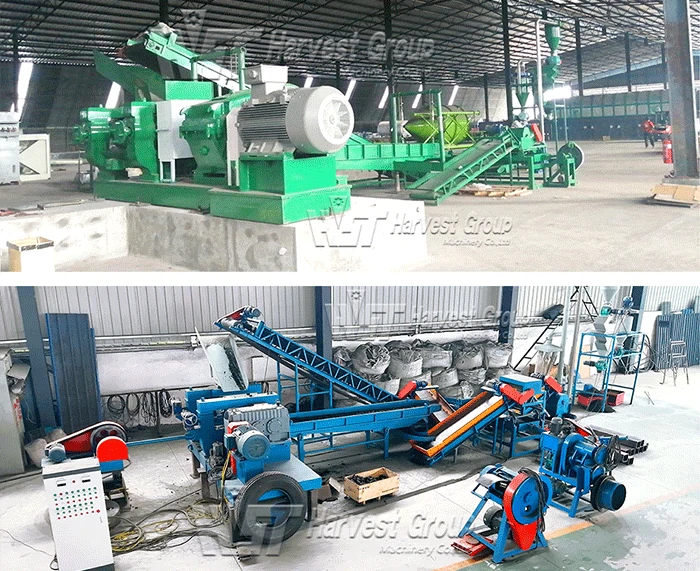
XKP Rubber Cracking Mill (Core Unit)
| Solution | Capacity | Output Rubber Size | Purity | Crusher Power | Required Worker | Required Space | Power Consumption |
| Solution 1 | 300–500 kg/h | 5–40 mesh | 99.7% | 55 kW | 4–5 people | 12 × 8 × 5 m | 65 kWh / hour |
| Solution 2 | 500–1000 kg/h | 5–40 mesh | 99.7% | 110 kW | 3–4 people | 21 × 8 × 5 m | 136 kWh / hour |
| Solution 3 | 1000–1500 kg/h | 5–40 mesh | 99.7% | 132 kW | 3–4 people | 27 × 8 × 5 m | 151 kWh / hour |
| Solution 4 | 2000–3000 kg/h | 5–40 mesh | 99.7% | 200 kW | 2–3 people | 39 × 10 × 5 m | 223 kWh / hour |
| Note: The actual output depends on particle size. Larger granules increase capacity, while finer rubber powder reduces throughput. | |||||||
A tire crushing line is designed to produce fine rubber powder (5–40 mesh), while a tire shredder is used to cut whole tires into rough rubber chips (30–100 mm).
For recycling applications such as rubber tiles, asphalt modification, or reclaimed rubber, the tire crushing line provides the essential size reduction stage required for efficient rubber powder production.
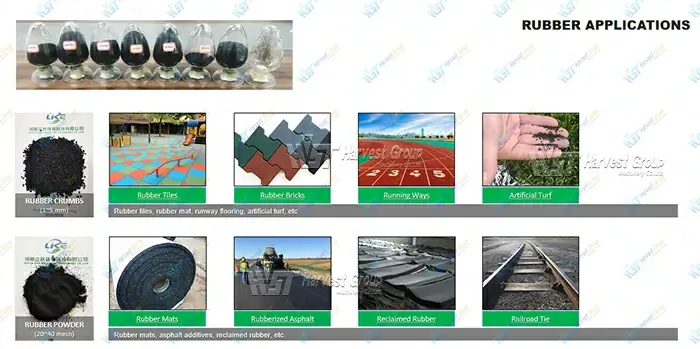
Rubber material produced by a tire crushing line (typically 5–40 mesh rubber granules or coarse rubber powder) is widely used across multiple industries. With stable particle size and high purity, it serves as a versatile raw material for:
These applications demonstrate how a complete rubber crushing line can transform waste tires into high-value recycled materials.
Below are common questions about tire crushing line solutions, including cost, capacity, and output size.
The cost of a tire crushing line depends on capacity, automation level, and output size requirements. Typical configurations range from small-scale systems (300–500 kg/h) to large industrial lines (2–3 tons per hour).
Contact us today to get a customized solution and quotation based on your project needs.
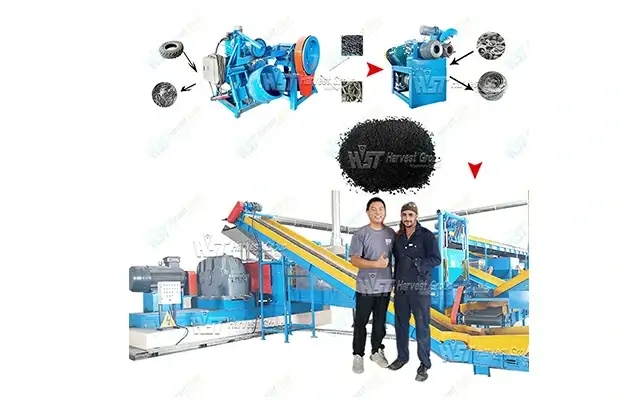
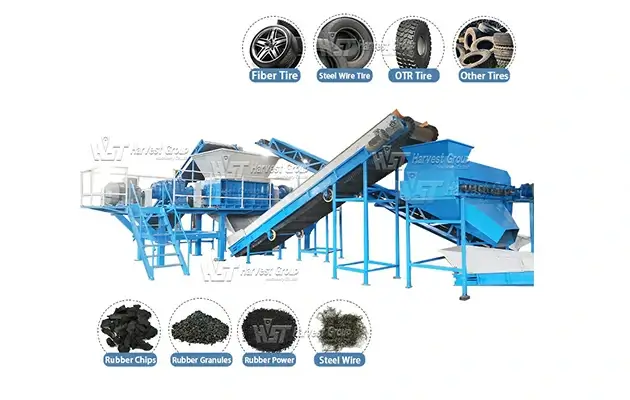
The diagram below illustrates a complete tire crushing line process for converting waste tires into 5–40 mesh rubber granules or powder.
A typical workflow includes tire debeading, cutting, shredding, rubber crushing, screening, and magnetic separation, ensuring efficient size reduction and high-purity output.
Depending on project requirements, both automatic and semi-automatic tire recycling line configurations can be applied to achieve different capacity and cost targets.
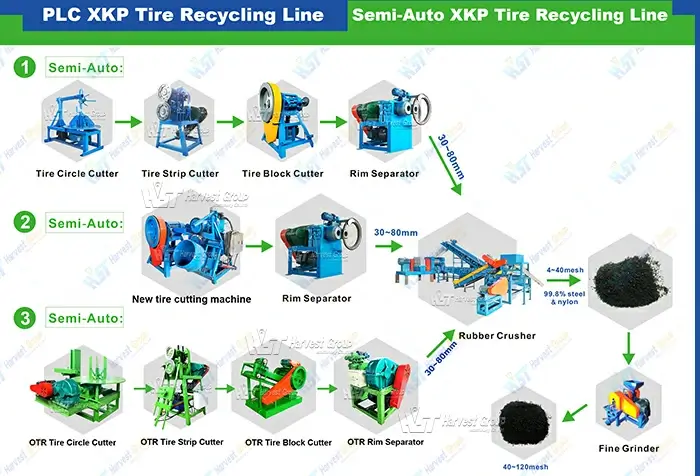

Below are the most frequently asked questions about tire crushing line solutions, including cost, capacity, and rubber output.
A tire crushing line is a complete system used to process waste tires into rubber granules or coarse powder through shredding, crushing, and separation stages.
Typical output ranges from 5–40 mesh rubber granules or coarse powder, depending on configuration.
The cost of a tire crushing line depends on capacity, automation level, and output size. Small systems start from lower investment, while large industrial lines require higher budgets.
Yes. Tire recycling can be highly profitable due to low raw material cost and strong demand for recycled rubber in asphalt, construction, and industrial applications.
No. Whole tires must first be pre-treated using cutting or shredding equipment before entering the tire crushing line for further size reduction.
Depending on configuration, tire crushing lines typically range from 300 kg/h to over 3 tons per hour for industrial-scale recycling projects.