Waste Tire Recycling Equipment
Tire Shredder Machine for Sale for Waste Tire Recycling
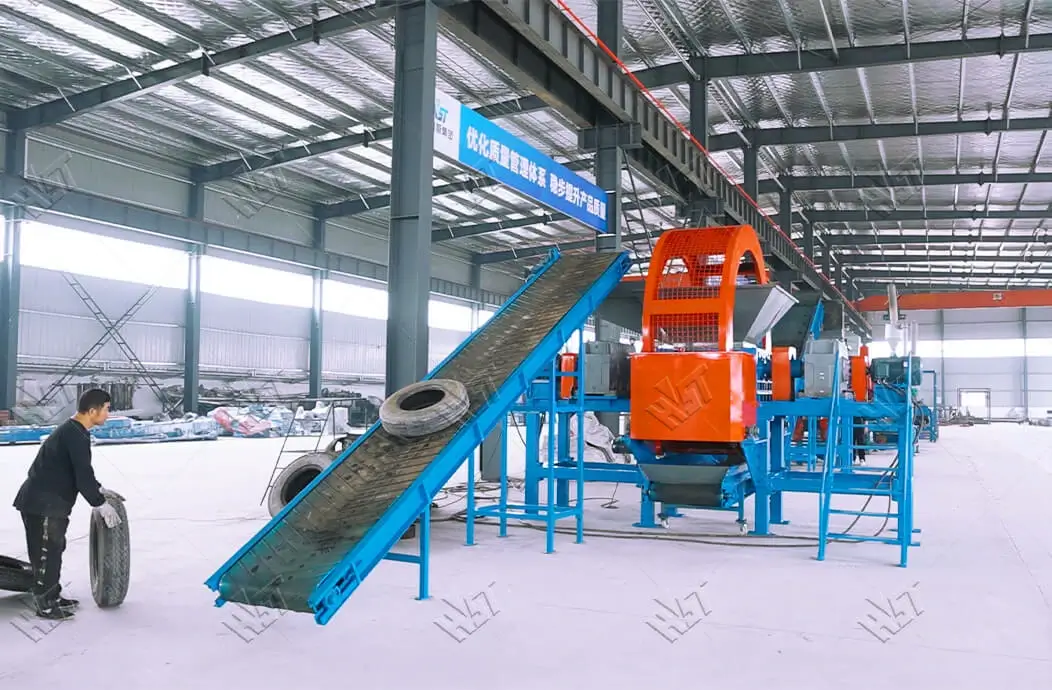
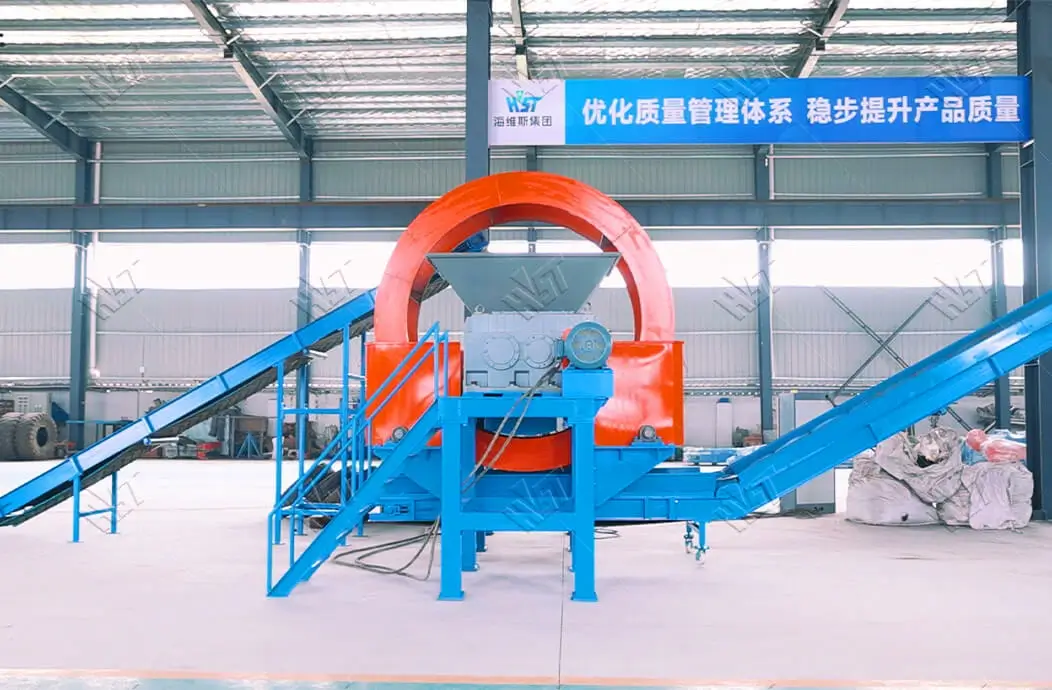
HVST manufactures heavy-duty tire shredders, tire shredder machines and industrial tire shredding equipment for processing passenger, truck, bus and OTR tires into controlled-size rubber chips. Our tire shredders for sale can operate independently or as the primary size-reduction stage in a complete tire recycling system.
A tire shredder machine is heavy-duty size-reduction equipment used to process whole or pre-cut waste tires into smaller rubber chips before further steel separation, granulation or grinding.
HVST tire shredders use a low-speed, high-torque dual-shaft cutting system to process passenger, truck, bus and OTR tires. Depending on the model and blade configuration, the machine can produce approximately 50–200 mm tire chips at capacities from 1 to 30 T/h.
The shredded tire chips can be used for TDF, rubber mulch or as feed material for downstream rasper, granulator and crumb rubber production systems.
HVST tire shredders can be configured for different tire sizes, steel content and recycling requirements. The suitable machine depends on tire diameter, required capacity and target chip size.
Passenger tires can be processed as whole tires or pre-cut material and reduced into tire chips for further steel separation, granulation and rubber recycling.
Truck and bus tires contain thicker rubber and heavier steel reinforcement, so higher-torque shredders and stronger cutting systems are normally selected.
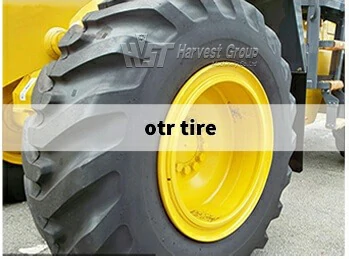
Large OTR and construction tires may require bead removal or pre-cutting before shredding, depending on tire diameter and feeding opening size.
Light truck tires can be processed individually or together with passenger tires. Blade configuration is selected according to the tire mix and required output size.
Tire sidewalls, tread sections and pre-cut tire blocks can be fed directly when oversized tires have already passed through pre-processing equipment.
Projects processing a mixture of passenger, light truck and commercial tires can be configured according to the largest tire size, steel content and required production capacity.
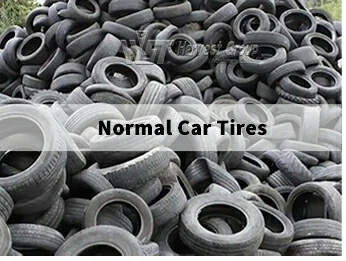
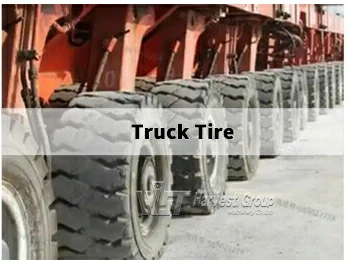
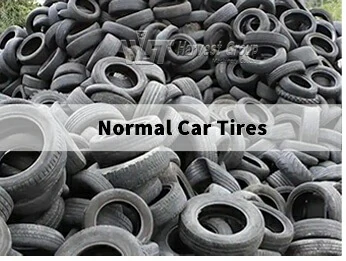
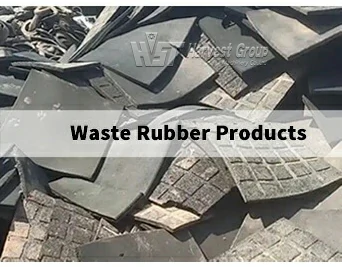
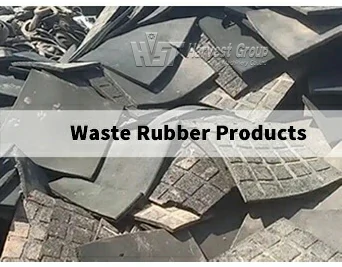
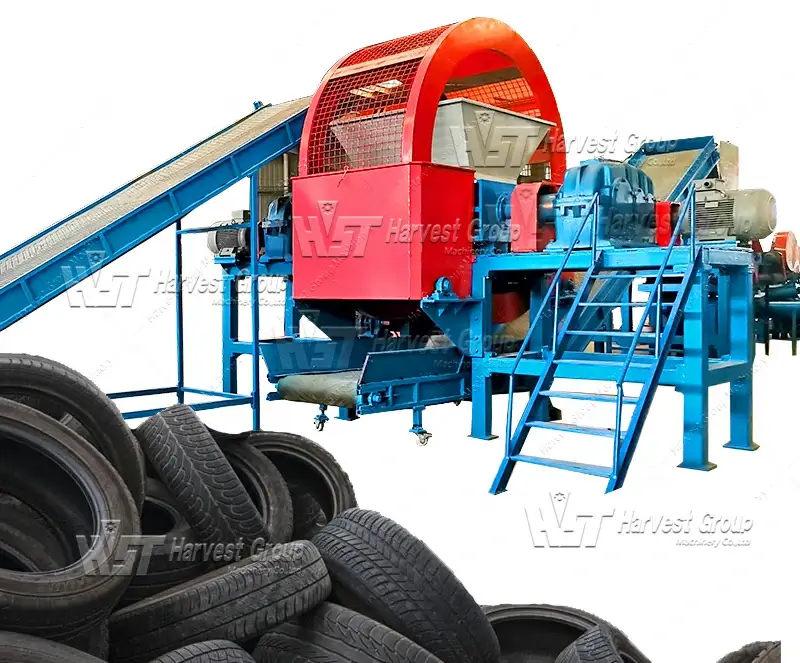
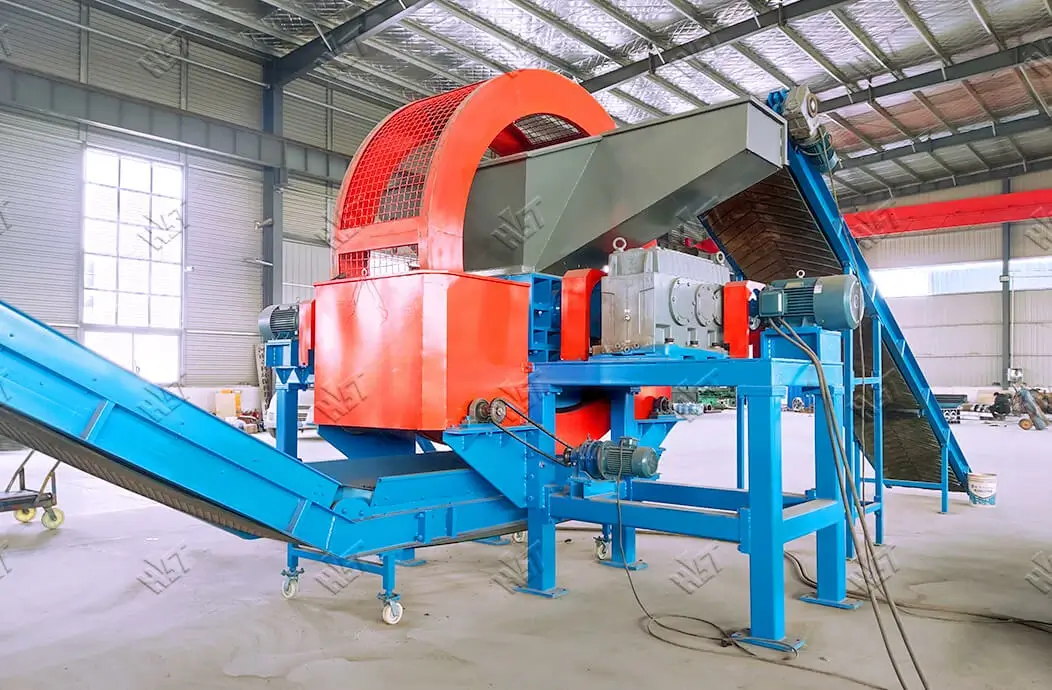
An industrial tire shredder machine is built around a heavy-duty dual-shaft cutting system. The main components are designed to handle the rubber, textile and steel reinforcement found in waste passenger, truck and bus tires.
Two counter-rotating shafts grip the tire and pull it into the shredding chamber. The low-speed, high-torque design provides strong tearing force while reducing unnecessary high-speed impact during tire processing.
Wear-resistant alloy blades are mounted along the two shafts to tear waste tires into tire chips. Blade thickness, spacing and arrangement can be selected according to the required tire chip size and processing capacity.
The motor and heavy-duty gearbox provide the torque required for continuous tire shredding. Motor power is matched to the shredder model, maximum tire size and hourly production requirement.
The reinforced shredding chamber, shaft supports and machine frame are designed to withstand repeated cutting loads during industrial tire recycling. Larger shredder models use heavier structural components for truck tires, bus tires and high-capacity applications.
The tire shredding machine can automatically reverse the shafts when excessive load or material blockage is detected. This helps release jammed material and protects the cutting system during continuous operation.
The reinforced feeding hopper guides whole or pre-cut tires into the shredding chamber. Its opening size and structure can be configured according to tire diameter, feeding method and required processing capacity.
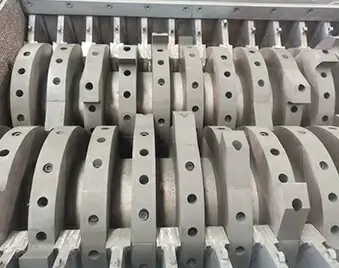
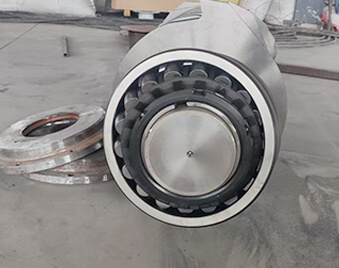
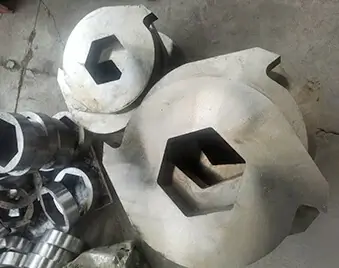
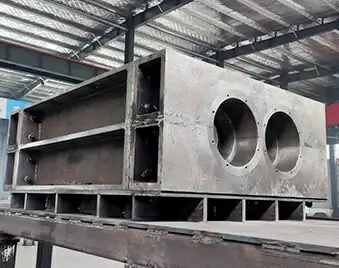
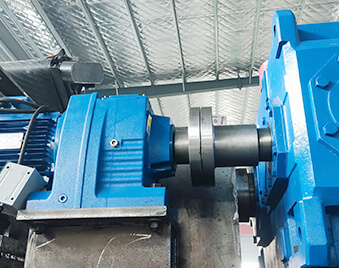
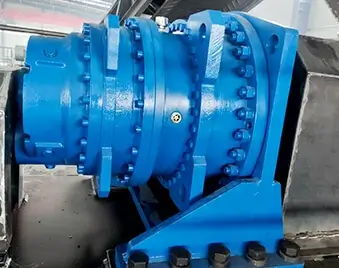
An industrial tire shredder is designed for continuous processing in waste tire recycling plants. Compared with light-duty general-purpose shredders, tire shredder equipment requires higher torque, stronger shafts, wear-resistant blades and a reinforced frame to handle steel-belted tires reliably.
The double-shaft structure grips and tears tires at relatively low speed and high torque. Automatic reversing protects the machine against overload, while optional screening and return systems can help control tire chip size.
HVST industrial tire shredders can be configured as a standalone machine or integrated with conveyors, screens, magnetic separators, raspers and rubber granulators.
HVST provides industrial tire shredders for sale in different machine sizes and capacities for small, medium and large waste tire recycling projects.
HVST offers several tire shredder models for different tire sizes and production capacities. Model selection should be based on the maximum tire diameter, required output size, hourly capacity and downstream recycling process.
| Model | Input Size | Output Size | Capacity | Motor | Blades | Dimensions | Weight |
| TS-800 | 800 mm | 50×50 mm | 1–2 T/h | 2×22 kW | 16 pcs | 4×2.6×3.2 m | 8 T |
| TS-1200 | 1200 mm | 60×60 mm | 3–5 T/h | 2×45/55 kW | 20 pcs | 4.8×2.8×3.5 m | 14 T |
| TS-1600 | 1600 mm | 50–150 mm | 6–8 T/h | 2×75 kW | 16–30 pcs | 5×2×3.4 m | 18 T |
| TS-1800 | 1800 mm | 50–150 mm | 7–10 T/h | 2×90/110 kW | 20–24 pcs | 5.6×2×3.4 m | 23 T |
| TS-2000 | 2000 mm | 75–200 mm | 10–15 T/h | 2×110 kW | 20–30 pcs | 6×2.4×4 m | 36 T |
| TS-2400 | 2400 mm | 100–200 mm | 20–30 T/h | 2×160 kW | 16–24 pcs | 7.4×3.2×5.2 m | 56 T |
Note: Specifications can be adjusted according to tire type, required capacity, output size and project configuration.
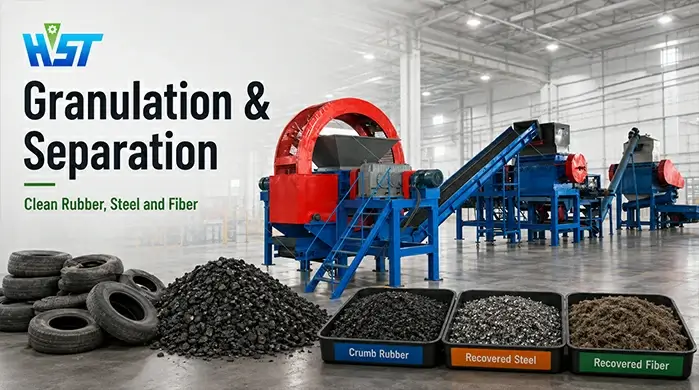
Selecting a tire shredder machine should be based on the actual tire feedstock, required production rate and downstream recycling process rather than motor power alone. Providing the following project information helps determine the correct shredder size, blade configuration and auxiliary equipment.
| Project Parameter | Information Required | Impact on Machine Selection |
| Tire Type | Passenger, light truck, truck, bus, OTR or mixed waste tires | Helps determine the required torque, cutting chamber size and blade configuration |
| Maximum Tire Diameter | Largest tire size that will be fed into the shredder | Determines the feeding opening and whether tire pre-cutting is required |
| Bead and Steel Condition | Whole tire with bead wire, debeaded tire or pre-cut tire sections | Affects cutting load, blade wear and required torque reserve |
| Target Tire Chip Size | Required output such as 50–100 mm, 75–150 mm or 100–200 mm | Influences blade width, spacing and the need for a screening and return system |
| Required Capacity | Expected processing rate in tons per hour and daily operating time | Used to select shredder model, motor power, gearbox and conveyor capacity |
| Final Product | TDF chips, material for steel recovery, rubber granules or crumb rubber | Determines how the shredder should connect with downstream recycling equipment |
| Downstream Equipment | Screen, magnetic separator, rasper, granulator or grinding equipment | Ensures the tire chip size and discharge system match the next processing stage |
| Operating Requirements | Continuous or intermittent operation, available power supply and site conditions | Helps determine electrical configuration, control system and overall equipment layout |
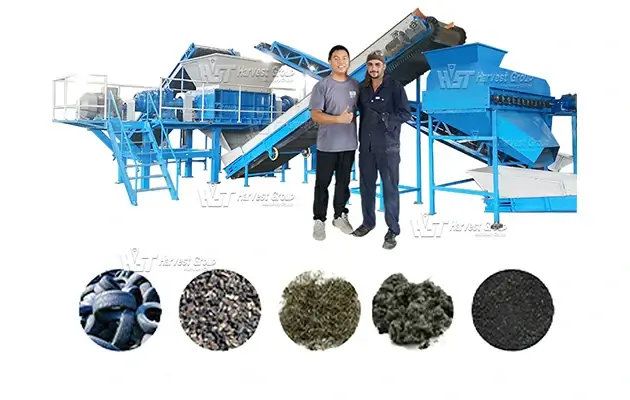
A tire shredder must handle flexible rubber, embedded steel wire and irregular tire shapes under continuous load. HVST tire shredders combine low-speed cutting, reinforced construction and flexible system configuration to improve shredding stability and match different recycling requirements.
Counter-rotating shafts pull tires directly into the cutting chamber and tear the material with high torque. This provides stable size reduction for passenger, truck and other steel-reinforced tires.
When uniform output is required, a screening and return system can separate oversized pieces and send them back to the shredder for another cutting cycle.
Blade thickness, spacing and screening equipment can be selected according to the required tire chip size, whether the material is intended for TDF or further recycling.
The shredding chamber, shafts, bearing supports and machine frame are designed for repeated cutting loads generated by rubber, textile reinforcement and steel wire inside waste tires.
The control system can reverse the shafts when excessive resistance or material blockage is detected, helping release jammed tires and protect the cutting components.
The shredder can operate as a standalone machine or work with conveyors, screens, magnetic separators, raspers and granulators as the primary size-reduction stage of a tire recycling line.
The final size of shredded tire material is determined by the tire shredder model, blade width, cutting chamber arrangement and optional screening system. HVST tire shredders can typically produce tire chips in the range of approximately 50–200 mm, with different sizes selected for primary volume reduction, TDF preparation and further tire recycling.
Choosing the correct output size is important because the shredded material may continue to magnetic separation, rasper processing, granulation or grinding. The shredder configuration should therefore be matched to both the required tire chip size and the final recycled product.
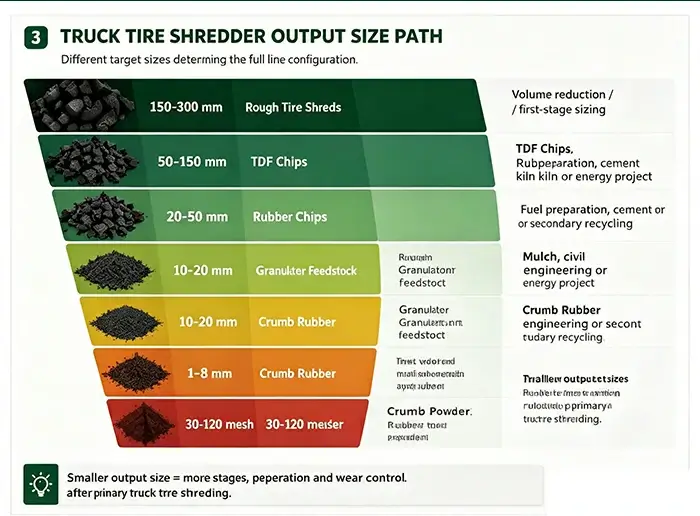
Different tire recycling products require different levels of size reduction. Primary shredding produces larger tire pieces, while smaller rubber chips, crumb rubber and rubber powder require additional shredding, separation, granulation and grinding stages.
| Output Size | Typical Product | Common Application | Recommended Processing Stage |
| 150–300 mm | Rough Tire Shreds | Primary volume reduction, easier storage, transportation and preparation for further processing | Primary tire shredder or whole tire shredder machine |
| 50–150 mm | TDF Chips | Tire-derived fuel preparation for cement kilns, industrial boilers and energy recovery projects | Primary tire shredder with screening and return conveyor |
| 20–50 mm | Rubber Chips | Rubber mulch production, secondary recycling and preparation for further material separation | Secondary shredding with magnetic steel separation |
| 10–20 mm | Granulator Feedstock | Intermediate feed material for crumb rubber and smaller rubber granule production | Rasper or secondary size reduction with steel separation before granulation |
| 1–5 mm | Crumb Rubber | Sports surfaces, rubber mats, molded rubber products, flooring and modified asphalt applications | Granulation and fiber separation after primary and secondary size reduction |
| 30–120 Mesh | Rubber Powder | Fine rubber products, rubber compounds, modified materials and other powder applications | Fine grinding and milling after complete steel and fiber separation |
Note: These output sizes are typical reference ranges rather than fixed standards. Final material size should be selected according to tire type, steel content, required capacity, final product and downstream equipment. Large truck and OTR tires may require heavier primary shredding or pre-processing before smaller output sizes can be produced.
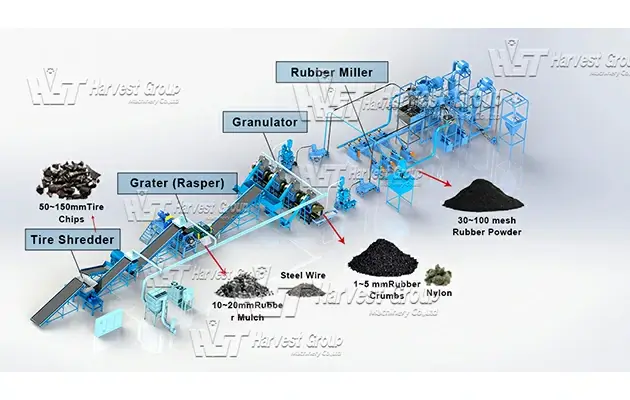
A complete tire recycling process reduces waste tires through several size-reduction stages. The tire shredder performs the primary shredding stage, while downstream equipment is used to produce smaller rubber materials.
| Whole Waste Tires Passenger, truck, bus and other waste tires entering the recycling system |
| ↓ |
| Primary Tire Shredding Approximately 100–200 mm tire shreds after initial size reduction |
| ↓ |
| Controlled Tire Chips Approximately 50–100 mm material after screening and return shredding |
| ↓ |
| Secondary Size Reduction Approximately 20–50 mm material for steel recovery and further processing |
| ↓ |
| Rubber Granules / Crumb Rubber Approximately 1–5 mm after granulation, steel separation and fiber removal |
The required chip size should be selected according to the final use of the shredded tires rather than simply choosing the largest shredder. Output size affects screening, steel separation and the downstream equipment required in the recycling line.
TDF production: Tire chips are generally produced in a controlled size range suitable for fuel handling and downstream requirements.
Rubber mulch production: Smaller tire chips normally require additional size reduction and steel removal after primary shredding.
Crumb rubber production: Primary tire shreds must continue through rasper and granulator equipment before smaller rubber granules can be produced.
Rubber powder production: Several stages of shredding, granulation and grinding are required before fine rubber powder is obtained.
OTR tire recycling: Large OTR tires normally begin with heavier primary size reduction before entering smaller downstream processing equipment.
The tire shredder is only the first size-reduction stage in many recycling projects. The selected output size determines whether screening, return conveying, magnetic separation, rasping or granulation equipment should be installed after the shredder.
Producing smaller tire chips does not always mean selecting a more powerful primary shredder. Blade configuration, tire type, steel content, throughput and screening requirements must be considered together to achieve stable continuous operation.
For this reason, HVST selects the tire shredder according to both the required hourly capacity and the next processing stage, helping the shredded material match the complete tire recycling process.
HVST tire shredding systems can be equipped with different screening configurations according to the required tire chip size and downstream recycling process. The screen separates qualified material from oversized pieces and helps maintain more consistent output.
The circular screening system is suitable when smaller and more uniform tire chips are required. It can typically be configured for output around 50–60 mm, depending on tire type, shredder blade arrangement and screen opening size.
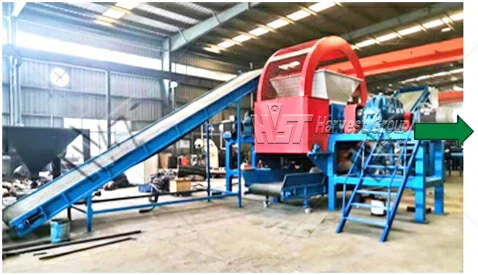
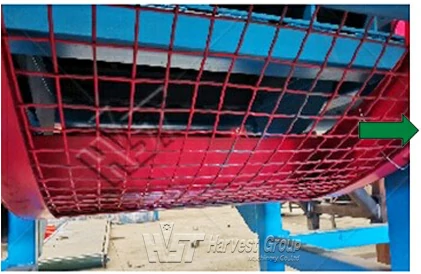
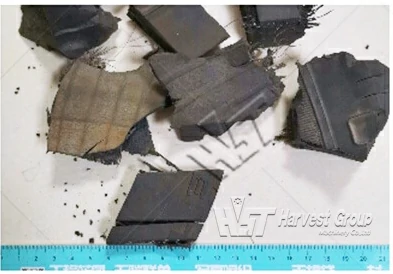
The disc screening system is commonly used for larger shredded tire material, typically around 75–150 mm. Tire chips that meet the required size can continue to the next processing stage, while oversized pieces can be returned to the shredder for additional size reduction.
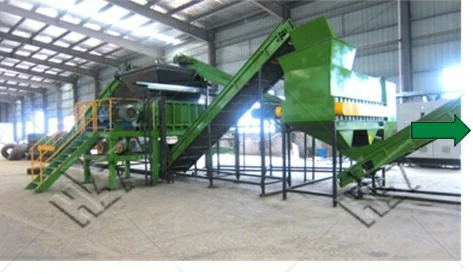
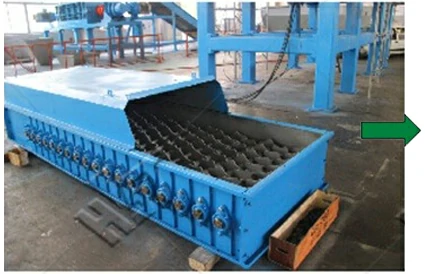
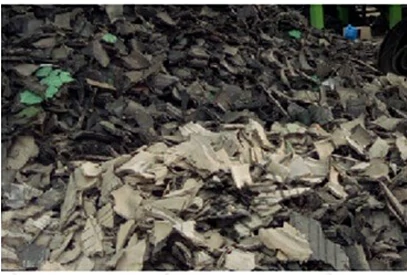
A tire shredding machine uses two counter-rotating shafts fitted with cutting blades. The blades grip the tire, pull it into the shredding chamber and tear the rubber, steel reinforcement and textile structure into smaller tire chips.
Depending on the required final product, the shredded tire chips may be discharged directly or returned through a screening system for additional size reduction. In some markets, a machine used mainly to produce larger tire chips may also be described as a tire chipper.
After primary shredding, the material can continue through rasper machines, magnetic separators, rubber granulators, fiber separators and screening equipment to produce cleaner and smaller rubber products.
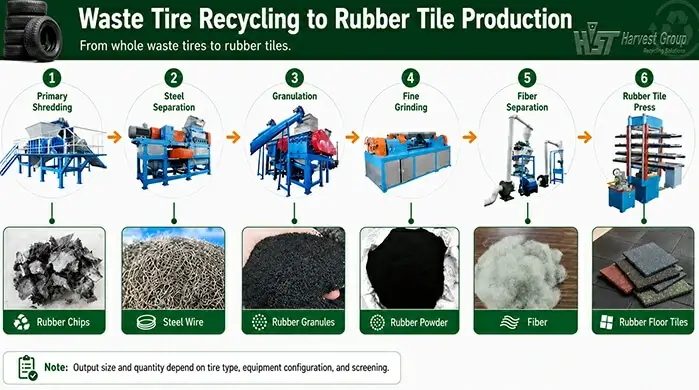
The correct tire shredder depends mainly on tire size, hourly processing capacity, target chip size and the final application of the shredded material.
A tire shredder machine can be supplied as a standalone machine or combined with auxiliary equipment according to the required tire chip size and downstream process. The configuration does not need to be the same for every tire recycling project.
| Configuration | Main Equipment | Suitable Application |
| Standalone Tire Shredder | Tire shredder + discharge conveyor | Basic tire size reduction and volume reduction |
| Shredding and Screening System | Tire shredder + screen + return conveyor | Production of more consistent rubber tire chips |
| Shredding and Steel Removal System | Tire shredder + screening + magnetic separation | Projects requiring cleaner shredded tire material |
| Complete Tire Recycling System | Primary shredder + downstream size reduction and separation equipment | Rubber mulch, rubber granules and other recycled rubber products |
The tire shredder normally performs the first major size-reduction stage in a complete tire recycling equipment system.
Depending on the final product, the recycling process may also include:
A tire shredder and a tire cutter are used at different stages of waste tire recycling. A tire shredder is designed for continuous primary size reduction of whole or pre-cut tires, while a tire cutter divides tires into several large sections before further crushing or shredding. The suitable machine depends on tire size, plant automation level, required capacity and downstream process.
| Comparison Item | Tire Shredder Machine | Tire Cutter Machine |
| Main Function | Primary size reduction of waste tires into smaller tire chips | Pre-cutting whole tires into several manageable tire sections |
| Processing Method | Low-speed, high-torque dual-shaft shredding | Hydraulic cutting with a heavy-duty cutting blade |
| Typical Feed Material | Whole tires or pre-cut tire sections | Whole passenger, truck or other suitable waste tires |
| Typical Output | Approximately 50–200 mm tire chips depending on configuration | Several large tire sections for further size reduction |
| Operation Mode | Suitable for continuous feeding and automated processing | Normally used for batch or semi-automatic pre-cutting |
| Cutting Structure | Two counter-rotating shafts equipped with intermeshing blades | Hydraulic cutting system with a large cutting blade |
| Processing Capacity | Suitable for medium- and high-throughput recycling projects | Better suited to lower-capacity pre-processing requirements |
| Labor Requirement | Can be integrated with conveyors for reduced manual handling | Usually requires more operator involvement for feeding and positioning |
| System Investment | Higher initial investment but suitable for continuous industrial production | Simpler equipment structure with lower initial investment |
| Best Suited For | Commercial tire recycling plants, TDF preparation and complete recycling lines | Small recycling projects or pre-processing before downstream crushing equipment |
Note: Tire shredders and tire cutters are not direct substitutes in every project. A tire cutter is mainly used for pre-processing, while a tire shredder performs the main size-reduction stage. Large or oversized tires may use both machines in the same recycling process.
A tire shredder machine is industrial size-reduction equipment used to process waste tires into rubber chips before further recycling, granulation, grinding or TDF production.
Depending on the model, tire shredders can process passenger car tires, truck tires, bus tires, OTR tires and other industrial rubber materials.
Typical output ranges from approximately 50 mm to 200 mm depending on machine model, blade configuration and screening system.
HVST tire shredder models cover approximately 1–30 T/h, with different machine sizes available for small, medium and large tire recycling projects.
Yes. The shredder can work with conveyors, screening systems, rasper machines, magnetic separators, granulators and fiber separation equipment in a complete tire recycling line.
The price depends on machine size, capacity, motor power, blade configuration and auxiliary equipment. See our tire shredder machine price guide for detailed cost factors and quotation information.
HVST manufactures industrial tire shredder machines for waste tire recycling projects worldwide. Different shredder models and system configurations are available according to tire type, processing capacity, required tire chip size and downstream application.
Contact us with your tire type, required capacity and target output size to select a suitable tire sh
Every tire recycling project has different feedstock and production requirements. To recommend a suitable tire shredder machine, please send us your tire type, maximum tire diameter, required capacity, target chip size and final application.
HVST can select the appropriate shredder model and recommend the required feeding, screening, return conveying, steel separation and downstream equipment according to your actual project conditions.
Please provide: Tire type · Maximum tire size · Capacity (T/h) · Required output size · Final product · Power supply