In the waste tire recycling industry, one question consistently comes up before any project begins: how much does a tyre shredder cost?
The reality is that there is no fixed price. Tyre shredder costs vary widely, and the difference is rarely caused by the machine name alone. In most cases, the real gap comes from processing requirements and system configuration. What you are purchasing is often not just a single machine, but a complete solution designed for long-term, stable production. Depending on the configuration, total investment can differ by two to three times.
This article combines real-world industry experience with practical project logic, explaining tyre shredder cost from multiple angles: equipment classification, reasons for price differences, total cost of ownership, equipment form selection, and how to avoid common quotation mistakes.
The key takeaway is simple: tyre shredder cost is never a single number—it is a range that must match your actual operating needs.
Tyre shredders can be broadly classified by processing capacity and tire type.
Entry-level machines are usually applied in trial operations, small recycling points, or as pre-processing equipment. These systems typically handle passenger car tires with lower throughput and simpler configurations. Feeding is often manual, and output size usually falls in a coarse range suitable for basic volume reduction.
Industrial-grade shredders are the mainstream choice for commercial operations. They support continuous operation, higher throughput, and more stable performance. These systems commonly process a mix of passenger and light truck tires and may include semi-automatic feeding and optional steel separation to support TDF or intermediate recycling applications.
Heavy-duty shredders are designed for large-scale recycling centers handling truck tires, mixed tire streams, or OTR tires. These machines require high-torque drive systems, reinforced structures, and advanced control logic to ensure continuous production under heavy load.
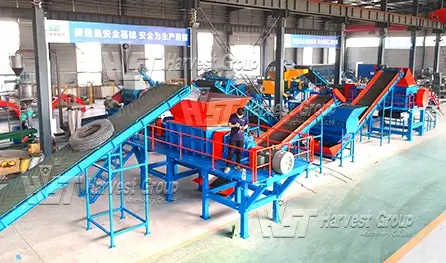
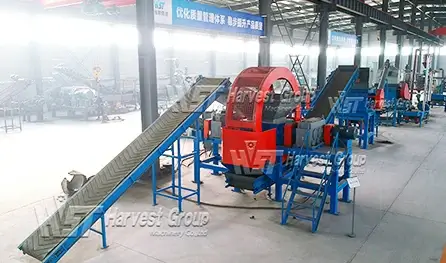
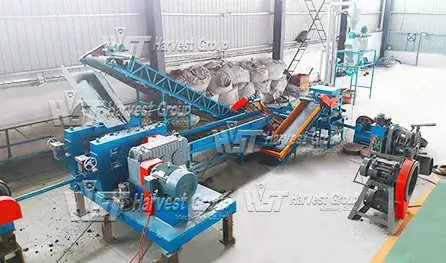
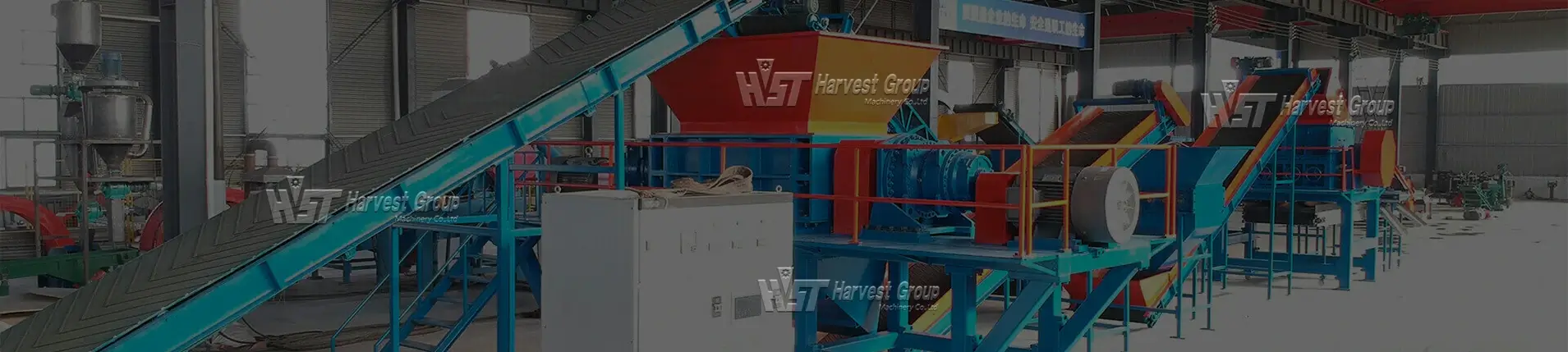
Complete recycling lines integrate shredding, conveying, separation, screening, and dust control into a single system. These solutions support downstream processes such as granulation, milling, or pyrolysis and are typically used in medium to large industrial facilities.
Stationary tyre shredders are installed at fixed recycling plants and are best suited for long-term, high-capacity operations. They offer predictable operating costs and allow for optimized system layouts.
Portable shredders, including skid-mounted or trailer-mounted units, are used for temporary sites or remote locations. Their mobility reduces the need for fixed infrastructure, but structural reinforcement and integration increase equipment cost compared with stationary units of the same capacity.
Mobile shredding plants combine shredding, separation, and conveying systems into a fully integrated unit. These systems require higher initial investment but can significantly reduce tire transportation costs when processing is spread across multiple locations.
A key decision factor is whether it is more economical to transport tires to a fixed plant or bring the equipment to the tires.
Twin-shaft tyre shredders account for the majority of applications in tire recycling due to their balance of performance and reliability.
High torque and strong adaptability allow them to handle steel-reinforced tires with minimal risk of jamming. Their continuous feeding capability makes them ideal as the primary shredding stage in recycling lines. Blade wear is typically more uniform, which helps control maintenance costs over long-term operation.
For projects targeting fine crumb rubber or small particle sizes, a single twin-shaft shredder is usually not sufficient. Secondary crushing, screening, and steel removal stages are required, which significantly increases overall system cost.
Machines with similar appearances can have dramatically different prices. The reasons are almost always found in internal design rather than external structure.
Passenger car tires place relatively low stress on equipment, allowing for simpler machine designs. Truck and bus tires contain multiple steel layers and require reinforced blades and higher torque drive systems. OTR and mining tires are much larger and more complex, demanding heavy-duty frames and customized cutting tools.
Foreign objects such as nails or metal fragments may require additional protection systems, further increasing cost.
Capacity is one of the strongest cost drivers. Increasing throughput from one ton per hour to two tons per hour involves far more than upgrading the motor. Shafts, blades, gearboxes, bearings, frames, feeding systems, and overload protection must all be reinforced to maintain stable operation.
A common budgeting mistake is confusing peak capacity with continuous stable capacity. For new projects, selecting equipment based on realistic daily throughput often delivers better return on investment.
Coarse shredding for TDF chips or large rubber pieces requires fewer cutting cycles and simpler configurations. As output size becomes smaller and more uniform, additional shredding stages, screens, and separation systems become necessary.
Each reduction in particle size adds mechanical complexity and pushes the project from a single-machine budget toward a full system investment.
Basic manual systems have the lowest initial cost but rely heavily on labor. PLC control, automatic reverse, overload protection, and monitoring systems increase upfront investment but reduce downtime and operational risk.
Advanced configurations may include safety interlocks, emergency stop systems, enclosed dust control, noise reduction, and remote monitoring, all of which improve long-term compliance and reliability.
Equipment value extends far beyond purchase price. Blade life, machine stability, spare parts availability, and service response time directly affect total operating cost.
Low-price equipment often suffers from frequent blade replacement, longer downtime, and limited technical support. Over time, maintenance and lost production can outweigh any initial savings.
Tyre shredder investment does not end with equipment purchase. Additional costs typically account for fifteen to thirty percent of total project budget and must be planned in advance.
Transportation and logistics include international shipping, customs clearance, inland transport, and professional packaging. Installation and commissioning involve foundations, electrical connections, trial runs, and system tuning.
Training and compliance cover operator instruction, maintenance training, and safety requirements. Maintenance costs include blades, wear parts, bearings, and spare part inventory. Operating costs include electricity, labor, routine inspections, and potential downtime.
Evaluating cost per ton processed over the equipment’s lifetime provides a more accurate measure of real value than focusing on machine price alone.
Low upfront pricing often hides long-term risks. Common issues include rapid blade wear, frequent blockages, unstable output, delayed spare parts supply, and extended commissioning periods due to limited technical support.
A truly cost-effective tyre shredder operates reliably, maintains stable output, offers predictable maintenance costs, and is supported by proven applications and responsive service.
To receive a quotation that matches real operating conditions, buyers should prepare clear project information.
Important details include tire type and size, feeding method, target continuous capacity, desired output size, local power supply, automation requirements, downstream application, and delivery and service expectations.
After receiving quotations, comparing price structure, technical parameters, and after-sales terms helps avoid low-price traps and ensures long-term profitability.
The true cost of a tyre shredder depends on what you need to process, how much you plan to produce, how fine the output must be, and whether you require a complete, stable production system.
Chasing the lowest price often leads to higher long-term costs, while over-configuration can reduce investment efficiency. The most effective approach is to define real requirements, compare suppliers with similar project experience, and evaluate total cost of ownership rather than equipment price alone.
With clear project data, it becomes possible to select the right configuration and achieve the best return on investment within your budget