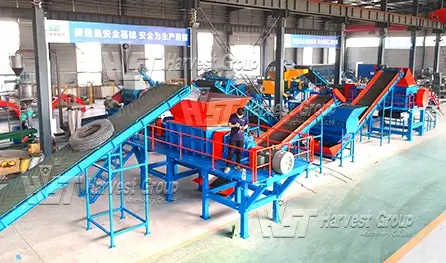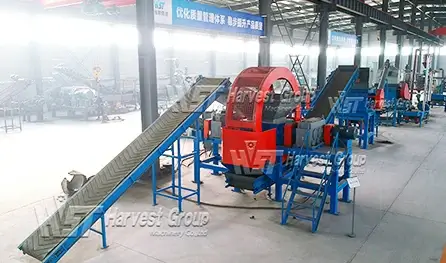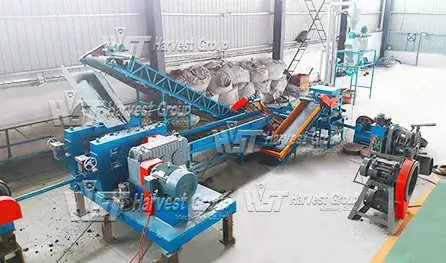
Starting a tire recycling business involves much more than purchasing a shredder and collecting discarded tires. A successful project needs a reliable supply of waste tires, confirmed buyers for the finished products, a suitable business model, compliant facilities, and equipment that matches the required output.
The first decision is not which machine to buy. It is what your business will sell. Some companies collect and transport used tires, while others produce tire-derived fuel, rubber chips, crumb rubber, rubber powder, or recovered steel. Each model requires a different investment level, plant configuration, customer base, and operating plan.
This guide explains how to start a tire recycling business step by step, from market research and raw material sourcing to business planning, equipment selection, permits, product sales, and long-term operation.
A tire recycling business can be commercially viable when three basic conditions are present: a stable supply of waste tires, consistent demand for the intended final product, and a processing system that fits the available budget and local market.
Waste tires contain several recoverable materials. Rubber can be processed into tire-derived fuel, rubber chips, mulch, granules, or powder. Steel wire can be separated and sold to metal recyclers. Some businesses also receive collection or disposal fees for accepting tires, depending on local regulations and market practices.
However, recycling tires for money is not simply a matter of processing as many tires as possible. Transportation distance, electricity consumption, equipment wear, product purity, local selling prices, storage requirements, and environmental compliance all affect the result.
Before investing, determine which product already has buyers in your region. A plant that produces a technically good material without a reliable sales channel may struggle even when its machinery performs well.
There is no single way to operate a tyre recycling business. Investors can enter the industry at different stages of the waste tire supply chain.
| Business Model | Main Activity | Typical Output | Main Customers | Investment Level |
| Used tire collection | Collecting and transporting discarded tires | Whole used tires | Licensed recyclers and processing plants | Relatively low |
| Tire shredding business | Reducing whole tires into smaller pieces | TDF, TDA, or rubber chips | Cement plants, construction companies, and downstream recyclers | Low to medium |
| Rubber granule production | Shredding, steel separation, and granulation | Rubber granules and recovered steel | Flooring, sports surface, mat, and molded-product manufacturers | Medium |
| Rubber powder production | Fine grinding and material purification | Rubber powder in selected mesh sizes | Rubber product, asphalt, and industrial material manufacturers | Medium to high |
| Complete tire recycling plant | Collection, shredding, separation, granulation, and packaging | Multiple recycled tire products | Industrial buyers in several markets | High |
A collection business can be a practical entry point for entrepreneurs who are not ready to purchase a complete processing line. The company collects tires from repair shops, dealerships, vehicle fleets, tire retailers, and municipal collection programs, then delivers them to licensed tire recycling centers.
This model requires transport vehicles, storage space, weighing procedures, supplier agreements, and any licenses required for operating as a waste tire hauler. The processing investment is limited, but revenue depends heavily on route density, transportation cost, and the fees or prices agreed with suppliers and recycling plants.
A tire shredding business processes whole tires into chips or shreds. The material may be sold as tire-derived fuel, tire-derived aggregate, or feedstock for another recycling plant.
This model can require fewer downstream machines than a crumb rubber plant, but the investor must confirm the required chip size, steel content, cleanliness, and delivery specifications with potential buyers before choosing a shredder.
Producing rubber granules or powder requires additional size reduction, magnetic separation, fiber removal, screening, and dust-control systems. The investment is higher, but the finished material can serve a wider range of manufacturing applications.
The required purity and particle size should be determined by the target customer. A buyer producing molded rubber tiles may have different requirements from a company using powder in rubberized asphalt or industrial compounds.
Market research should be completed before selecting equipment. Start with the local supply of waste tires and then study who will purchase the finished products.
Identify how many tire shops, vehicle service centers, dealerships, trucking companies, bus operators, agricultural fleets, mines, landfills, and municipal collection sites operate within a practical transportation area.
Do not rely only on the number of tires generated in a country or state. What matters to an individual recycling plant is the amount that can actually be collected under stable commercial agreements.
Record the tire types as well. Passenger car tires, truck tires, agricultural tires, and OTR tires require different handling methods and may need different pretreatment or shredding configurations.
Potential buyers may include cement plants, power-intensive industrial facilities, construction contractors, playground surface installers, rubber flooring manufacturers, asphalt producers, molded rubber factories, and metal recycling companies.
Ask each prospective buyer for its actual purchasing specifications. Important details include particle size, maximum steel content, fiber content, moisture, packaging, monthly volume, testing requirements, and delivery terms.
Review what nearby recycling companies produce, their approximate capacity, accepted tire types, product quality, target customers, and delivery areas. The purpose is not simply to copy an existing plant. It is to find an underserved part of the market.
For example, one region may already have several suppliers of coarse TDF chips but no reliable producer of clean rubber granules. Another region may have demand for TDF but insufficient collection and shredding capacity.
A recycling plant cannot operate consistently without a dependable tire collection network. Raw material interruptions can leave expensive machinery idle, while uncontrolled deliveries can create storage and fire-safety problems.
Common sources of discarded tires include:
People searching for where to sell used tires or where to take old tires are part of the supply side of the industry. A recycling company can receive these tires directly only when its permits, storage system, pricing policy, and local regulations allow it to do so.
For a B2B recycling operation, long-term agreements with tire shops, fleets, collectors, and local authorities are usually more reliable than receiving occasional tires from individual vehicle owners.
Depending on the local market, a recycler may purchase tires, collect them without charge, receive a disposal fee, or combine several arrangements. The correct model depends on local regulations, competition, transportation distance, tire condition, and the value of the final product.
All collection costs should be calculated before setting the product price. A tire that appears to be free can still be expensive after loading, hauling, unloading, sorting, storage, and compliance costs are included.
A tire recycling business plan turns a general investment idea into a measurable operating project. It is also useful when applying for financing, discussing permits, negotiating with suppliers, or comparing equipment proposals.
| Business Plan Section | Questions to Answer |
| Business model | Will the company collect tires, produce TDF, make rubber granules, manufacture powder, or operate a complete recycling center? |
| Raw material supply | Who will supply the tires, what types will be received, and what monthly volume is available? |
| Target product | What particle size, purity, steel content, and packaging will customers require? |
| Customer analysis | Who are the confirmed or potential buyers, and what quantities can they purchase? |
| Equipment configuration | Which machines are required to produce the specified output at the planned capacity? |
| Operating costs | What are the expected costs of labor, electricity, transport, wear parts, maintenance, rent, insurance, and packaging? |
| Compliance | Which environmental, waste handling, land-use, fire, and transport permits are required? |
| Sales strategy | How will the company reach buyers, provide samples, control quality, and arrange delivery? |
| Financial plan | How much working capital is needed before stable production and regular sales begin? |
A realistic plan should include a conservative production ramp-up period. New plants often need time to stabilize feeding, adjust screen sizes, train operators, build spare-parts inventory, test product quality, and complete customer approval procedures.
The site should provide enough space for raw tire storage, equipment installation, finished-product storage, vehicle access, fire lanes, electrical systems, dust collection, maintenance, and future expansion.
Convenient access to both tire suppliers and product buyers can significantly reduce logistics costs. The lowest-priced land is not always the most economical choice when it is far from major collection routes or industrial customers.
Confirm the available electrical voltage, frequency, transformer capacity, and permitted connected load before finalizing the equipment configuration. Large shredders, rubber crushers, granulators, air separation systems, and dust collectors can require substantial power.
Compressed air, cooling water, drainage, ventilation, fire protection, and dust extraction requirements should also be considered during the site-planning stage.
Permit requirements differ by country, state, province, and municipality. A project may need business registration, land-use approval, a waste tire processing permit, environmental approval, fire-safety approval, transport authorization, emissions or dust-control documentation, and employee insurance.
Some regions also regulate how many whole tires can be stored, how storage piles must be separated, and how stormwater, fire risk, mosquitoes, and emergency access must be managed.
Consult the appropriate local authorities and professional advisors before signing a site lease or purchasing equipment. A machine supplier can provide technical documents, but it cannot replace local legal or environmental approval.
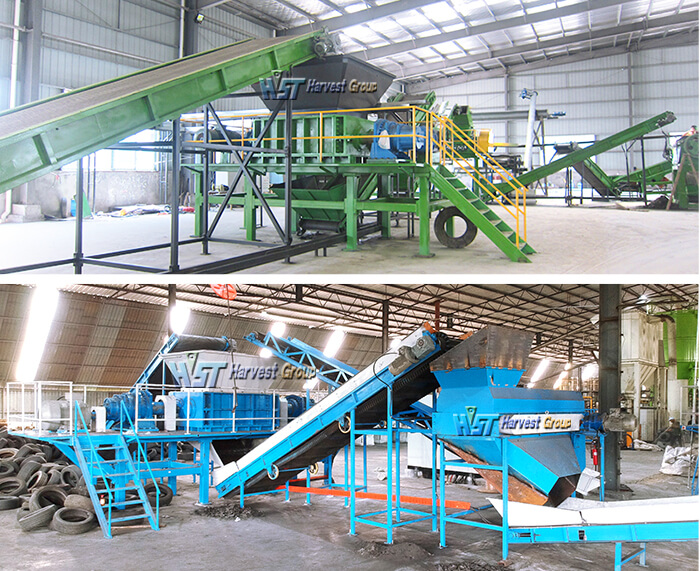
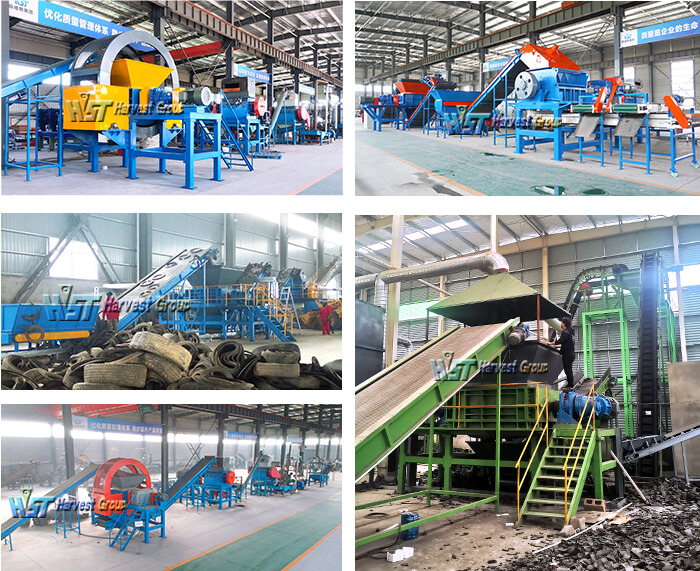
The equipment configuration should be selected backward from the required finished product. A plant producing coarse TDF chips does not need the same machinery as a facility making clean 1–4 mm rubber granules or fine rubber powder.
| Target Product | Typical Processing Requirement | Main Equipment |
| TDF or coarse tire chips | Primary size reduction with optional steel control | Tire debeader or cutter, tire shredder, screen, and magnetic separator |
| Wire-free rubber chips | Secondary size reduction and stronger steel separation | Primary shredder, rasper or secondary crusher, screening, and magnetic separation |
| Rubber granules | Fine size reduction, steel removal, and fiber separation | Shredder, crusher or granulator, magnetic separators, fiber separator, and screen |
| Rubber powder | Fine grinding, classification, and dust control | Granulation line, rubber powder mill, screening system, and dust collection equipment |
The primary shredder is important, but it is only one part of the production system. Conveyors, screens, magnetic separators, dust collectors, electrical controls, wear parts, and safety protection also affect plant stability and product quality.
Investors who need a detailed machine-by-machine comparison can review our complete tire recycling machine guide.
When comparing proposals, confirm the allowable tire diameter, tire type, input method, actual output size, hourly capacity, motor power, automation level, steel-separation result, wear-part life, maintenance access, and after-sales support.
The cost of starting a tire recycling business varies widely because a collection company, a tire shredding business, and a complete rubber powder plant are fundamentally different projects.
The main investment categories normally include:
Machine price alone does not represent the complete project cost. A lower equipment quotation can become more expensive if it requires excessive manual labor, frequent blade replacement, unstable feeding, repeated shutdowns, or additional downstream machines to reach the required product quality.
For a more detailed breakdown, see our guide to tire recycling plant equipment, cost, and profit.
A tire recycling company may earn revenue from more than one source. The available combination depends on the business model and the local market.
Some operators charge for collecting or accepting discarded tires. This income can help offset transportation, handling, and storage costs. Whether such fees are allowed or commercially realistic depends on local regulations and competition.
Shredded tires can be sold as tire-derived fuel or feedstock for downstream recycling. Buyers generally specify chip size, steel content, cleanliness, moisture, and delivery volume.
Clean rubber granules and powder can serve playground surfacing, running tracks, rubber flooring, molded products, rubberized asphalt, mats, and other industrial applications.
Smaller particles do not automatically produce higher profits. Fine grinding normally consumes more energy, requires more separation and dust control, and may increase wear-part costs. The target particle size should therefore be based on confirmed customer demand.
Steel removed during tire processing can be sold to metal recyclers. Its value depends on cleanliness, rubber contamination, baling or packaging, transport distance, and the local scrap market.
Some plants process tires for another collector, recycler, government program, or product manufacturer and charge according to the quantity handled or the required output specification.
Profitability ultimately depends on the difference between total revenue and the full cost of collecting, processing, packaging, storing, and delivering the products. Production capacity alone is not a reliable measure of profit.
One of the most common mistakes in the waste tire recycling business is purchasing equipment before confirming who will buy the finished material.
Potential customers should be contacted during the planning stage. Request product specifications and, when possible, discuss sample testing, monthly demand, packaging, delivery frequency, payment terms, and quality-control procedures.
Different products require different sales approaches:
A new plant should avoid trying to produce every possible recycled tire product at once. It is usually safer to begin with one or two products supported by clear local demand, then expand after the supply chain and customer base are stable.
A general request for a “tire recycling machine” is not enough to design a production line. The supplier needs to know the tire type, maximum diameter, hourly capacity, final size, required purity, local voltage, available space, and automation expectations.
A single supplier can reduce deliveries, change prices, or stop operating. A stable plant normally needs several tire sources and written collection arrangements.
Whole tires are bulky and expensive to transport. Collection routes, truck loading efficiency, supplier distance, and finished-product delivery can materially affect operating costs.
A product may have useful applications globally but limited demand in a particular region. Confirm actual buyers instead of relying only on general market reports.
Quoted capacity may depend on tire type, feed condition, output size, screen configuration, and operating time. Compare complete system performance rather than one machine’s nominal number.
Shredder blades, crusher rollers, screens, bearings, and conveyors operate under demanding conditions. Include wear parts, preventive maintenance, lubrication, operator training, and downtime in the financial plan.
Land-use, environmental, waste-storage, transport, and fire requirements can determine whether a proposed site is suitable. These issues should be reviewed before the factory and equipment plans are finalized.
Begin by selecting a business model and target product. Then confirm the available supply of waste tires, identify buyers, prepare a financial plan, select a compliant site, obtain the required permits, and choose equipment that matches the expected tire type, capacity, and output specification.
It can be profitable when raw material supply, product demand, transport distance, equipment efficiency, operating costs, and compliance are properly controlled. Profit is not guaranteed simply because waste tires are widely available.
Common sources include tire retailers, repair shops, dealerships, commercial fleets, municipal collection programs, waste tire haulers, transfer stations, landfills, farms, mines, and construction companies.
Depending on tire condition and local regulations, individuals may contact used tire dealers, tire shops, licensed collectors, recycling centers, or local waste-management programs. A tire recycling plant should only receive tires in accordance with its permits and operating policy.
The configuration depends on the final product. A basic shredding operation may use a tire cutter or debeader, primary shredder, screen, and magnetic separator. Granule or powder production requires additional crushing, granulation, steel separation, fiber separation, screening, and dust collection.
Yes. Some businesses begin by producing tire chips, TDF, or feedstock for larger recycling plants. Before investing, confirm the required output size, steel content, monthly demand, and price with potential buyers.
The cost depends on capacity, tire type, final product size, automation, plant construction, electrical installation, environmental controls, transport equipment, and local labor costs. A collection business requires far less capital than a complete rubber powder plant.
Common products include tire-derived fuel, tire-derived aggregate, rubber chips, rubber mulch, crumb rubber, rubber powder, recovered steel, and textile fiber. The most suitable product depends on local demand and the available processing technology.
Most regions regulate waste tire storage, transport, processing, fire safety, land use, and environmental protection. The exact permits vary by location and should be confirmed with the relevant authorities before the project begins.
A successful tire recycling project begins with a market, not a machine. Investors should first understand where the tires will come from, what products nearby industries are willing to purchase, what quality those buyers require, and how much material can be collected and sold each month.
Once these questions are answered, the equipment configuration becomes much clearer. A properly designed system can then connect used tire collection, size reduction, steel and fiber separation, product screening, and packaging into a stable commercial operation.
Plan a Tire Recycling System for Your Local Market
HVST has extensive experience designing tire recycling equipment for passenger car tires, truck tires, and OTR tires. Our team can recommend a suitable process according to your raw tire size, required capacity, final product, available factory space, electrical standard, and investment plan.
Send us your tire type, expected hourly capacity, required output size, and target product. We will help you compare suitable tire shredding, granulation, and rubber powder production solutions.
View all tire recycling solutions