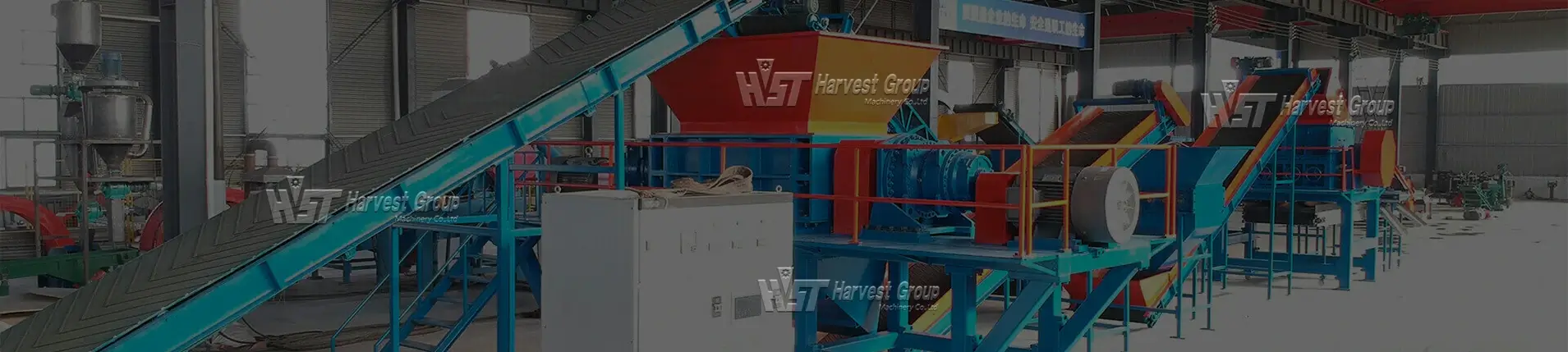
Tire recycling is not a single-machine operation but a coordinated industrial system designed to convert whole waste tires into reusable materials. From large truck tires to OTR mining tires, each processing stage requires specific equipment with a defined function.
Different types of tire recycling machines are responsible for size reduction, steel separation, fiber removal, and fine grinding. The selection and combination of these machines determine final output size, rubber purity, production stability, and overall plant efficiency.
Understanding the function, advantages, and application of each machine type is essential when designing a modern tire recycling system.
Primary equipment handles whole tires and prepares them for downstream processing.
A tire debeader is used to remove steel bead wire from truck and OTR tires before shredding. The bead wire is extremely strong and can cause premature wear on shredder blades if not removed.
The main advantage of a debeader is blade protection and reduced maintenance cost. By separating bead wire at the beginning, overall system stability improves significantly.
Debeading is particularly important when processing heavy truck tires or large industrial tires.
A whole tire cutter divides large tires into halves or segments before shredding. This reduces the stress on the primary shredder and improves feeding efficiency.
The cutter is commonly used when handling thick OTR tires or oversized industrial tires. It ensures smoother operation and helps extend the lifespan of downstream equipment.
The double shaft tire shredder is the core machine in most tire recycling systems. Its function is to reduce whole tires into 50 to 150 millimeter blocks.
The shredder operates at low speed with high torque, allowing it to process passenger tires, truck tires, and OTR tires efficiently. This design minimizes dust, reduces noise, and ensures stable operation under heavy load.
The main advantages include wide capacity range, strong blade durability, and compatibility with multiple production goals such as TDF production or crumb rubber processing.
Primary shredding determines the overall throughput of the recycling line.
After shredding, tire blocks must be further refined and separated.
A tire rasper machine converts shredded tire blocks into rubber chips typically ranging from 10 to 30 millimeters. During this process, steel wire is liberated and separated.
The rasper increases the value of material significantly compared to raw tire blocks. Its cutting system is designed for high efficiency steel separation while maintaining consistent output size.
This machine is commonly used in rubber mulch production and as an intermediate stage before granulation.
A rubber granulator machine reduces rubber chips into granules ranging from 1 to 6 millimeters. It plays a critical role in producing uniform crumb rubber with high purity.
The granulator improves material consistency and ensures further removal of residual steel and textile fiber. High purity output is required for applications such as playground surfaces, artificial turf infill, and rubber tiles.
Granulated rubber represents one of the most stable and commercially viable segments of the recycling market.
Magnetic separators remove steel wire from processed rubber material, while fiber separators eliminate nylon and textile content.
These machines enhance rubber purity and protect fine grinding equipment from damage. High purity rubber is essential for advanced rubber products and asphalt modification.
Material cleanliness directly affects resale value and product competitiveness.
Fine grinding systems produce higher-value rubber powder used in specialized industries.
The rubber crusher, often configured as a roll mill system, converts rubber granules into smaller particles such as 5 to 40 mesh material.
This stage improves product refinement and prepares material for advanced applications. The roll mill design allows adjustable spacing and controlled crushing to maintain consistent output.
Rubber produced at this stage is commonly used in reclaimed rubber production and industrial rubber blending.
Fine grinders process crumb rubber into ultra-fine powder ranging from 40 to 120 mesh.
Finer mesh material commands higher market value and is used in asphalt modification, waterproof membranes, automotive rubber components, and high-performance rubber compounds.
Temperature control during grinding is important to maintain rubber quality and prevent material degradation.
Fine grinding represents the highest value-added stage in a tire recycling system.
Different combinations of tire recycling machines are used depending on the desired output.
A TDF tire recycling line focuses on producing 50 to 150 millimeter chips for fuel applications in cement kilns and power plants.
A rubber mulch line emphasizes 10 to 30 millimeter chips for landscaping and playground surfaces.
A crumb rubber production line produces 1 to 6 millimeter granules suitable for sports flooring and rubber tiles.
A rubber powder production line integrates fine grinding equipment to produce 20 to 120 mesh powder for industrial applications.
Each configuration reflects a different market focus and operational scale.
Output size plays a decisive role in determining end-use markets.
Larger tire chips are typically used as alternative fuel.
Medium-size rubber mulch is applied in landscaping and impact-absorbing surfaces.
Granulated rubber is widely used in sports infrastructure and molded rubber products.
Fine rubber powder is integrated into asphalt, waterproof materials, and advanced rubber compounds.
Understanding market demand before selecting equipment ensures long-term profitability.
Tire recycling systems can be configured as semi-automatic or fully automatic PLC-controlled lines.
Semi-automatic systems offer flexible layouts and lower initial investment. They are suitable for small to medium production capacity.
Fully automatic systems integrate conveyors and centralized control. They provide continuous operation, improved efficiency, and reduced labor requirements.
Automation level should align with production goals and operational scale.
Types of tire recycling machines are defined by their role in size reduction, separation, and refinement.
From shredding to rasper processing, granulation, and fine grinding, each machine contributes to product quality and plant performance.
Understanding machine functions, advantages, and applications allows operators to design efficient systems that match market demand and production objectives.
A well-structured tire recycling system transforms waste tires into valuable industrial materials while maintaining operational stability and scalability.