Every year, billions of waste tires are produced globally. These “black waste” not only occupy large amounts of land but also pose environmental risks like fires and pollution. In tire recycling projects, many people mistakenly believe that waste tires can be turned into rubber powder through a simple process. In reality, tires are complex composite materials made of rubber, steel wire, and fiber. To turn them into usable rubber powder, a multi-stage mechanical process is required, with tire shredding being the critical first step. Understanding this complete process can help investors and recyclers choose the right equipment configuration, avoiding unnecessary costs.
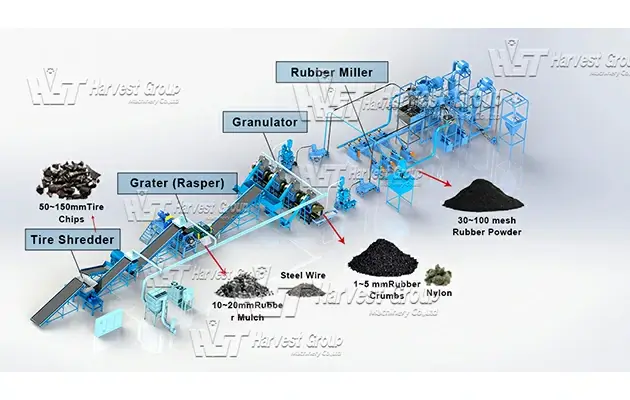
The entire tire is designed for durability, flexibility, and impact resistance. While these qualities ensure driving safety, they also make it extremely difficult to grind a tire directly into fine powder. The steel belts, bead wires, and textile fibers in the tire must be gradually released and separated before fine grinding is possible. Feeding whole tires directly into milling equipment will lead to rapid equipment wear, frequent breakdowns, and unstable powder output. Therefore, tire recycling must follow a step-by-step reduction process, starting with shredding instead of direct grinding.
A tire shredder doesn’t directly produce rubber powder. Instead, it lays the foundation for the entire production process. Its core value is seen in:
Volume reduction: The shredder cuts whole tires into smaller pieces, significantly reducing the difficulty of material transportation and subsequent processing.
Structural breakdown: It breaks down the tire’s composite structure, exposing internal steel wires and fibers, creating the conditions necessary for separation.
Stable material handling: It provides even output, ensuring safe and continuous operation of downstream equipment, improving the efficiency of the entire production line.
Data shows that a high-quality twin-shaft tire shredder can process up to 30 tons of waste tires per hour, turning them into 2-6 inch uniform rubber chunks, ensuring scalability for large-scale production.
The performance of the tire shredder directly affects key production indicators:
Downstream energy consumption: Evenly shredded material helps reduce energy consumption during subsequent grinding.
Equipment wear rates: Avoids excessive wear on granulators and mills caused by oversized chunks.
Production stability: Ensures consistent feeding and output, preventing frequent downtime in the production line.
Final product quality: The consistency of shredded particle size directly impacts the purity and uniformity of the rubber powder.
Thus, selecting the right shredder is one of the most crucial decisions in rubber powder production.
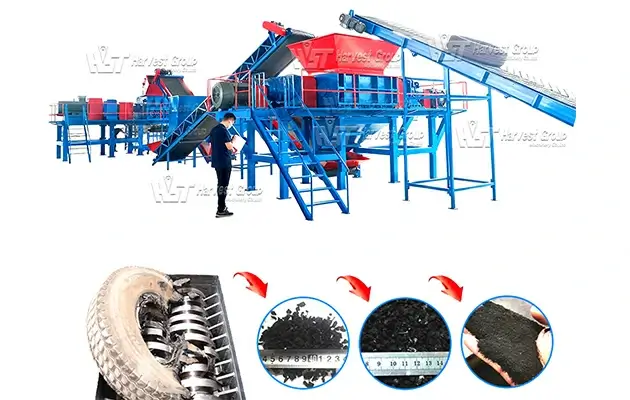
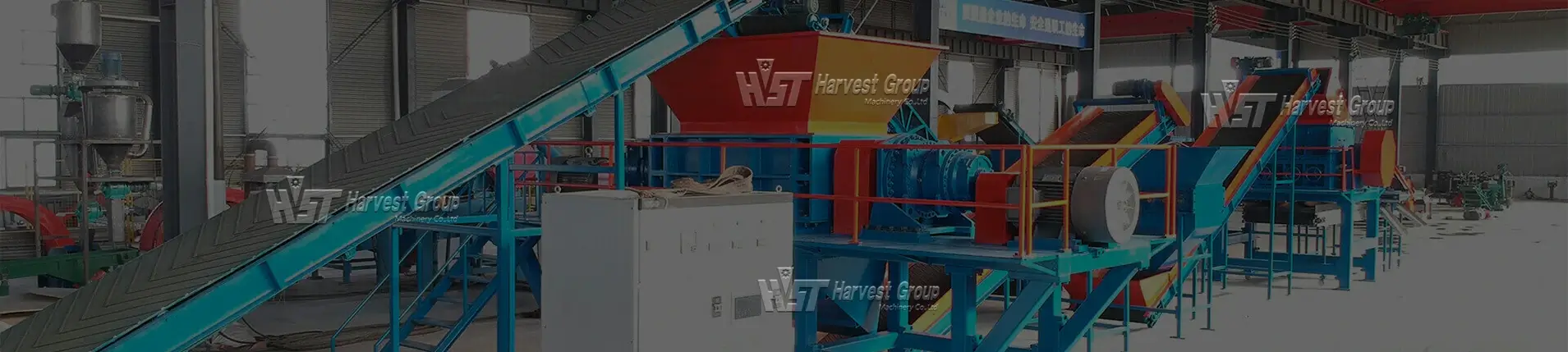
This is the foundational step in rubber powder production, where the tire shredding machine (usually twin-shaft design) plays a crucial role. Powered by a motor and reducer, the two main shafts’ cutters rotate in opposite directions, gradually cutting whole passenger or truck tires into manageable rubber chunks (typically 2-6 inches). The main objective is not to create powder but to:
Reduce tire volume
Break the tire structure
Prepare material for the subsequent separation and processing stages
Ensure stable, safe material handling
After primary shredding, the output is usually coarse rubber chunks rather than fine particles. The size is adjusted according to the requirements of the downstream equipment. The key here is uniformity: unevenly shredded material could lead to equipment jams, dust contamination, and increased energy consumption in subsequent processes. High-quality shredders often feature adjustable blade gaps and overload protection devices to ensure stable output.
The coarse rubber chunks from the first stage are fed into a secondary shredder or crusher to further reduce them to 1-2 cm-sized rubber granules. This step fully breaks down the bond between rubber and steel or fiber, making it easier to separate impurities and improving material uniformity for efficient fine grinding.
Tires contain a significant amount of steel reinforcement, which, although partially released during primary shredding, is not completely separated. After secondary shredding, magnetic separators and self-unloading iron removal systems are used to remove steel particles from the rubber granules. This step is crucial for:
Protecting downstream grinding equipment from damage caused by steel particles.
Increasing the purity of the rubber granules, which improves the quality of the final rubber powder and enables the recovery of steel, offering additional profit opportunities.
Professional tire fiber separators, such as vibration screens and air-flow separators, are used to remove nylon or polyester fibers from the rubber. After steel and fiber removal, the purity of the rubber granules can reach over 95%, providing a solid foundation for high-quality rubber powder production.
Fine grinding is the critical step that transforms rubber granules into rubber powder. Unlike shredders that rely on high-torque tearing, grinders use controlled friction and cutting. At this point, most steel has been removed, and the material’s particle size is uniform enough to allow efficient grinding.
Depending on the application, different grinding equipment can be selected to produce rubber powder with varying mesh sizes, typically 20 mesh (coarse), 80 mesh, or 100 mesh (fine). High-purity rubber powder, with particle sizes smaller than 1mm and free of contaminants, holds the highest market value. Quality grinding machines are equipped with temperature control systems to prevent overheating, which could degrade the rubber and affect its performance.
The grinding system incorporates sieving and air-flow separation: Sieves trap particles that do not meet the desired size (which are returned for further grinding), while air currents carry the uniform rubber powder to dedicated collection containers. This design ensures consistent rubber powder particle sizes and prevents blockages within the equipment, improving overall production efficiency.
The production of rubber powder generates dust, which can be harmful to workers and the environment. A high-efficiency dust collection system is used to filter and capture the dust particles, ensuring compliance with health and environmental regulations.
Storage: Rubber powder should be stored in dry, cool, and sealed containers to prevent moisture from causing clumping.
Transport: Suitable bags or containers should be used for transporting rubber powder, clearly labeled with the powder’s mesh size and purity, ensuring proper handling and ease of identification by end-users.
If the goal is to produce coarse rubber chunks for resale or fuel-related applications, a single primary tire shredder may suffice. This option has a lower investment cost and is suitable for small-scale businesses or testing phases.
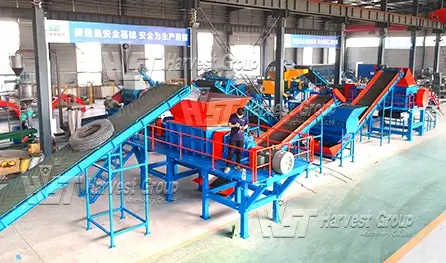
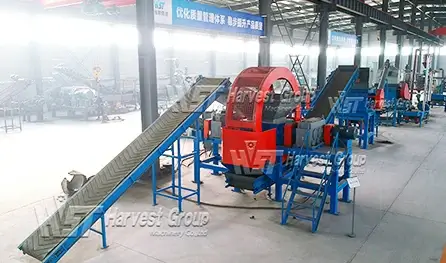
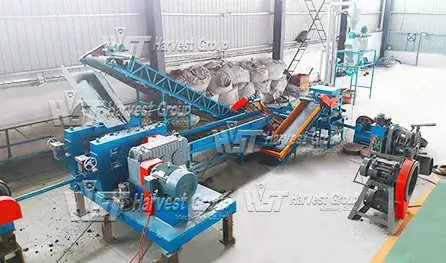
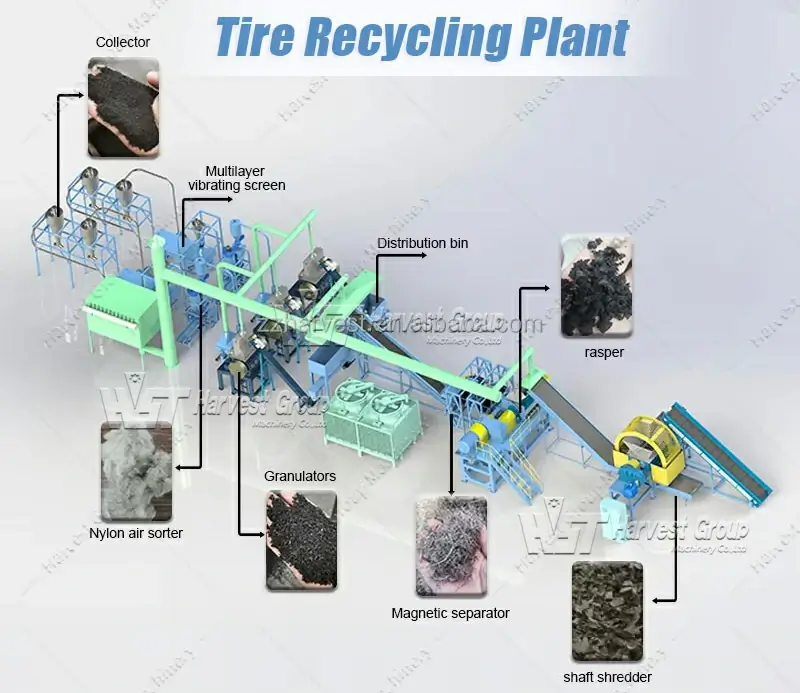
For rubber powder production, a complete production line is necessary, which includes:
Shredding Equipment: Primary tire shredder, secondary shredder/crusher
Separation Equipment: Magnetic separators, fiber separators, self-unloading iron removal systems
Grinding Equipment: Granulators or grinding mills
Auxiliary Equipment: Conveyor belts, dust collection systems, sieving equipment, and collection containers.
All components must work together in harmony for stable output and consistent rubber powder quality. Without a complete production line, production stability and product quality may suffer, leading to higher long-term costs.
Prioritize tire-specific shredders to avoid clogging and uneven shredding.
Ensure grinding equipment allows for adjustable mesh sizes to meet various market demands.
Focus on efficient separation, particularly the strength of magnetic separators, as this greatly impacts impurity removal.
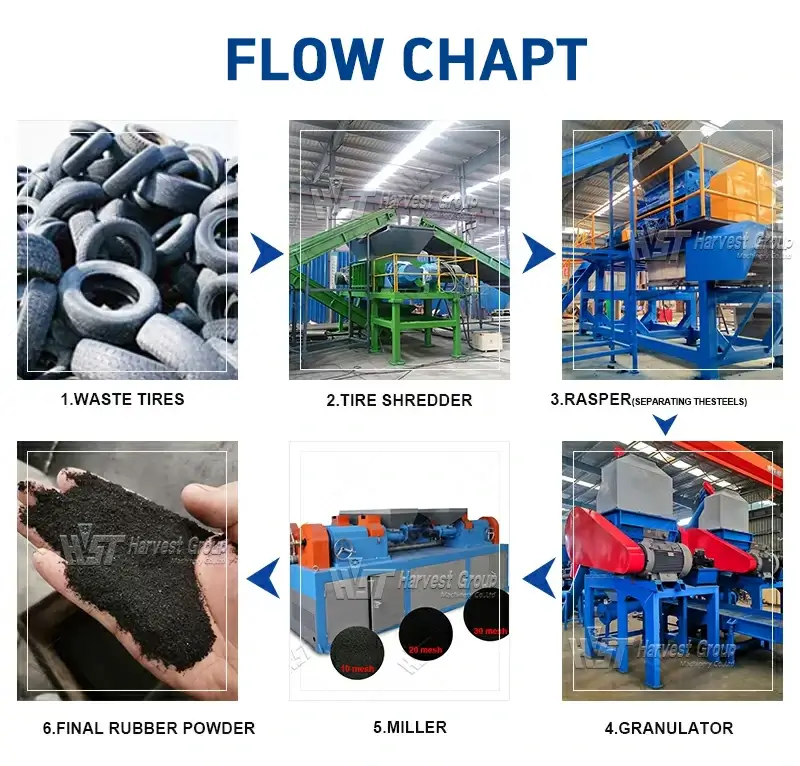
Turning waste tires into rubber powder is an exemplary “waste-to-resource” recycling project, and shredding plays an essential role as the starting point of the entire process. It provides a stable material base for subsequent separation, granulation, and grinding, directly influencing production efficiency, costs, and product quality.
With tightening environmental policies and growing demand for recycled materials, the rubber powder production industry is poised for growth. Whether you’re an investor looking to enter the market or a company seeking efficient recycling solutions, clear processing goals and properly configured equipment can help you establish a stable, efficient, and scalable production system, making rubber powder production a feasible and economically viable recycling solution.
If you want to learn more about tire shredder selection, production line design, or rubber powder market trends, feel free to contact us. We’ll provide customized solutions and budget planning to help you achieve sustainable profits in the tire recycling industry.