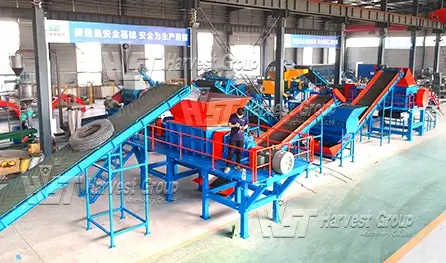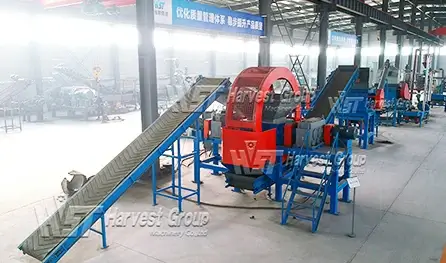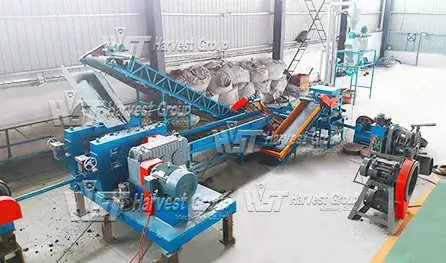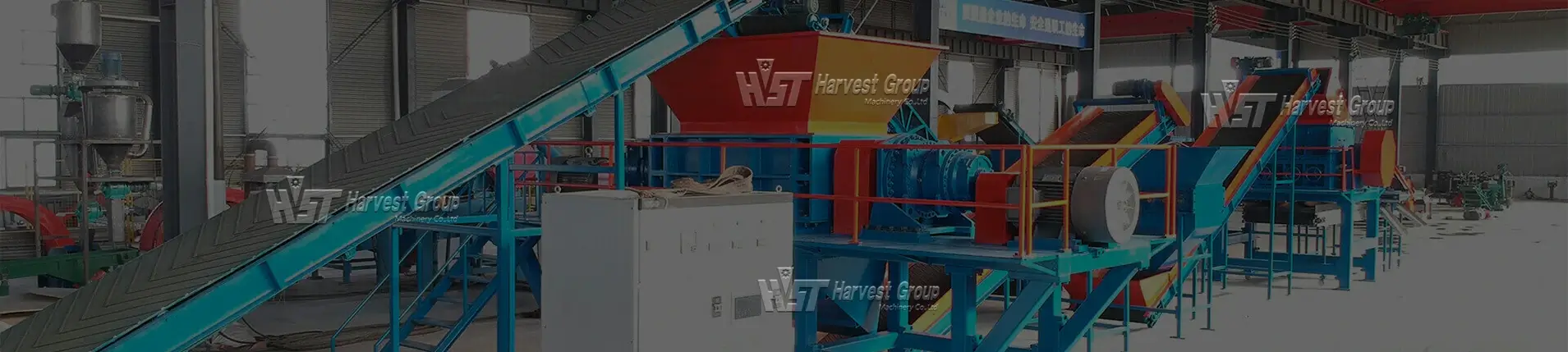
In a tire recycling project, the plant layout is one of the most important factors affecting efficiency, operating cost, and long-term operational stability. Many investors entering the tire recycling industry focus mainly on selecting equipment such as tire shredders, rasper machines, or granulators, but often underestimate how important the physical arrangement of those machines is within the factory.
A well-designed tire recycling plant layout ensures that materials move smoothly through each processing stage without unnecessary transportation or operational delays. Proper equipment positioning improves material flow, reduces energy consumption, simplifies maintenance work, and enhances overall production safety.
Because waste tire recycling involves multiple processing stages such as shredding, steel separation, granulation, and milling, the arrangement of machines directly influences the productivity and efficiency of the entire recycling system. A properly planned layout allows the plant to operate continuously while maintaining consistent output quality.
Waste tire recycling generally follows a mechanical processing workflow designed to gradually reduce tire size while separating embedded materials such as steel and fiber. The purpose of this recycling process is to convert whole scrap tires into reusable rubber materials including tire chips, rubber mulch, crumb rubber, and fine rubber powder.
In a typical tire recycling line, whole tires are first fed into primary size-reduction equipment. This stage prepares the material for downstream processing by breaking the tire structure into smaller and more manageable pieces.
After primary shredding, the material passes through additional crushing and separation stages where steel wires are released from the rubber structure and removed using magnetic separation systems. Textile fibers are then removed through fiber separation equipment.
Depending on the desired final product, the rubber material may continue through granulation and fine grinding processes. At the end of the recycling workflow, rubber can be processed into uniform granules or fine powder suitable for a wide range of industrial applications.
Mechanical recycling technology allows waste tires to be converted into valuable raw materials without chemical treatment or high-temperature processing.
The recycling process begins with feeding whole tires into the production line. Tires are typically transported from storage areas to the feeding system using conveyors or loaders.
In some recycling systems, tires may first pass through equipment such as a tire debeader or tire cutter. Removing the bead wire before shredding helps protect shredder blades from excessive wear and improves overall processing efficiency.
After the preparation stage, tires enter the primary shredding section where large tires are reduced into smaller rubber strips or blocks.
A double shaft tire shredder is commonly used in this stage. These shredders operate at relatively low rotational speeds but generate high torque, allowing them to tear apart heavy truck tires and off-road tires efficiently.
After shredding, rubber pieces are processed by a rasper machine. The rasper further breaks the material into smaller rubber chips while simultaneously liberating steel wires embedded within the tire structure.
Magnetic separators are installed after the rasper to remove steel wires from the rubber stream.
In the next stage, tire granulators reduce rubber chips into smaller rubber granules. These machines refine the material into consistent particle sizes suitable for various industrial uses.
After granulation and fiber removal, the material becomes clean crumb rubber that can be used in multiple manufacturing applications.
For recycling plants that require finer rubber material, crumb rubber may be further processed through rubber powder milling equipment.
This fine powder is widely used in reclaimed rubber production, rubberized asphalt, waterproofing materials, and other polymer applications.
A typical tire recycling plant layout is designed to allow materials to move efficiently from tire feeding to final product storage while minimizing unnecessary handling and transportation.
The tire feeding area is usually located close to the tire storage zone.
The shredding area is normally the first major processing zone of the plant because it handles the largest and heaviest materials.
After shredding, the material flows into the grinding and granulation area.
The final section of the recycling plant is dedicated to finished product handling and storage.
The required space for a tire recycling facility depends largely on production capacity, equipment configuration, and storage requirements.
Small recycling plants processing several hundred kilograms of tires per hour can operate within relatively compact industrial spaces.
Larger recycling plants with capacities of several tons per hour require significantly more factory space.
A tire debeader is used to remove steel bead wire from truck and OTR tires before shredding.
A whole tire cutter divides large tires into halves or segments before shredding.
The double shaft tire shredder is the core machine in most tire recycling systems.
A complete tire recycling equipment system relies on multiple machines working together as an integrated processing system.
Granulators refine rubber chips into uniform granules suitable for various applications. For finer products, rubber powder production lines grind the granules into fine powder.
The desired final product determines the configuration of the recycling line.
Production capacity also plays a crucial role in equipment selection and plant layout planning.
A tire recycling plant is an industrial facility designed to process waste tires and convert them into reusable rubber materials.
Waste tires can be processed into several valuable materials including tire-derived fuel, rubber mulch, crumb rubber, and fine rubber powder.
The required factory space depends on production capacity and equipment configuration.
Most tire recycling plants can process passenger car tires, truck tires, and off-road tires.
Tire recycling can be profitable when the plant is properly designed and the final products have stable market demand.