In modern military training and combat readiness, safety is always the top priority. From high-intensity obstacle courses to live-fire shooting exercises, every session involves potential risks that must be carefully managed. Recycled tire mulch — an innovative material derived from waste tires — is emerging as an invisible yet powerful guardian in this field. It not only supports environmental protection but also provides exceptional safety performance in multiple military environments, offering a modern solution that strengthens both protection and sustainability.
Military training is often physically demanding and high-risk. On traditional hard grounds, falls and impacts can easily lead to sprains, strains, or fractures, disrupting training schedules and reducing combat readiness. In live-fire shooting ranges, the danger is even greater — bullet ricochet, fragments, and the spread of lead dust can threaten both shooters and staff. Such hidden dangers call for a safer, more reliable, and long-lasting solution that can withstand extreme use.
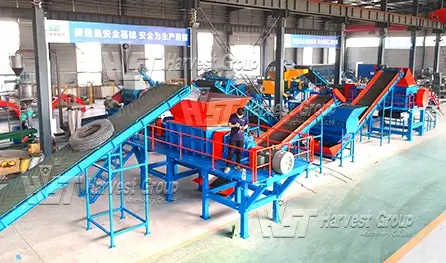
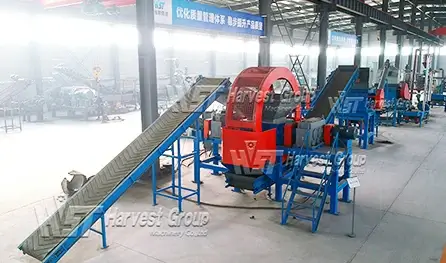
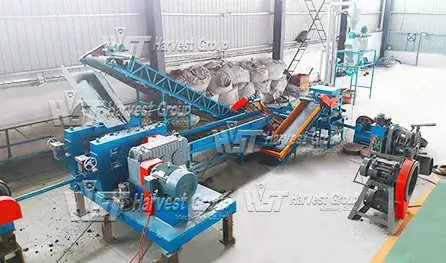
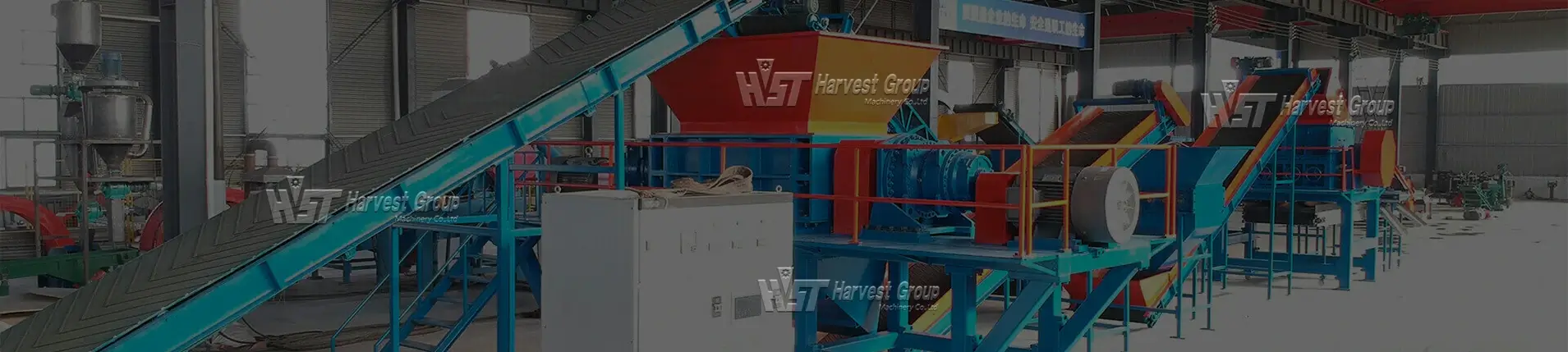
HVST Equipment has been committed to advancing tire recycling technology to create cleaner, safer, and more efficient solutions. The company’s advanced recycling system uses a four-stage precision processing method that transforms waste tires into high-purity rubber mulch ideal for demanding environments such as military bases and shooting ranges.
The process begins with patented twin-shaft shredders that break whole tires into 10–15 cm pieces. Magnetic separation then removes all embedded steel wire and other metal contaminants. The next stage uses a custom-designed granulator to grind the material into 3–5 mm rubber granules. Finally, an air separation system precisely separates rubber from fibers, ensuring 99.8% purity in the finished mulch.
The fully automated system can operate continuously for 24 hours a day, processing up to 15 tons of scrap tires daily — 40% more efficient than traditional methods. Its modular design reduces maintenance costs by about 30%, while integrated dust and noise control systems meet the strictest environmental standards. The resulting wire-free rubber mulch not only tackles the issue of tire waste pollution but also provides unique physical characteristics that make it an excellent material for enhancing military safety.
Recycled tire mulch is more than an eco-friendly surface — it is reshaping how the military approaches safety. Whether used on training grounds, obstacle fields, or shooting ranges, it improves protection, reduces injuries, and lowers long-term operating costs, offering a durable foundation for modern defense infrastructure.
In military training, repeated physical contact with the ground is one of the main causes of injuries. Traditional hard surfaces provide little to no cushioning, causing significant impact on knees, ankles, and the spine. Recycled tire mulch, with its natural elasticity, absorbs and disperses energy efficiently. At a 6-inch installation depth, it provides fall protection equivalent to a 17-foot drop — a crucial safeguard for climbing, jumping, and obstacle training exercises.
Its loose-fill composition further enhances safety by spreading the impact over a wider area, minimizing localized pressure points. This dual-layer safety mechanism—rubber’s elasticity combined with structural cushioning—creates an impact-absorbing barrier unmatched by other materials.
Military training areas face constant use and heavy wear. Soil and sand surfaces degrade quickly, forming ruts and uneven patches that demand frequent repairs. Recycled tire mulch, however, performs exceptionally under these extreme conditions. It resists freezing, erosion, and displacement, even during severe weather. Because rubber mulch is non-biodegradable, it maintains stability and performance over many years without decomposing or compacting, greatly reducing replacement frequency and maintenance costs.
Its adaptability is another strength. Recycled tire mulch can be used both indoors and outdoors, maintaining consistent safety performance in shooting ranges, obstacle courses, and parachute landing zones alike.
Dust, mud, and dirt can be constant problems during training. On sunny days, dust clouds reduce visibility and cling to uniforms; during rain, soil turns to mud, making cleaning a challenge. Recycled tire mulch solves both issues. It produces minimal dust, drains quickly after rainfall, and doesn’t turn muddy. Uniforms and gear stay cleaner, saving significant time and effort in post-training maintenance.
Additionally, rubber mulch resists pests, mold, and bacteria growth. It does not attract rodents or insects, and it maintains hygienic conditions for longer periods. Its drainage properties prevent standing water and slippery conditions, ensuring a safer and more comfortable environment for every soldier.
Shooting ranges are among the most hazardous areas in any military facility. Standard materials struggle to contain high-velocity bullets, often resulting in ricochets and fragment scatter. Ballistic-grade recycled tire mulch, however, is engineered to absorb and encapsulate bullets upon impact. When a round enters the mulch, it is trapped and cushioned, preventing rebounds and minimizing secondary injury risks.
Beyond ballistic safety, the material helps contain lead dust and metal fragments produced during live-fire exercises. Instead of allowing contaminants to spread into the air or soil, the mulch locks them inside, reducing environmental and health risks. It also provides moderate sound absorption, lowering noise levels and protecting hearing in indoor and outdoor ranges.
Obstacle and rope training develop soldiers’ strength, agility, and coordination but also involve falls and slips. Surrounding these areas with recycled tire mulch provides a cushioning layer that dramatically reduces injury severity. Its texture can be customized to simulate natural terrain, balancing realism and safety without compromising performance.
High-altitude training, such as rappelling and parachute landings, demands exceptional shock absorption. Rubber mulch placed beneath rappel towers and landing zones absorbs impact forces and ensures smoother landings. Even under frequent high-impact use, its structure remains stable without compaction, maintaining consistent performance throughout intensive training schedules.
From floors to backstops, shooting range safety requires comprehensive protection. Recycled tire mulch can be installed on floors to reduce ricochet and noise, while compressed blocks and panels can line walls and ceilings to capture stray rounds. When wrapped in durable fabric similar to Kevlar, these panels create powerful barriers that stop projectiles and contain fragments effectively.
Its versatility makes it suitable for a wide range of facilities — from military ranges to law enforcement and civilian training grounds — all tested to meet strict ballistic and environmental standards.
Every ton of recycled tire mulch repurposes roughly 134 discarded tires, preventing pollution from landfills and incineration. Compared with traditional materials like wood or sand, rubber mulch reduces dependence on natural resources and minimizes ecological damage. Its adoption supports the military’s long-term sustainability goals by combining safety with environmental responsibility.
Rubber mulch is produced under controlled conditions to eliminate harmful substances. It is non-toxic, does not release volatile chemicals, and poses no threat to personnel or nearby ecosystems. Additionally, it features excellent fire resistance — a critical advantage for facilities such as shooting ranges, where sparks or heat sources are common. This property significantly reduces the risk of fire accidents.
Recycled tire mulch offers a wide range of customization choices in color, texture, and form. Beyond standard black, it can be produced in natural tones like brown or green to blend seamlessly with the environment. Uncoated natural mulch provides cost-effective safety for large-scale installations, while colored variants enhance visibility and aesthetic integration.
For large-scale military projects, rubber mulch is supplied in 2,000-pound bulk bags to simplify transport and on-site handling. Each bag covers a wide area, reducing storage needs and improving installation efficiency. The material’s metal-free purity (up to 99.9%) prevents damage to precision range equipment and eliminates corrosion issues over time.
Slight variations in color or size between batches are natural due to differences in source tires but have no effect on performance or safety. Responsible manufacturers, like HVST Equipment, provide transparent specifications so procurement teams can make informed and confident decisions.
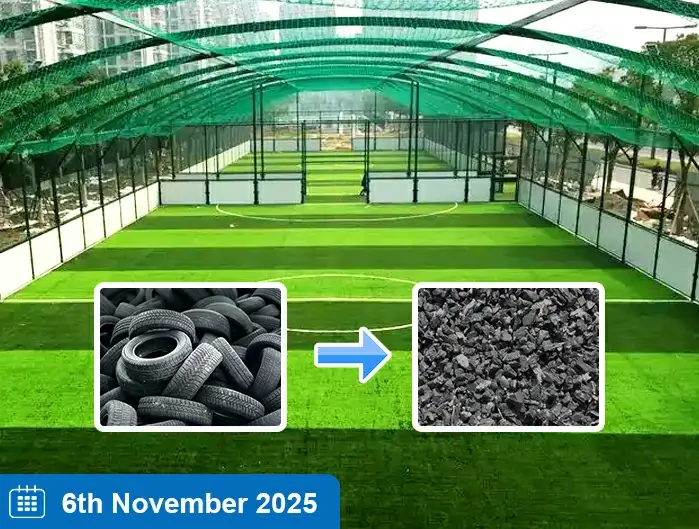
Recycled tire mulch delivers comprehensive protection by preventing injuries, offering ballistic defense, and enduring the toughest training conditions. It solves long-standing safety challenges while cutting maintenance costs, creating a safer, cleaner, and more sustainable environment for soldiers.
By combining the goals of safety and sustainability, recycled tire mulch perfectly aligns with the modern military’s focus on innovation and environmental responsibility. As recycling technology advances, its role in global defense infrastructure will continue to expand — protecting soldiers, preserving the planet, and setting new standards for military safety.
For companies planning to produce this material commercially, HVST can provide a complete rubber mulch production line for tire shredding, steel separation, fiber removal, screening, and customized rubber mulch output.