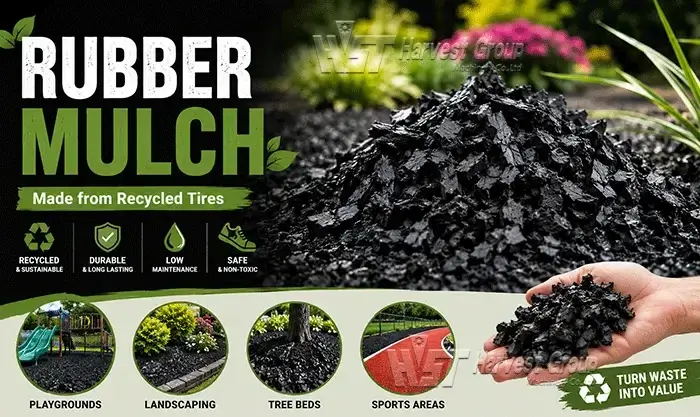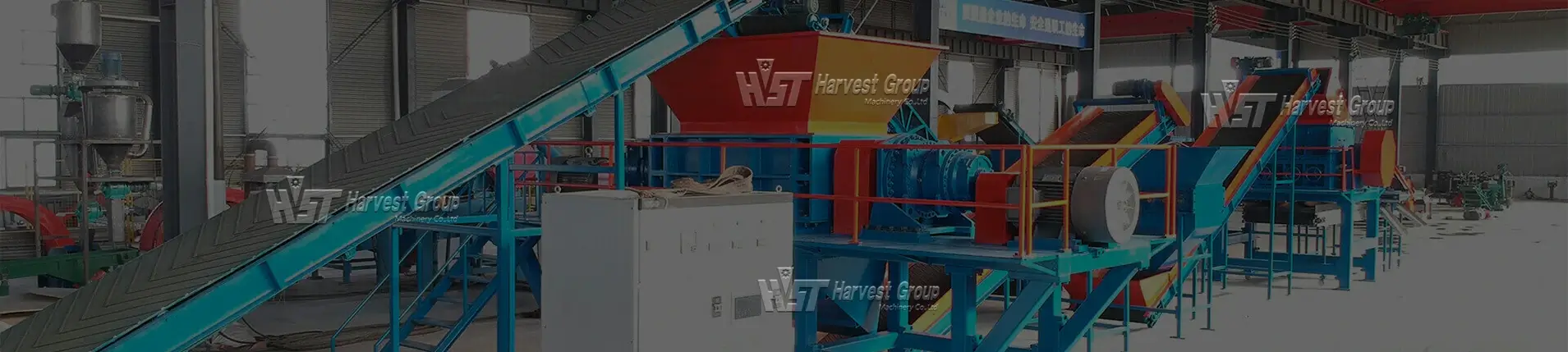
Every year, millions of scrap tires are discarded worldwide. Instead of ending up in landfills, these tires can be recycled into valuable products such as rubber mulch. Widely used in landscaping, playgrounds, gardens, equestrian facilities, and commercial projects, rubber mulch offers a sustainable solution for tire recycling while creating long-term economic value.
This article explains how rubber mulch is produced from scrap tires, the equipment required, the processing steps involved, and the business opportunities available in the growing rubber mulch market.
The production of rubber mulch begins with collecting discarded tires from various sources. Passenger car tires, truck tires, agricultural tires, and OTR tires can all be used as raw materials for rubber mulch production.
Scrap tires are commonly obtained from tire shops, vehicle service centers, transportation companies, recycling stations, municipal waste facilities, and industrial tire users. In many regions, waste tires are available at a relatively low cost, making them an attractive raw material for recycling businesses.
Before processing, tires are sorted according to their size, construction, and steel content. Proper sorting improves production efficiency and helps maintain consistent product quality throughout the recycling process.
Collected tires should be inspected for excessive contamination such as mud, stones, metal debris, and other foreign materials. Proper handling and storage procedures help ensure worker safety and prevent equipment damage during processing.
Modern tires contain steel wires and textile fibers that must be removed before producing high-quality rubber mulch.
Residual steel can create safety hazards, particularly when rubber mulch is used in playgrounds or landscaping applications. High-quality rubber mulch typically contains less than 0.1% residual steel.
Industrial tire recycling facilities use magnetic separators, steel wire separators, and multi-stage cleaning systems to remove steel efficiently. These systems ensure that the finished rubber mulch is safe and suitable for commercial use.
For complete tire processing systems, many recyclers use equipment from the Tire Recycling Equipment line
Besides steel, tires contain textile fibers and accumulated dirt. Advanced screening and air separation systems help remove these materials and improve the purity of the final product.
Once contaminants have been removed, the tires are reduced into smaller rubber pieces through shredding and grinding.
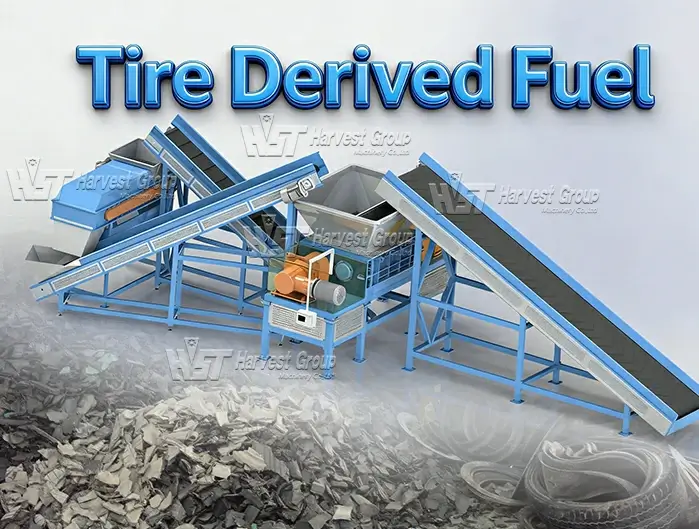
A Waste Tire Shredder Machine is typically used to process whole tires into rubber chips measuring approximately 50–100 mm.
These tire chips become the feedstock for further size reduction.
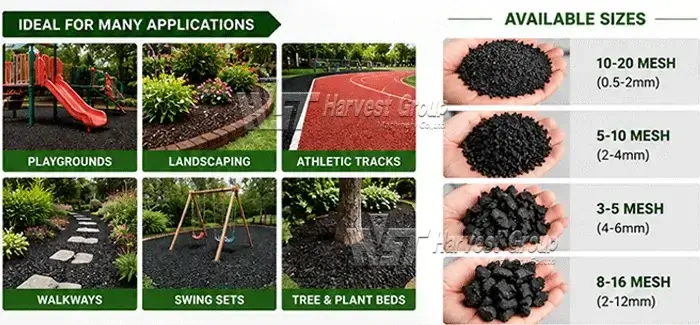
Secondary shredding and grinding equipment reduce the rubber chips into the particle sizes commonly used for mulch applications. The most popular rubber mulch sizes range from 10 mm to 20 mm, although custom sizes can be produced according to customer requirements.
Different processing methods produce different particle shapes and textures. Some applications prefer larger rubber nuggets for landscaping, while others require finer material for playground surfaces. Choosing the right shredding system helps maximize product value and market demand.
Natural rubber mulch is black, but many customers prefer colored mulch for decorative applications.
Specialized coloring systems apply non-toxic pigments to rubber particles. Popular colors include red, green, blue, brown, and custom shades for schools, parks, and commercial projects.
Premium rubber mulch products often receive protective coatings that improve color retention and resistance to ultraviolet exposure. These coatings help maintain appearance for many years in outdoor environments.
Only environmentally friendly coatings should be used. High-quality rubber mulch manufacturers select coatings that are safe for children, pets, plants, and surrounding ecosystems.
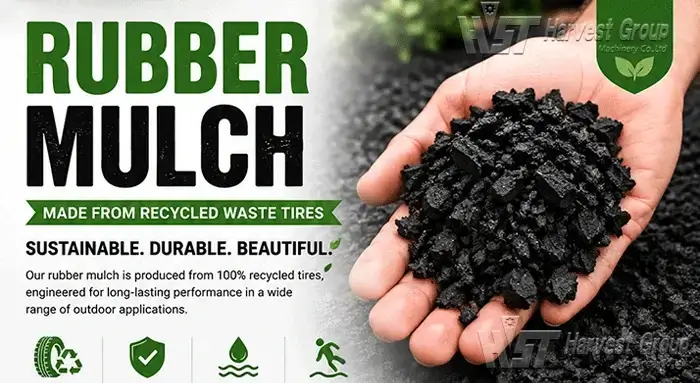
The final production stage focuses on quality control and product preparation.
Vibrating screens separate oversized and undersized particles to ensure consistent product specifications.
| Rubber Mulch Application | Typical Particle Size |
|---|---|
| Landscaping | 10–20 mm |
| Playground Surfacing | 20–30 mm |
| Decorative Garden Areas | 10–15 mm |
| Commercial Projects | Customized |
If coloring is applied, the rubber mulch must be dried before packaging. Proper drying prevents clumping and ensures long-lasting color performance.
Finished rubber mulch can be packaged according to customer requirements.
| Packaging Type | Typical Weight |
|---|---|
| Retail Bag | 40 lb (18 kg) |
| Jumbo Bag | 500–1000 kg |
| Half Pallet | 1000 lb |
| Full Pallet | 2000 lb |
Rubber mulch has become a preferred ground-cover material across many industries.
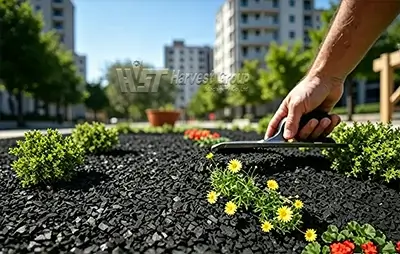
Landscape designers use rubber mulch to improve appearance while reducing maintenance requirements. Playground operators value its excellent shock-absorbing properties, which help reduce injury risks.
Rubber mulch helps retain soil moisture, reduce erosion, and suppress weed growth. Unlike organic mulch, it does not decompose or wash away easily.
| Feature | Rubber Mulch | Wood Mulch | Gravel |
|---|---|---|---|
| Lifespan | 10–20 Years | 1–3 Years | 5–8 Years |
| Maintenance | Very Low | High | Medium |
| Shock Absorption | Excellent | Moderate | Poor |
| Color Retention | Excellent | Limited | Excellent |
| Recyclability | High | Natural Decomposition | Limited |
Rubber mulch production offers attractive opportunities for tire recyclers and investors.
Production costs are influenced by raw material prices, labor expenses, electricity consumption, equipment efficiency, and transportation costs.
Automated tire recycling plants significantly reduce labor requirements while increasing throughput and product consistency.
For dedicated mulch production projects, a complete rubber mulch production line can combine tire shredding, steel separation, screening, coloring, drying, and packaging to produce consistent rubber mulch for landscaping, playgrounds, and commercial supply.
The growing demand for sustainable landscaping materials continues to drive the rubber mulch market. Colored mulch products often command higher selling prices and stronger profit margins than standard black mulch.
A single recycled passenger tire can produce enough rubber mulch to cover approximately ten square feet of garden space.
Rubber mulch can last more than ten years without significant degradation, making it one of the longest-lasting landscape materials available.
Many playgrounds around the world use recycled tire rubber because of its superior impact absorption characteristics.
Millions of scrap tires are generated annually across North America, Europe, and Asia. Tire recycling continues to grow as governments and businesses seek sustainable solutions for waste management.
Modern recycling facilities can recover valuable rubber, steel, and fiber materials from waste tires, transforming environmental challenges into profitable business opportunities.
As demand for eco-friendly landscaping materials continues to increase, rubber mulch production remains one of the most promising sectors within the tire recycling industry.