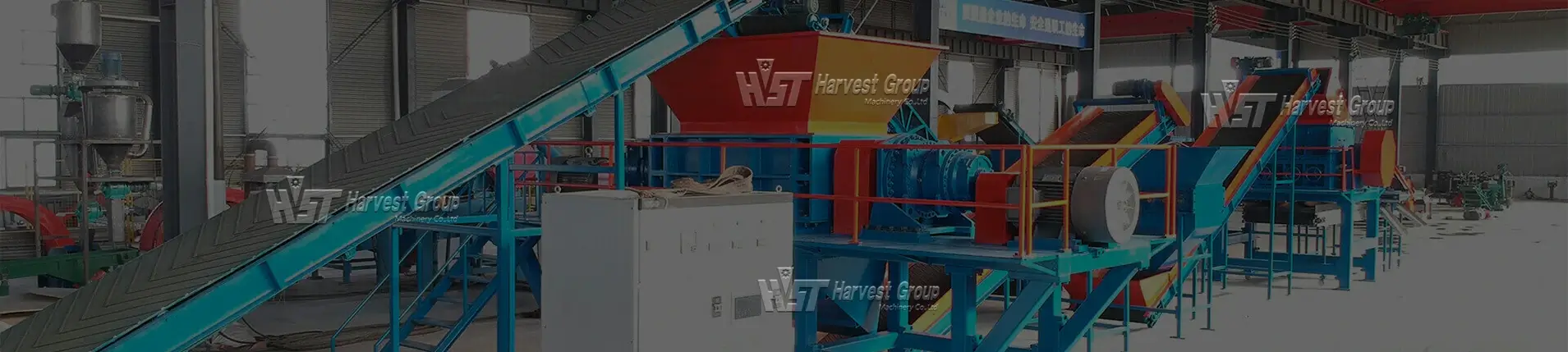
With the rapid expansion of the global automotive industry, the number of end-of-life tires continues to grow every year. These waste tires not only occupy land resources but also pose serious environmental risks such as fire hazards and pollution. Through advanced tire recycling machine, waste tires can be converted into rubber powder, creating a sustainable and profitable recycling solution.
Today, rubber powder has become a high-value industrial material widely used in road construction, sports surfaces, construction materials, and manufacturing industries. It plays a key role in turning waste into reusable resources while creating strong business opportunities.
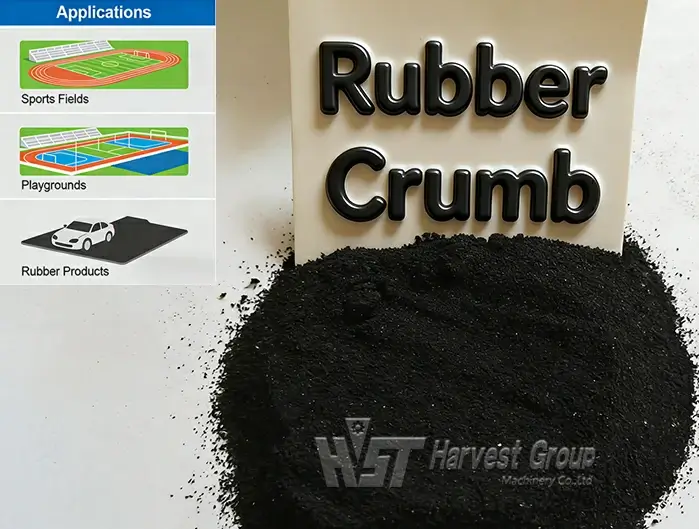
Rubber powder, also known as crumb rubber, is a fine recycled material produced from waste tires. Its particle size typically ranges from 0.1 mm to 1 mm, depending on the application requirements.
This material offers stable physical properties such as elasticity, wear resistance, and aging resistance. It can be easily blended with asphalt, plastics, and resins without affecting product performance. Because of this, rubber powder is widely used as a cost-effective alternative to virgin rubber.
As environmental regulations become stricter worldwide, the demand for waste tire recycling solutions continues to increase. Rubber powder has evolved from a low-value byproduct into a key raw material in multiple industries.
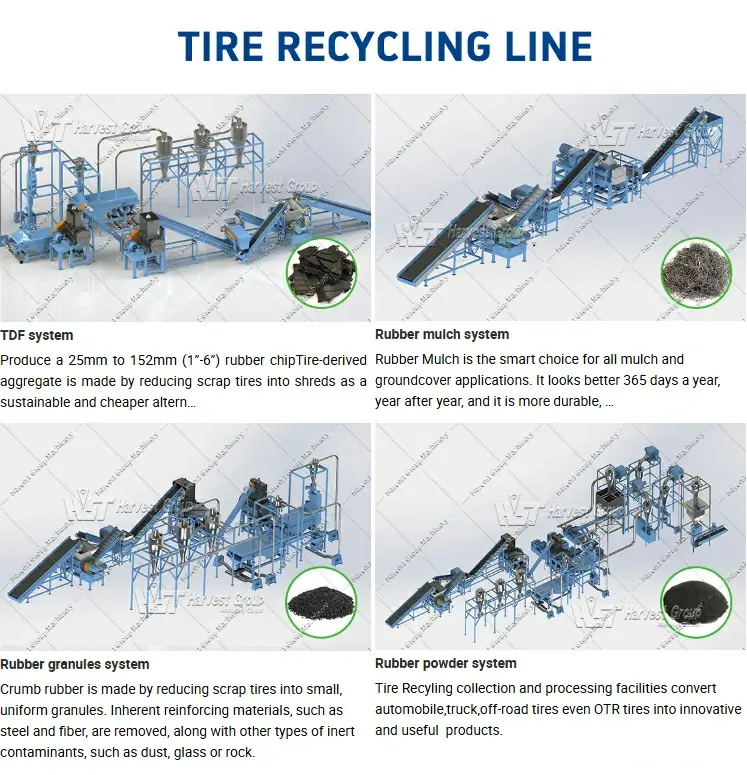
The production of rubber powder requires a complete rubber powder production line designed to ensure high purity and consistent particle size.
The process begins with tire cutting and shredding, where whole tires are reduced into smaller rubber chips. These chips are then processed through steel wire separation and fiber removal systems to eliminate impurities.
After cleaning, the rubber material is fed into a grinding system, where it is converted into fine powder. The final product is screened into different sizes based on market demand.
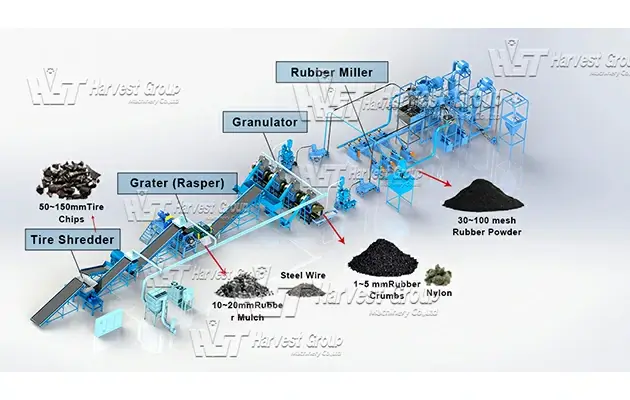
A complete system typically includes a tire shredder machine, steel separator, fiber separator, and rubber grinding machine. Each piece of equipment plays a critical role in ensuring the quality of the final product.
The most important requirement is purity. High-quality rubber powder must be free of steel and fiber contamination. Uniform particle size is also essential for consistent performance in downstream applications.
If you are planning to invest in a recycling project, selecting the right tire recycling machine configuration is crucial for achieving your target output and market positioning.

The mesh size of rubber powder determines its application. Different industries require different particle sizes to achieve optimal performance.
| Mesh Size | Particle Size | Typical Applications |
|---|---|---|
| 5–10 mesh | 2–4 mm | Playgrounds, garden paths, rubber tiles, artificial turf |
| 10–20 mesh | 0.8–2 mm | Sports courts, EPDM safety mats, gym flooring |
| 30 mesh | 0.5–0.6 mm | Waterproof materials, insulation, asphalt additives |
| 40 mesh | 0.4 mm | Seals, gaskets, rubber sheets, industrial products |
| 60 mesh | 0.25 mm | Fine rubber products, reclaimed rubber |
| 80 mesh | 0.18 mm | Modified asphalt, high-end rubber applications |
Choosing the correct mesh size is essential for maximizing the value of your rubber powder production line. Fine powder is typically used in high-value markets such as asphalt, while coarser material is suitable for general applications.

One of the largest uses of rubber powder is in rubber-modified asphalt. It is widely used in highways, urban roads, and infrastructure projects.
Rubberized asphalt improves crack resistance, wear resistance, and skid resistance. It also reduces traffic noise and extends the service life of roads, often lasting significantly longer than conventional pavement.
To meet industry standards, fine and clean rubber powder produced by a high-precision rubber powder production line is required.
Rubber powder is widely used in running tracks, playground flooring, and gym surfaces. It provides excellent shock absorption and anti-slip performance, improving safety for athletes and children.
These surfaces are durable, weather-resistant, and require minimal maintenance, making them ideal for schools and public facilities.
Uniform particle size and impurity-free material are essential for ensuring proper bonding with binders and long-term performance.
Rubber powder is an important raw material for producing rubber mats, shoe soles, seals, gaskets, hoses, and conveyor belts.
It is often mixed with virgin rubber or plastics to reduce production costs while maintaining performance. This makes it highly attractive for manufacturers looking to optimize material costs.
In some cases, adding crumb rubber can reduce raw material costs by more than 30 percent.
In the construction industry, rubber powder is used in waterproof membranes, sealants, and insulation materials. It enhances flexibility, durability, and resistance to aging.
Its compatibility with asphalt and resins makes it an ideal additive for high-performance building materials used in roofs, basements, and infrastructure projects.
Rubber powder can be blended with plastics to produce modified materials with improved impact resistance and flexibility. These materials are widely used in automotive parts, industrial components, and plastic products.
This application improves product durability while reducing material costs.
Lower-grade rubber powder can be used as tire-derived fuel in cement plants and industrial boilers. It has a high calorific value and serves as a stable solution for utilizing recycled materials.
This ensures that all processed waste tires can be effectively used, supporting continuous operation of recycling facilities.
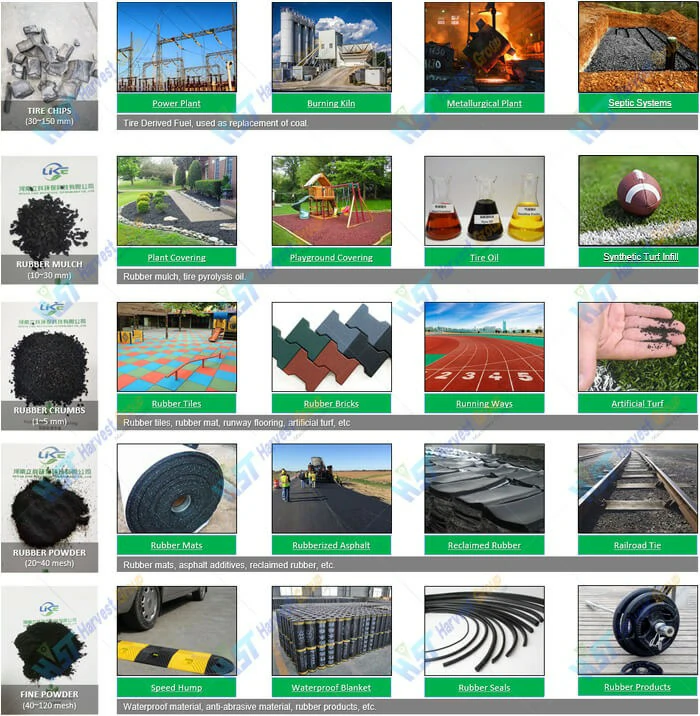
Different industries require different specifications of rubber powder. Fine and high-purity powder is required for asphalt and sports surfaces, while coarser material can be used for fuel applications.
Across all applications, the absence of steel and fiber is critical. Even minor contamination can affect product performance and lead to rejection by customers.
This is why investing in a high-quality tire recycling machine and separation system is essential for long-term success.
The waste tire recycling industry offers strong profitability due to low raw material costs and diverse application markets.
Waste tires are widely available and inexpensive, while rubber powder has stable demand across infrastructure, manufacturing, and construction sectors.
By producing different grades of rubber powder, businesses can target multiple markets and maximize revenue. High-quality fine powder is sold at premium prices, while lower-grade material still generates income through fuel applications.
With proper planning and equipment selection, many projects achieve a fast return on investment and long-term stable profits.
A reliable rubber powder production line is the foundation of a successful recycling business. It ensures high purity, consistent particle size, and stable production capacity.
With extensive experience in tire recycling equipment, we provide customized solutions based on your raw materials, capacity requirements, and target markets.
Our systems are designed to process passenger car tires, truck tires, and OTR tires, helping you maximize efficiency and expand your business.
Rubber powder is widely used in asphalt modification, sports surfaces, rubber products, construction materials, and industrial applications.
Fine rubber powder between 0.1–0.3 mm is typically required for rubberized asphalt to ensure proper mixing and performance.
Yes, due to low raw material costs and multiple application markets, rubber powder production can achieve a fast return on investment.
A complete rubber powder production line includes a tire shredder, steel separator, fiber removal system, and rubber grinding machine.
If you are planning to start a tire recycling business or upgrade your existing system, choosing the right rubber powder production line is critical.
Our engineering team can design a customized solution based on your raw materials, target output size, and local market demand. We help you match the right equipment configuration to maximize your return on investment.
From tire shredding to fine grinding and separation, we provide complete tire recycling machine solutions with stable performance and long-term reliability.
Contact us today to get your customized solution, technical details, and project quotation.