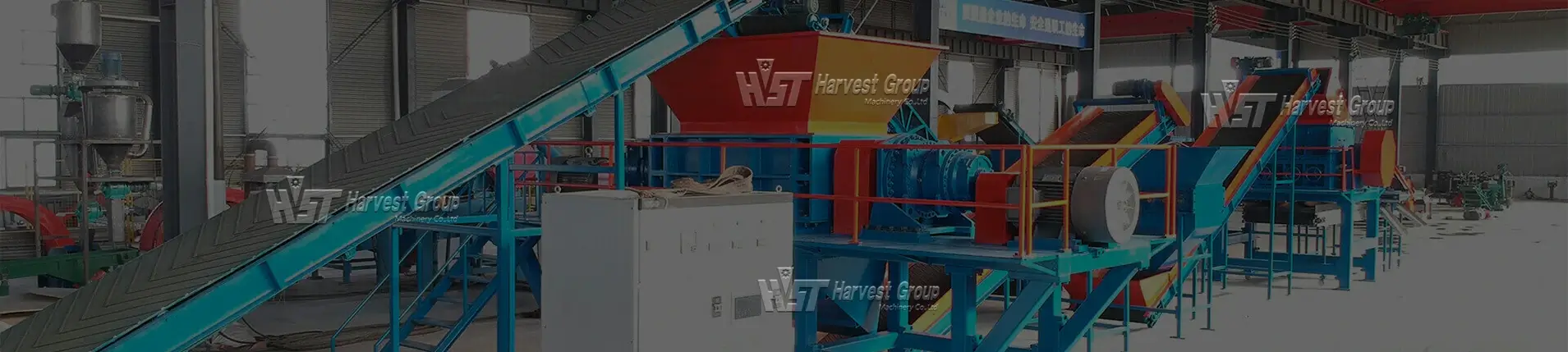
As global tire disposal volumes continue to increase, the number of end-of-life tires is growing at an unprecedented rate. It is estimated that global scrap tire output will exceed 3.2 billion units by 2025, with China alone contributing around 380 million units annually. This creates a massive market opportunity worth hundreds of billions in the tire recycling industry.
However, for small and medium-sized recycling plants, entering this industry is not easy. High equipment investment, complex processing systems, and strict environmental requirements often become major barriers.
Under this background, the Model 560 tire granulator, also known as the XKP560 rubber cracking mill, has gradually become the most widely adopted equipment in the mid-stage of tire recycling lines. Its popularity comes from a balanced combination of cost, performance, flexibility, and environmental compliance. It effectively fills the gap between small 400-series machines and large 600-series equipment, solving the common industry problems of insufficient capacity or excessive investment.
The 560 tire granulator belongs to the category of rubber cracking mills and granulation equipment. Its primary function is not to produce final rubber powder, but to convert pre-processed rubber blocks into uniform rubber granules.
In a complete recycling line, it serves as a critical transition stage between shredding and fine grinding. The output granules directly determine the efficiency and quality of the downstream tire grinding machine process.
The machine is designed to process pre-treated rubber materials such as rubber blocks after steel wire removal and primary shredded rubber sheets.
Typical input size ranges from 30 mm to 100 mm.
The output products include:
Rubber granules sized 5–20 mm
Primary rubber particles of 10–26 mesh
These materials are ideal feedstock for further processing into fine rubber powder.
The Model 560 granulator plays a central role in connecting upstream and downstream processes.
A standard tire recycling workflow includes:
Waste tire pre-processing, including debeading, cutting, and shredding to produce rubber blocks
Granulation stage using the 560 machine to produce uniform rubber particles
Post-processing including magnetic separation, steel wire removal, fiber removal, and fine grinding
This structure ensures stable production and efficient material flow throughout the entire system.
The Model 560 is designed specifically for plants that require balanced capacity and cost control.
Typical specifications include:
Production capacity ranging from 500 to 1300 kg per hour
Motor power between 37 kW and 110 kW depending on configuration
Stable operation with only two to three operators
Roller design using a 560 mm front roller and a 510 mm rear roller
This configuration allows the equipment to achieve high efficiency while maintaining relatively low energy consumption and labor requirements.
Compared with entry-level 400 models, the 560 offers significantly higher capacity and better scalability.
Compared with large 600 models, it requires lower investment and occupies less space.
This makes it the most practical and widely used option for small and medium-sized tire recycling plants.
The machine adopts dual-roll differential crushing technology, combining shear and compression forces to effectively break down rubber materials.
The adjustable roller gap allows flexible control of output size, making it suitable for various downstream applications.
The system is designed for continuous operation, supporting 24-hour production without significant performance fluctuations.
Core components such as rollers and blades are made from high-strength alloy materials, ensuring long service life and strong wear resistance.
The machine includes overload protection systems that automatically stop operation in case of abnormal materials, reducing the risk of equipment damage.
Stable mechanical design minimizes failure rates and maintenance costs over long-term operation.
The equipment adopts a sealed structure combined with dust collection systems, effectively reducing emissions and meeting environmental standards.
Noise levels are controlled within industrial limits, making it suitable for regulated production environments.
The processed rubber granules achieve high purity, supporting applications that require strict material quality standards.
The 560 granulator is not limited to tire recycling. It can also process various materials such as rubber products, plastics, and light scrap materials. For tire recycling projects, it can be integrated with complete tire recycling equipment to improve overall material recovery efficiency.
Customized configurations can be provided based on different production needs, including larger motors or modified feeding structures.
The machine can also be integrated into complete recycling lines or used as a standalone unit.
Startup recycling plants benefit from its low investment and fast return cycle.
Existing factories use it to upgrade outdated equipment and improve capacity.
Multi-material recycling centers use it to expand business scope and increase equipment utilization.
In medium-sized plants, the 560 model enables stable production of high-purity rubber granules suitable for export markets.
In Southeast Asia, compact configurations allow continuous operation with low energy consumption and limited space requirements.
These practical cases demonstrate its strong adaptability and economic value.
The granules produced by the 560 machine provide ideal feedstock for fine grinding systems.
Uniform particle size reduces energy consumption during milling and improves overall efficiency.
It also prevents over-grinding, which helps increase final product yield.
New investors who want to start with lower risk and gradually expand capacity.
Factories upgrading from older equipment to improve performance and product quality.
Businesses targeting high-value applications such as modified asphalt or sports materials.
Modern versions of the 560 machine include energy-saving motors and frequency control systems.
Remote monitoring and intelligent maintenance systems are gradually being adopted.
Improved materials and coating technologies enhance durability and reduce maintenance costs.
Increasing environmental regulations are pushing higher tire recycling rates worldwide.
Demand for recycled rubber materials continues to grow across multiple industries.
Expanding applications such as road construction and sports surfaces are creating new market opportunities.
The widespread use of the Model 560 tire granulator is not accidental. It is the result of precise alignment with market demand.
It provides an optimal balance between cost, performance, and scalability, making it the most practical solution for small and medium-sized tire recycling plants.
For businesses entering or upgrading within the recycling industry, the 560 model represents a reliable and efficient investment choice.
The price varies depending on configuration, typically ranging from 18,000 to 159,000 USD.
Yes, with upgraded configurations, it can handle larger tire sizes.
Installation, training, and technical support are commonly available for international customers.
Road construction, rubber manufacturing, and sports surface materials are the main application areas.
It is ideal for plants with medium capacity requirements, limited budgets, and plans for future expansion.
The following table shows the key technical specifications of the Model 560 tire granulator, helping you quickly evaluate whether it fits your production needs.
| Parameter | Standard Configuration | Upgraded Configuration | Key Advantage |
|---|---|---|---|
| Machine Dimensions | 5000 × 2000 × 2500 mm | 5064 × 2284 × 1978 mm | Saves up to 40% floor space |
| Capacity | 500–1000 kg/h | Up to 1300 kg/h | Ideal for small and medium plants |
| Motor Power | 37–45 kW | 90–110 kW | Balanced energy consumption and performance |
| Operators Required | 2–3 people | 2–3 people | Reduces labor input by 50% |
| Roller Structure | Front 560 mm + Rear 510 mm (grooved rollers) | Front 560 mm (nano-coated) + Rear 510 mm | Higher durability and better grip |
Comparison of 400 vs 560 vs 600 Tire Granulator
| Comparison | Model 400 | Model 560 | Model 600 |
|---|---|---|---|
| Capacity | 300–500 kg/h | 500–1300 kg/h | 1500–2500 kg/h |
| Investment Cost | Low (10,000–30,000 USD) | Medium (18,000–159,000 USD) | High (200,000+ USD) |
| Application | Small plants / labs | Mainstream SME plants | Large-scale plants |
| Advantages | Low cost, simple | Best balance of cost & performance | High output, automation |
| Limitations | Low capacity | No major drawback | High cost, large footprint |
Application Output Size & Usage Mapping
| Output Size | Mesh | Application |
|---|---|---|
| 5–20 mm | — | Rubber mulch, playground, TDF |
| 10–26 mesh | Medium | Asphalt modification |
| 30–120 mesh | Fine powder | Rubber products, sealing materials |