Rubber crumb production is one of the most important industrial processes in the global tire recycling industry. Millions of waste tires are generated every year from passenger cars, trucks, agricultural machinery, and construction equipment. Because tires are made from durable rubber compounds reinforced with steel wire and textile fiber, they are difficult to dispose of using traditional landfill methods.
Modern tire recycling technology transforms waste tires into valuable recycled materials through mechanical processing systems. By using shredders, rasper machines, granulators, and separation systems, used tires can be converted into rubber granules and rubber powder known as crumb rubber. Many modern tire recycling equipment systems are designed specifically to handle this transformation efficiently.
Crumb rubber has become one of the most profitable products in the tire recycling sector. It is widely used in modified asphalt, sports surfaces, artificial turf, rubber flooring, industrial rubber products, and many other applications. As environmental regulations continue to strengthen worldwide, the demand for recycled rubber materials continues to grow rapidly.
Crumb rubber refers to recycled rubber particles produced by mechanically grinding scrap tires after removing steel wire and textile fiber. The process does not involve chemical reactions, meaning the original rubber properties are largely preserved.
The particle size of crumb rubber can vary depending on the grinding system used in the recycling plant. Rubber granules generally range from about 1 millimeter to 6 millimeters, while finer rubber powder may range from 20 mesh to more than 100 mesh.
Because crumb rubber maintains the elasticity, durability, and abrasion resistance of tire rubber, it has excellent performance characteristics for industrial applications.
In many countries, crumb rubber production has become a key solution for reducing environmental pollution caused by waste tires while creating valuable secondary raw materials.
The primary raw material for crumb rubber production is end-of-life tires collected from transportation and industrial sectors. These include passenger vehicle tires, truck tires, bus tires, agricultural tires, and other types of rubber tires.
Before entering the main recycling process, the tires often go through a preparation stage. During this stage, bead wires located in the tire sidewalls may be removed to protect downstream machinery and improve processing efficiency.
After preparation, the tires are fed into the shredding system where the mechanical recycling process begins.
Crumb rubber is produced through several mechanical processing stages. Each stage gradually reduces the size of the rubber material while separating steel and fiber components.
The recycling process begins with tire shredding. Whole tires are fed into a heavy-duty tire shredder designed to break them into smaller rubber blocks. These blocks are typically between 30 millimeters and 80 millimeters in size.
Industrial shredders such as modern waste tire shredder machines operate at low speed and high torque, allowing them to efficiently cut through steel-reinforced tire structures while maintaining stable operation.
After shredding, the rubber blocks still contain large amounts of embedded steel wire. The material is processed through a rasper or steel wire separator that further reduces the rubber pieces and liberates the steel wire.
Magnetic separation systems then remove the steel fragments from the rubber material. Modern magnetic separators can achieve steel removal efficiency above 99 percent.
After most of the steel wire has been removed, rubber chips enter a granulator. Granulators use high-speed rotating blades and screen systems to grind the rubber into smaller particles.
At this stage the rubber particles are usually reduced to granules between 1 millimeter and 6 millimeters in size. Industrial systems such as tyre granulators machines are commonly used for this stage.
Even after steel removal and granulation, small amounts of textile fiber remain inside the rubber material. Fiber separators use airflow and vibration technology to remove lightweight nylon fibers from the heavier rubber particles.
This step ensures that the final crumb rubber product is clean and suitable for industrial applications.
If finer rubber powder is required, the rubber granules are further processed using cracker mills or fine grinders. These machines reduce the granules into smaller particles that can reach sizes of 20 mesh, 40 mesh, or even finer.
Fine grinding systems are commonly used when producing rubber powder for asphalt modification or rubber product manufacturing. Some plants may use a dedicated rubber powder production line for this purpose.
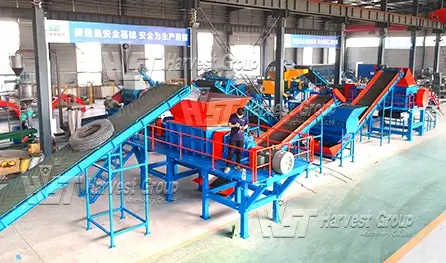
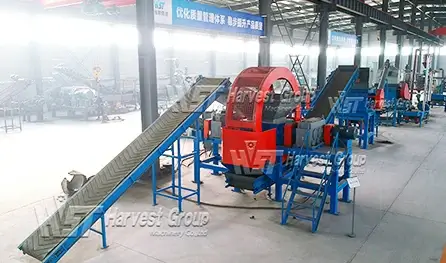
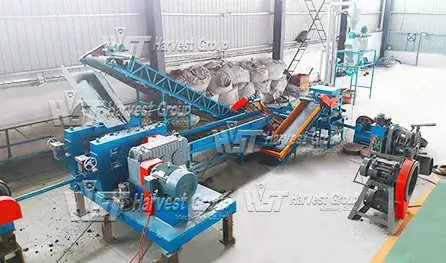
A complete crumb rubber production line consists of several specialized recycling machines designed to work together efficiently.
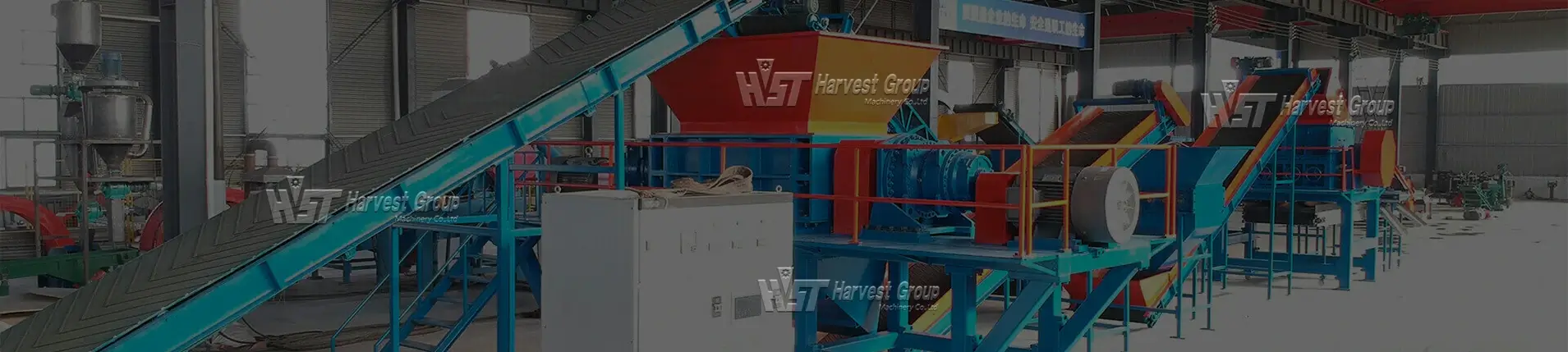
The tire shredder is responsible for the initial size reduction of whole tires into rubber blocks. These machines typically use powerful motors and hardened alloy blades designed to withstand heavy industrial loads.
Rasper machines play an important role in reducing rubber blocks and separating steel wire from the rubber. They are designed for mid-stage grinding and metal separation.
Granulators further reduce the rubber pieces into smaller granules and prepare the material for final separation and grinding processes.
Magnetic separators remove steel fragments from the rubber material, while fiber separators eliminate textile fibers.
Together, these machines form a complete waste tire recycling machine system capable of processing large volumes of waste tires efficiently.
Crumb rubber can be produced in several different particle sizes depending on the intended market application.
Rubber chips are the coarsest recycled rubber product and are often used for fuel applications or basic recycling processes.
Rubber granules typically range from about 1 millimeter to 6 millimeters. These materials are widely used in sports fields, artificial turf infill systems, and playground safety surfaces.
Rubber powder is the finest product produced in tire recycling plants. It can range from approximately 20 mesh to more than 100 mesh depending on the grinding system.
Different particle sizes allow recycling plants to supply a wide range of industries and maximize the value of recycled tire materials.
Crumb rubber has a wide range of industrial and construction applications due to its durability, flexibility, and shock-absorbing properties.
One of the largest markets for crumb rubber is modified asphalt used in road construction. Rubber-modified asphalt improves pavement durability, reduces traffic noise, and increases resistance to cracking.
Rubber granules are widely used as infill materials in artificial turf fields and sports tracks. Their elasticity provides better shock absorption and improves athlete safety.
Crumb rubber is also used in manufacturing rubber tiles, gym flooring, playground safety mats, and other construction materials.
Additional applications include reclaimed rubber production, molded rubber components, sound insulation materials, and industrial rubber products. These materials are commonly produced through advanced rubber mulch production lines and crumb rubber processing systems.
Global demand for crumb rubber continues to grow as governments and industries seek sustainable solutions for managing waste tires.
Infrastructure projects using rubber-modified asphalt have expanded rapidly in many countries, particularly in North America, Europe, and Asia.
At the same time, the increasing construction of sports facilities and artificial turf fields has created additional demand for rubber granules.
Because crumb rubber has stable market demand and multiple industrial uses, it remains one of the most commercially attractive products produced in tire recycling plants.
Establishing a crumb rubber production facility requires careful planning of equipment selection, plant layout, and processing capacity.
Production capacity can range from small recycling systems processing several hundred kilograms per hour to large industrial plants capable of processing several tons of tires per hour.
A typical crumb rubber production line includes shredding equipment, rasper machines, granulators, magnetic separators, fiber separators, and dust collection systems.
Factory layout planning is also essential. Tire recycling plants require sufficient space for raw tire storage, machine installation, and finished product handling. Efficient material flow and proper ventilation systems help ensure safe and efficient plant operation.
Many investors begin by installing a full tire recycling solution designed for their specific capacity requirements.
Crumb rubber is made from recycled waste tires that are mechanically shredded and ground into small rubber particles after removing steel wire and textile fiber.
Crumb rubber is typically produced using tire shredders, rasper machines, rubber granulators, magnetic separators, fiber separators, and fine grinding equipment.
Crumb rubber is widely used in artificial turf fields, sports tracks, rubber flooring, playground safety surfaces, asphalt modification, and various rubber manufacturing applications.
Crumb rubber can range from about 1–6 millimeters for rubber granules to fine rubber powder sizes between 20 mesh and 120 mesh depending on the grinding system.
Modern tire recycling plants typically include multiple machines working together as a complete processing system. Depending on the final product requirements, recycling facilities may use tire shredders, rasper machines, granulators, and powder grinding systems.
Key equipment used in tire recycling plants includes tire recycling equipment, waste tire shredders, and rubber powder production lines.
Choosing the right combination of machines ensures efficient processing, high purity rubber products, and stable production capacity.
Crumb rubber production has become a critical component of the global tire recycling industry. Through advanced shredding, separation, and granulation technologies, waste tires can be transformed into valuable recycled rubber materials.
With growing environmental awareness and increasing demand for sustainable materials, crumb rubber continues to gain importance in industries such as road construction, sports facilities, and industrial rubber manufacturing.
Investing in modern tire recycling technology allows companies to convert waste tires into profitable recycled materials while contributing to environmental protection and sustainable development.