Rubberized asphalt has become a serious alternative to conventional asphalt as road owners face rising maintenance costs, stricter environmental regulations, and increasing traffic loads. By incorporating crumb rubber from recycled tires, this pavement technology aims to improve road performance while supporting large-scale tire recycling solutions.
But is rubberized asphalt truly better than traditional asphalt? The answer depends on performance, durability, lifecycle cost, and recycling impact.
Rubberized asphalt, often referred to as crumb rubber modified asphalt (CRMA), is produced by blending recycled tire rubber into asphalt binder at elevated temperatures. The rubber interacts with the binder, improving elasticity and resistance to cracking and deformation.
Traditional asphalt relies mainly on petroleum-based binder and mineral aggregates. While widely used, it tends to stiffen over time and becomes more vulnerable to cracking under temperature changes and heavy traffic.
Road infrastructure today must last longer, perform under extreme weather, and meet sustainability goals. At the same time, millions of end-of-life tires are generated every year, creating pressure for high-volume recycling solutions supported by modern tyre recycling machine systems.
Rubberized asphalt addresses both challenges by extending pavement life and converting waste tires into a functional construction material.
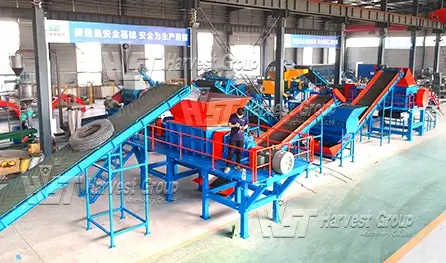
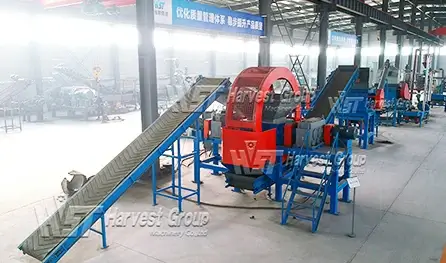
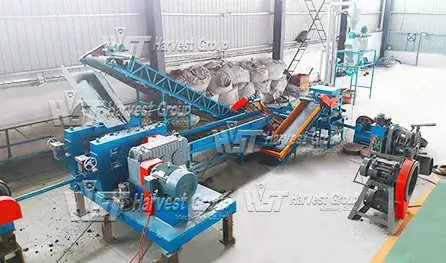
Rubberized asphalt depends on consistent, high-quality crumb rubber. Waste tires are first cut using waste tyre cutting machine equipment before being processed through shredding and size reduction stages. Steel wire and textile fibers are removed, allowing the remaining rubber to be reduced into controlled particle sizes suitable for asphalt modification.
Most asphalt applications prefer ambient-ground crumb rubber. This process relies on mechanical size reduction equipment such as tire granulators and rasper machines to produce rough-surfaced rubber particles with higher surface area, allowing better interaction with asphalt binder.
Cryogenic grinding creates smoother particles, which may be suitable for other rubber applications but are generally less reactive in asphalt mixtures.
Rubberized asphalt remains more flexible across temperature ranges. This flexibility helps absorb stress caused by traffic loads and thermal expansion, reducing fatigue and thermal cracking. These performance benefits are closely linked to the quality of crumb rubber produced by a complete tyre recycling machine line.
Traditional asphalt becomes progressively brittle as it ages, which increases cracking and maintenance requirements.
Rubberized asphalt surfaces can significantly reduce traffic noise. Their elastic structure absorbs vibration and dissipates sound instead of reflecting it outward. This makes rubberized asphalt particularly valuable for urban roads, highways near residential areas, and noise-sensitive zones.
The inclusion of rubber improves surface texture and traction, especially in wet conditions. Darker pavement color also improves contrast with road markings, increasing visibility during night driving.
Field experience shows that rubberized asphalt pavements often last substantially longer than conventional asphalt under similar conditions. Improved resistance to rutting, cracking, and weather-related damage helps extend service intervals.
Because damage develops more slowly, rubberized asphalt roads typically require fewer repairs. This lowers maintenance budgets and reduces traffic disruptions caused by frequent resurfacing.
Rubberized asphalt can have higher upfront costs due to mix design requirements, temperature control, and material handling. Contractors may also need additional experience to ensure consistent quality.
Over the full life of the pavement, rubberized asphalt often proves more cost-effective. Longer service life, fewer repairs, and reduced downtime contribute to lower total ownership costs compared to traditional asphalt.
Rubberized asphalt is one of the largest markets for recycled tire rubber. A single road project can consume thousands of scrap tires processed through systems such as rubber crumb production lines and rubber powder production lines.
Longer-lasting roads mean fewer reconstructions and less repeated material production. This reduces energy use, emissions, and raw material demand across the pavement lifecycle.
Despite its advantages, rubberized asphalt is not universally adopted. Barriers include higher initial costs, limited crumb rubber supply in some regions, and the need for technical expertise during production and paving.
In markets without mature tire recycling infrastructure, traditional asphalt may remain dominant in the short term.
Rubberized asphalt generally offers better flexibility, noise reduction, durability, and long-term sustainability. Traditional asphalt remains simpler and cheaper to install initially but often requires more frequent maintenance over time.
For tire recycling operations, rubberized asphalt represents a stable and scalable downstream market. Demand for consistent crumb rubber in controlled mesh sizes supports investment in complete systems including tire crushing lines, granulation units, and milling equipment such as rubber millers.
As infrastructure standards evolve, rubberized asphalt is moving from a niche solution to a mainstream application.
Rubberized asphalt outperforms traditional asphalt in many critical areas, including durability, noise reduction, safety, and lifecycle cost. While it requires higher initial investment and technical control, the long-term benefits make it an increasingly attractive choice for road authorities and contractors.
For infrastructure developers, it offers stronger pavement performance. For the tire recycling industry, it provides one of the most reliable paths to convert waste tires into long-term value. Learn more about our global projects on our case studies page or contact us directly.