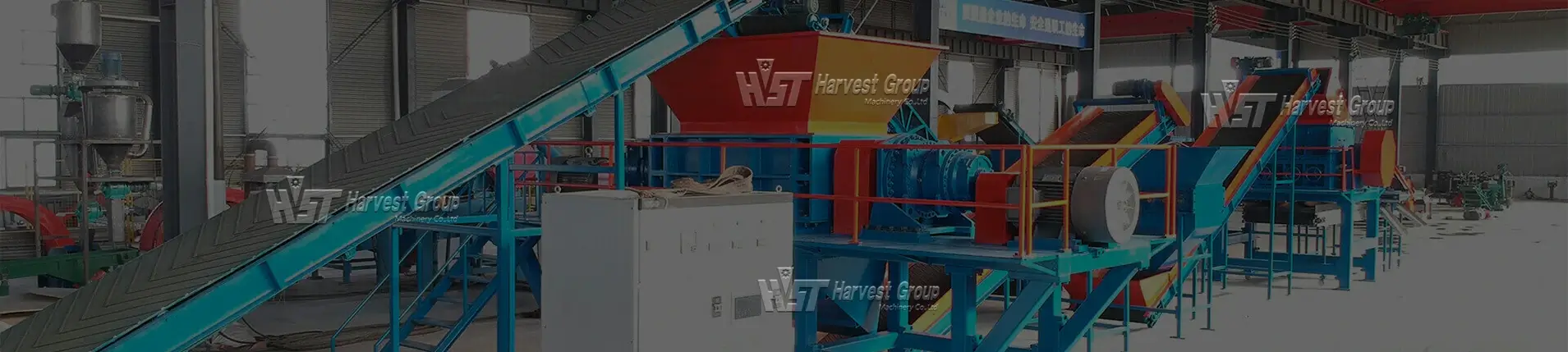
Off-the-road (OTR) tires are among the largest and most challenging types of tires to recycle. These tires are commonly used in mining trucks, quarry loaders, port equipment, and heavy construction machinery. Some mining tires can exceed 4 meters in diameter and weigh several tons, making traditional tire recycling equipment unsuitable for direct processing.
As global mining operations continue to grow, millions of large OTR tires reach the end of their service life each year. Improper disposal of these tires creates serious environmental and logistical problems because rubber is extremely durable and slow to degrade.
OTR tire recycling has therefore become an important segment of the tire recycling industry. With specialized cutting, shredding, and grinding equipment, giant mining tires can be converted into valuable products such as rubber chips, crumb rubber, rubber powder, and recycled steel wire.
This guide explains the complete OTR tire recycling process, equipment systems, plant layout, and investment potential.
Because mining tires are extremely large and reinforced with steel wire, recycling requires several stages of mechanical processing.
A typical recycling workflow includes:
Tire debeading
Tire cutting
Primary shredding
Secondary shredding
Steel and fiber separation
Granulation
Fine grinding
Each stage gradually reduces the tire into smaller rubber materials suitable for industrial reuse.
Mining tires contain thick rubber layers and heavy steel reinforcement. Feeding whole tires directly into shredders can damage equipment and reduce efficiency.
Pre-cutting machines reduce tire size and remove steel components before shredding.
Typical pre-processing machines include:
OTR tire circle cutter
OTR tire strip cutter
OTR tire block cutter
OTR rim separator
These machines prepare giant tires for shredding.
The circle cutter separates the tire sidewall and removes the steel bead ring.
| Model | Tire Size | Capacity |
|---|---|---|
| QK-1200 | ≤1200 mm | 20–30 pcs/h |
| QK-2000 | ≤2000 mm | 6–8 pcs/h |
| QK-3000 | ≤3000 mm | 4–6 pcs/h |
| QK-4000 | ≤4000 mm | 2–4 pcs/h |
Removing bead wire improves shredding efficiency.
This machine cuts the tire body into long rubber strips.
Advantages include:
Reduced tire thickness
Improved feeding efficiency
Reduced shredder load
Rubber strips are further cut into blocks suitable for shredding.
Typical output size:
30–80 mm rubber blocks
The rim separator removes steel components from large mining tires before shredding.
Benefits include:
Reduced equipment wear
Higher steel recovery
Cleaner rubber material
Understanding the size of off-the-road tires is important when designing a recycling system.
OTR tires are widely used in:
Mining dump trucks
Quarry loaders
Construction machinery
Agricultural equipment
These tires contain extremely thick rubber and strong steel reinforcement.
| Tire Model | Diameter | Width | Weight |
|---|---|---|---|
| 18.00R25 | 1.6 m | 0.5 m | 400–600 kg |
| 24.00R35 | 2.1 m | 0.7 m | 900–1200 kg |
| 27.00R49 | 2.7 m | 0.8 m | 1500–2000 kg |
| 33.00R51 | 3.0 m | 0.9 m | 2000–3000 kg |
| 40.00R57 | 3.6 m | 1.1 m | 3500–4500 kg |
| 59/80R63 | 4.0 m | 1.5 m | 5000+ kg |
Because of their massive size, these tires must be cut before shredding.
A complete OTR tire recycling plant uses multiple machines to gradually reduce tire size.
Machines used include:
OTR tire circle cutter
OTR tire strip cutter
OTR tire block cutter
OTR rim separator
These machines prepare the tire for shredding.
Heavy-duty shredders break rubber into large chips.
Typical equipment includes:
Double shaft tire shredder
Hydraulic feeding system
Conveyor system
Output size:
50–150 mm rubber chips
Rubber chips are processed into smaller granules.
Equipment used:
Tire rasper
Magnetic separator
Fiber separator
Output size:
10–30 mm rubber granules
Steel wire and fiber are separated during this stage.
Grinding machines produce fine rubber powder.
Typical equipment:
Rubber granulator
Rubber miller
Vibrating screen
| Product | Size |
|---|---|
| Rubber chips | 30–80 mm |
| Crumb rubber | 4–40 mesh |
| Rubber powder | 40–120 mesh |
A typical OTR tire recycling plant includes the following machines:
| Equipment | Function | Output Size |
|---|---|---|
| Tire Debeader | Remove bead wire | Whole tire |
| Tire Circle Cutter | Remove bead ring | Tire ring |
| Tire Strip Cutter | Cut tire strips | Rubber strips |
| Tire Block Cutter | Cut rubber blocks | 30–80 mm |
| Tire Shredder | Primary shredding | 50–150 mm |
| Tire Rasper | Secondary shredding | 10–30 mm |
| Magnetic Separator | Remove steel | Clean rubber |
| Fiber Separator | Remove textile | Purified rubber |
| Rubber Granulator | Produce crumb rubber | 1–6 mm |
| Rubber Miller | Produce rubber powder | 30–120 mesh |
OTR tire recycling is considered one of the most profitable segments of the tire recycling industry.
A single large mining tire may contain:
2–3 tons of rubber
300–500 kg steel wire
Both materials can be recycled and sold.
| Product | Application |
|---|---|
| Rubber chips | Tire-derived fuel |
| Crumb rubber | Rubber products |
| Rubber powder | Modified asphalt |
| Steel wire | Scrap steel recycling |
Rubber powder usually has the highest market value.
OTR tire recycling demand is increasing in regions with large mining industries:
Australia
Canada
Chile
Peru
South Africa
Middle East
Many mining companies are seeking sustainable recycling solutions.
OTR tires are heavy-duty tires used on mining trucks and large construction equipment. These tires can reach up to 4 meters in diameter.
Recycling involves several stages including cutting, shredding, steel separation, and grinding.
Typical machines include:
Tire debeader
Tire cutters
Tire shredder
Tire rasper
Rubber granulator
Rubber miller
Recycling produces:
Rubber chips
Crumb rubber
Rubber powder
Steel wire
OTR tire recycling is a specialized process designed to handle giant mining tires. Through cutting, shredding, separation, and grinding technologies, these tires can be converted into valuable recycled materials.
With growing environmental regulations and increasing demand for recycled rubber products, OTR tire recycling will continue to play an important role in the global circular economy.