Tires look simple—just black rubber rings—but they’re built to survive heat, abrasion, water, impact, and years of cyclic stress. That “built-to-last” design is exactly why tires are frustratingly difficult to recycle at scale.
In the U.S., net scrap tires generated in 2023 reached approximately 4.8 million tons, with nearly 19% still sent to landfills. In Europe, collection and recovery rates exceed 90%, yet the industry continues to face rising technical and economic pressure.
To understand why tire recycling is so challenging—and how modern waste tire recycling machines address these issues—we must first understand how tires are made. The materials used and the way they are permanently bonded together directly determine the difficulty of end-of-life processing.
A tire is not a single material product. It is a highly engineered composite made from rubber, steel, textile fibers, fillers, and chemical systems, all designed to work together under extreme conditions.
Rubber typically accounts for around half of a tire’s total weight. Manufacturers use carefully balanced blends rather than a single rubber type.
Natural rubber provides elasticity, tear resistance, and excellent fatigue performance. Synthetic rubbers such as SBR and BR enhance heat resistance, abrasion resistance, and wet traction.
From a recycling perspective, this means scrap rubber is never uniform. Different polymers behave differently during grinding and reuse, making consistency harder to achieve than with single-polymer plastics.
Fillers account for more than 20% of a tire’s weight.
Carbon black improves strength, wear resistance, and UV stability. Silica enhances wet grip and lowers rolling resistance, especially in modern passenger tires.
These fillers are chemically bonded to rubber molecules, significantly increasing durability while also increasing energy consumption during size reduction in a tire crushing line.
Steel wires form the bead and belt systems that give tires their shape, strength, and puncture resistance. Textile fibers such as polyester, nylon, and aramid reinforce the carcass and sidewalls.
For recyclers, incomplete separation of steel and fiber directly reduces the value and usability of crumb rubber or rubber powder products.
Antioxidants, antiozonants, oils, resins, and curing agents are essential to tire performance. However, they also influence odor control, dust behavior, and variability in recycled rubber properties.
Modern passenger and truck tires are predominantly radial tires. They are assembled from multiple functional layers and permanently bonded together through vulcanization.
An airtight rubber layer that maintains internal air pressure in tubeless tires.
Recycling challenge: highly heat-resistant and difficult to separate from adjacent layers.
Textile cords embedded in rubber form the main load-bearing structure.
Recycling challenge: fine fibers are tightly bonded and require efficient air separation to avoid contamination.
The region where the tire transfers torque to the wheel rim.
Recycling challenge: dense steel concentration and thick rubber increase cutting resistance.
High-strength steel wire bundles coated in rubber to ensure airtight mounting.
Recycling challenge: wire wrapping and equipment wear if pre-processing is insufficient.
Flexible, weather-resistant rubber protecting the tire body.
Recycling challenge: compound differences cause uneven fragmentation and screening behavior.
Fine steel cords embedded deep within rubber layers.
Recycling challenge: requires multi-stage magnetic separation to meet purity targets.
A circumferential fiber layer providing high-speed stability.
Recycling challenge: lightweight fibers are difficult to remove without advanced airflow systems.
Steel belt layers beneath the tread provide rigidity and puncture resistance.
Recycling challenge: steel-rubber bonding often leaves trapped steel after coarse shredding.
The outermost, most wear-resistant rubber layer.
Recycling challenge: highest abrasion resistance and energy demand during grinding.
All these layers are permanently bonded during vulcanization, creating a structure optimized for durability but extremely resistant to material separation.
Tires are more difficult to recycle than paper, plastics, or metals due to the combination of material complexity, irreversible chemistry, and physical form.
Unlike single-material products, tires combine rubber, steel, fibers, fillers, and additives with vastly different physical properties. Effective separation requires multiple processing stages, increasing cost and complexity.
Vulcanization creates a three-dimensional crosslinked rubber network that cannot be melted and reshaped. As a result, tires cannot be recycled in the same way as thermoplastics.
Tires are bulky, difficult to compress, and often contaminated with dirt, stones, oil, and metal debris. Transportation inefficiency and equipment damage risks further increase processing costs.
The challenges of tire recycling extend beyond technical separation.
Market demand for recycled rubber and tire-derived fuel fluctuates with energy prices and regulations. Stockpiled tires pose significant fire risks, requiring strict environmental and safety compliance.
These factors make tire recycling a capital-intensive and regulation-sensitive industry.
Tire recycling is a system-level process rather than a single-machine operation. The chosen process depends on the target product.
This is the most widely used method, producing rubber chips, crumb rubber, or rubber powder while recovering steel and fiber.
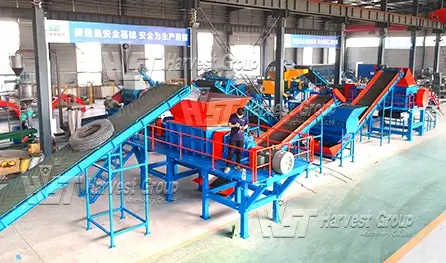
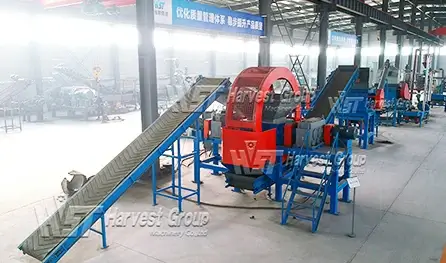
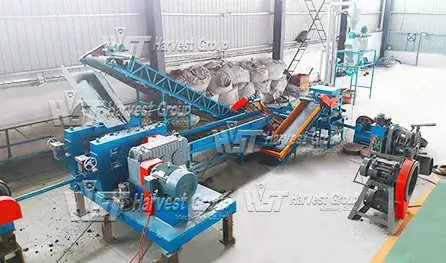
Key steps include shredding, granulation, multi-stage magnetic separation, fiber removal, screening, and dust control. If you’re comparing equipment options, see our Complete Tire Recycling Machine Guide.
Product purity is the main profit driver.
Tires are processed into fuel for cement kilns and industrial boilers, leveraging their high calorific value. Learn more in What Is Tire-Derived Fuel (TDF) and How Is It Made?.
Consistency of size, metal removal, and fire prevention systems are critical.
Devulcanization aims to partially break sulfur crosslinks, restoring rubber processability for higher-value reuse. For deeper technical background, read Why Can’t We Un-Vulcanize Old Tires to Make New Tires?.
While promising, it requires careful evaluation of cost, scalability, and product consistency.
Thermal decomposition produces tire oil, syngas, solid carbon materials, and steel.
Long-term profitability depends on emissions control, product upgrading, and stable sales channels.
Many recycling projects fail due to poor planning rather than equipment choice.
Successful projects start by identifying the target product, customer requirements, and local market demand before designing the processing line. For planning and budgeting, you can also参考 How to Start a Tire Recycling Business.
Low steel and fiber content directly increase selling price and customer acceptance, especially for fine rubber powder applications.
Wear parts, energy consumption, environmental compliance, fire prevention, and feedstock contamination must all be included in cost calculations. For layout & utilities planning, see How to Build an Efficient Tire Recycling Plant Layout.
What are tires mainly made of?
Rubber (natural and synthetic), carbon black or silica, steel, textile fibers, and chemical additives.
Why can’t tires be melted and reused like plastic?
Because vulcanization creates irreversible crosslinks that prevent remelting.
How are nails and dirt handled during recycling?
Through pre-sorting, magnetic separation, air classification, and screening systems.
What is the difference between crumb rubber and rubber powder?
Crumb rubber has larger particle sizes and lower purity requirements, while rubber powder is finer and requires stricter contamination control.
As demand grows for rubberized asphalt, recycled rubber products, and circular material solutions, tire recycling continues to evolve.
Advances in devulcanization, low-emission pyrolysis, and high-efficiency mechanical separation are improving both recovery rates and economic viability.
Tires are engineered for durability through composite materials, layered structures, and irreversible curing. These same features make recycling complex but not impossible.
With clear product positioning, strong purity control, and full-cost planning, scrap tires can be transformed into valuable resources—supporting both environmental protection and long-term business sustainability.